Archive Page 4

Jason Adams, “Nonwestern Anarchisms: Rethinking the Global Context” (2001)

“The future of anarchism must be appraised within a global context; any attempt to localize it is bound to yield a distorted outcome. The obstacles to anarchism are, in the main, global; only their specifics are determined by local circumstances.”
– Sam Mbah

“To the reactionists of today we are revolutionists, but to the revolutionists of tomorrow our acts will have been those of conservatives”
– Ricardo Flores Magon


Introduction

The purpose of this paper is to help anarchist / anti-authoritarian movements active today to reconceptualize the history and theory of first-wave anarchism on the global level, and to reconsider its relevance to the continuing anarchist project. In order to truly understand the full complexity and interconnectedness of anarchism as a worldwide movement however, a specific focus on the uniqueness and agency of movements amongst the “people without history” is a deeply needed change. This is because the historiography of anarchism has focused almost entirely on these movements as they have pertained to the peoples of the West and the North, while movements amongst the peoples of the East and the South have been widely neglected. As a result, the appearance has been that anarchist movements have arisen primarily within the context of the more privileged countries. Ironically, the truth is that anarchism has primarily been a movement of the most exploited regions and peoples of the world. That most available anarchist literature does not tell this history speaks not to a necessarily malicious disregard of non-Western anarchist movements but rather to the fact that even in the context of radical publishing, centuries of engrained eurocentrism has not really been overcome. This has been changing to an extent however, as there here have been several attempts in just the past decade to re-examine this history in detail in specific non-Western countries and regions, with works such as Arif Dirlik’s Anarchism in the Chinese Revolution, Sam Mbah’s African Anarchism and Frank Fernandez’ Cuban Anarchism. It is within the footsteps of this recent tradition that this paper treads further into the relatively new ground of systematically assessing, comparing and synthesizing the findings of all of these studies combined with original investigation in order to develop a more wholly global understanding of anarchism and its history. To begin our inquiry we first must make clear what it is that is actually meant by the term “Western anarchism.” Going back to the debates within the First International, it quickly becomes apparent that this term is a misnomer, as it is actually the opposite case that is true; anarchism has always been derived more of the East / South than of the West / North. As Edward Krebs has noted “Marx (and Engels) saw Russianness in Bakunin’s ideas and behavior” while “Bakunin expressed his fears that the social revolution would become characterized by ‘pan-Germanism’ and ‘statism.’” This debate has led some to characterize it as largely between Western and Eastern versions of socialism; one marked by a fundamental commitment to order and the other marked by a fundamental commitment to freedom (1998, p. 19). So in this sense anarchism can be understood as an “Eastern” understanding of socialism, rather than as a fully Western tradition in the usual sense of the term. At the same time it should be remembered that there also developed an extremely contentious North / South split between the more highly developed nations of England and Germany and the less developed semi-peripheral nations of Spain, Italy and others. This split was based on differences of material reality but developed largely along ideological lines, with the northern Anglo-Saxon nations siding primarily with Karl Marx and the southern Latin nations siding with Mikhail Bakunin (Mbah, p. 20). So in both the East / West and the North / South sense, anarchism has often been the theory of choice for the most oppressed peoples; particularly in those societies whose primarily feudal nature writes them out of historical agency in the Marxist understanding of the world. This may explain a good deal of why anarchism became so popular throughout Latin America, and why immigrating anarchists from the Latin nations of Europe were so well received in country after country that they visited, attempting to spread the anarchist vision.

Continue reading ‘Jason Adams, “Nonwestern Anarchisms: Rethinking the Global Context” (2001)’
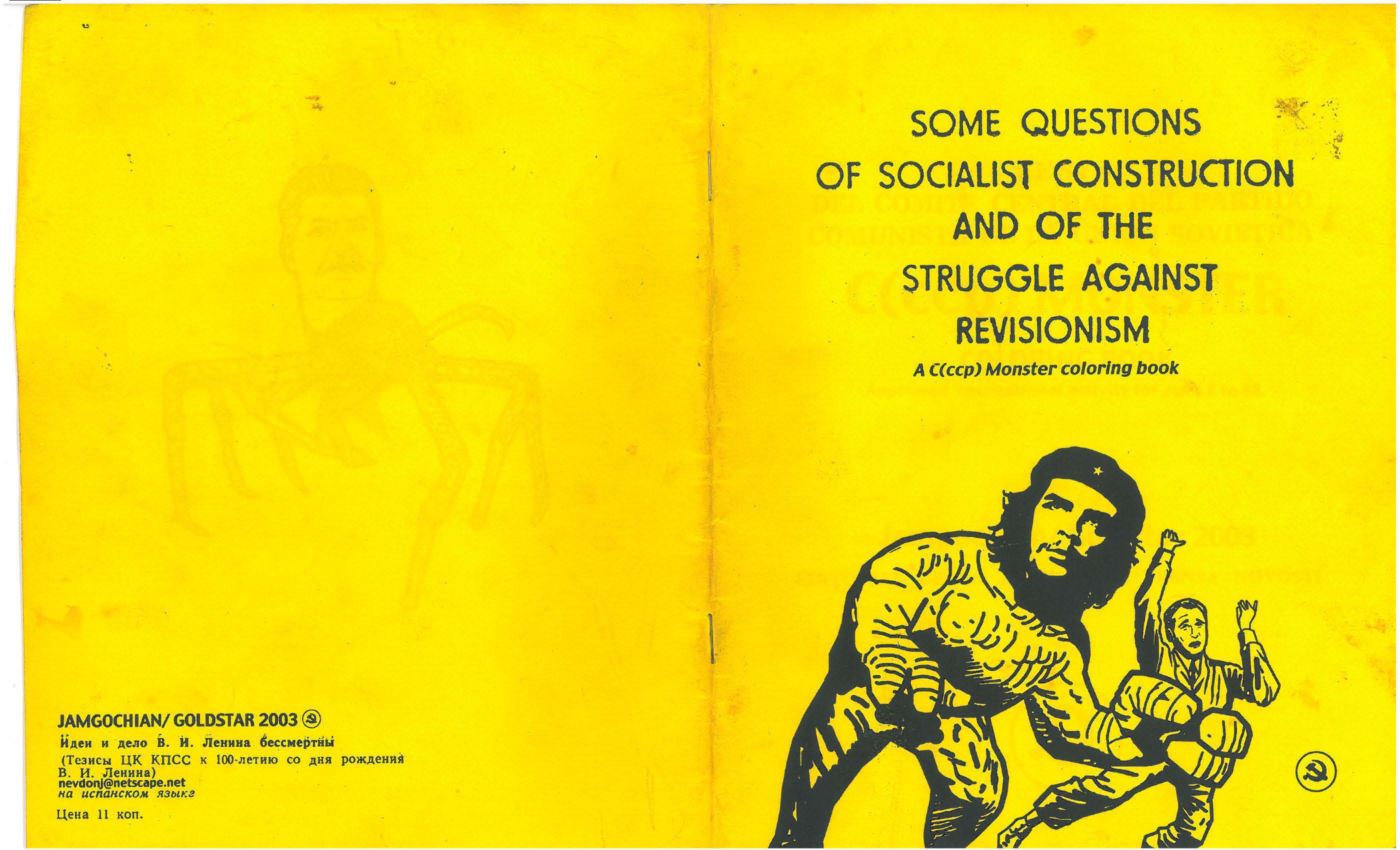
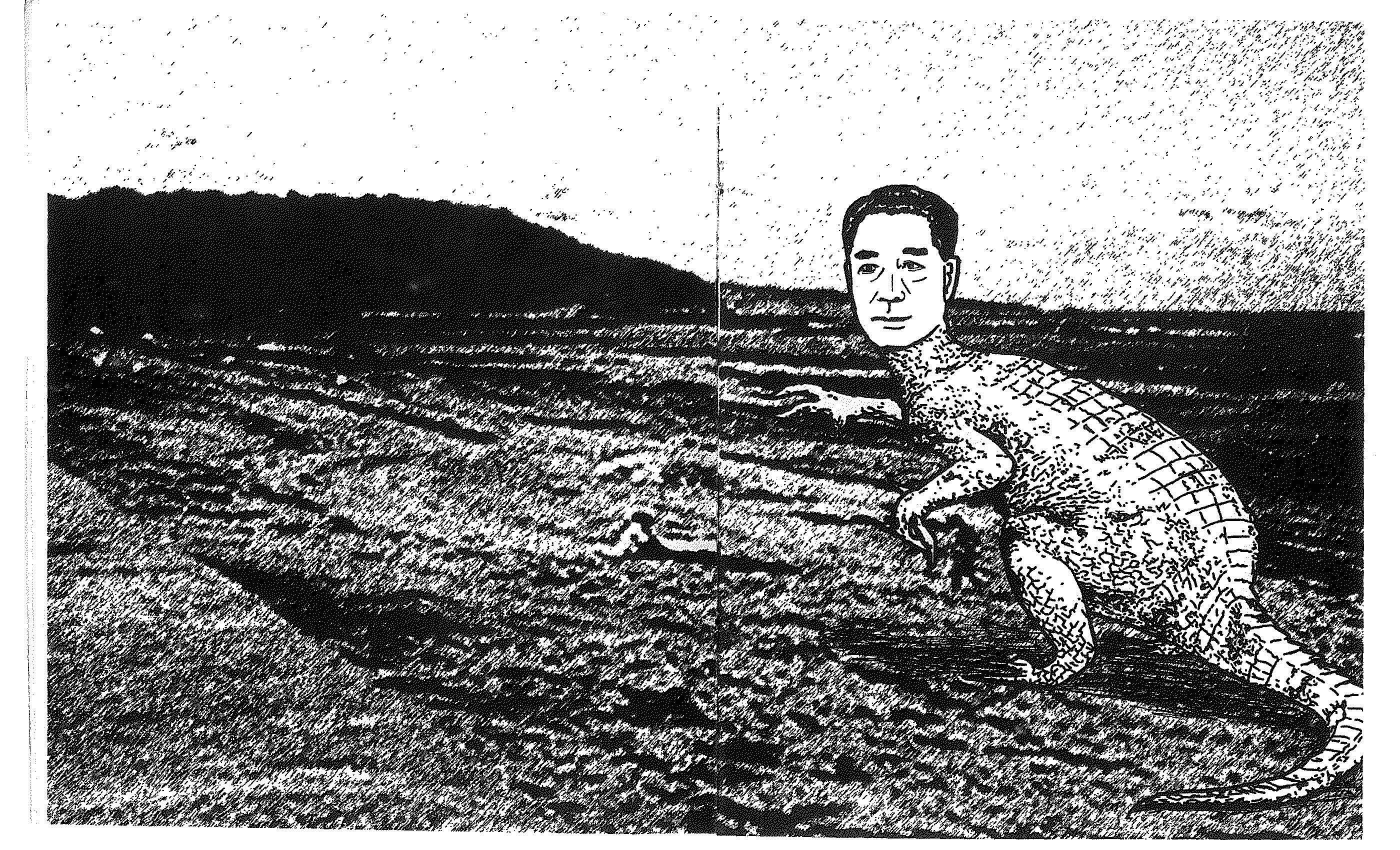
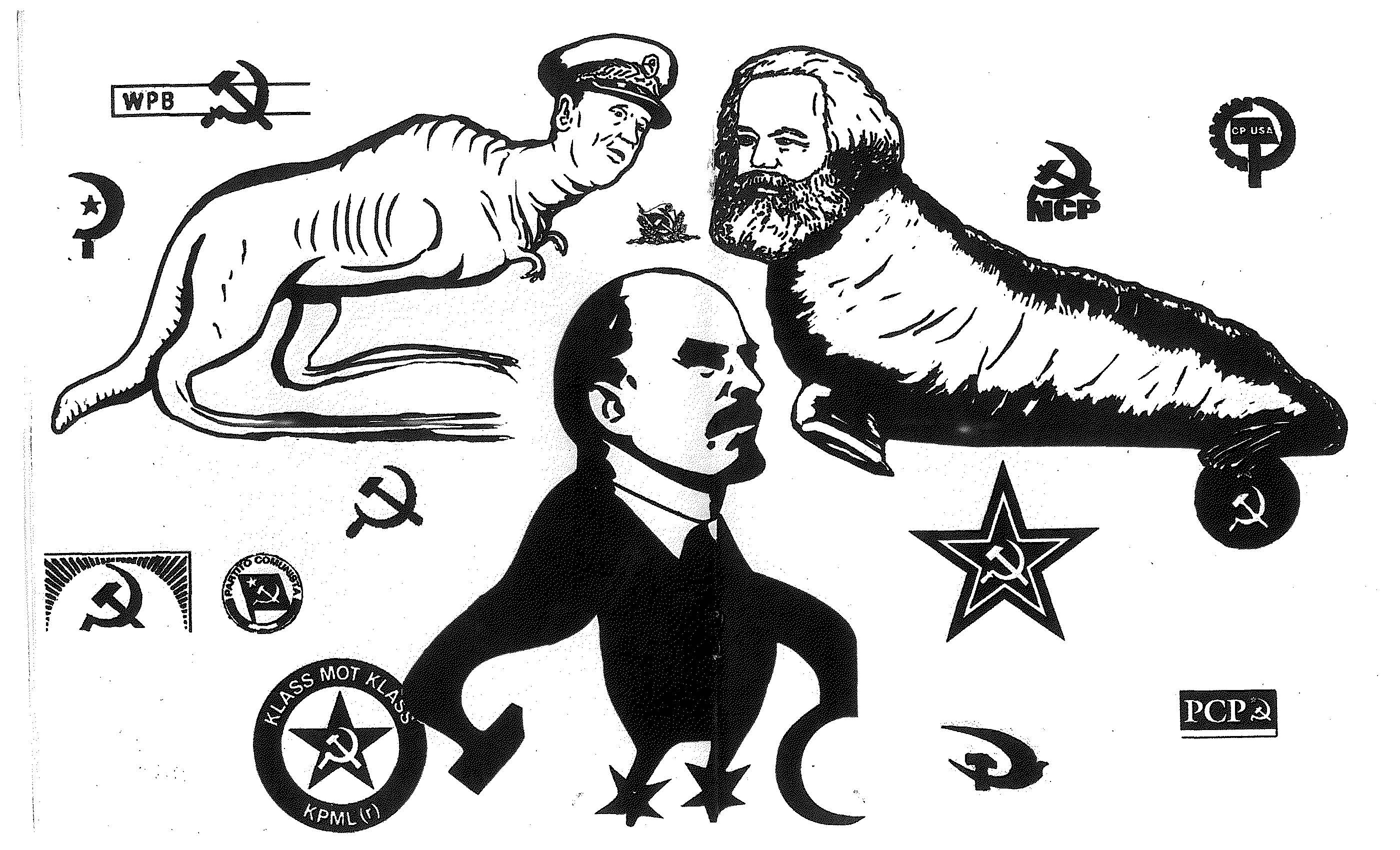
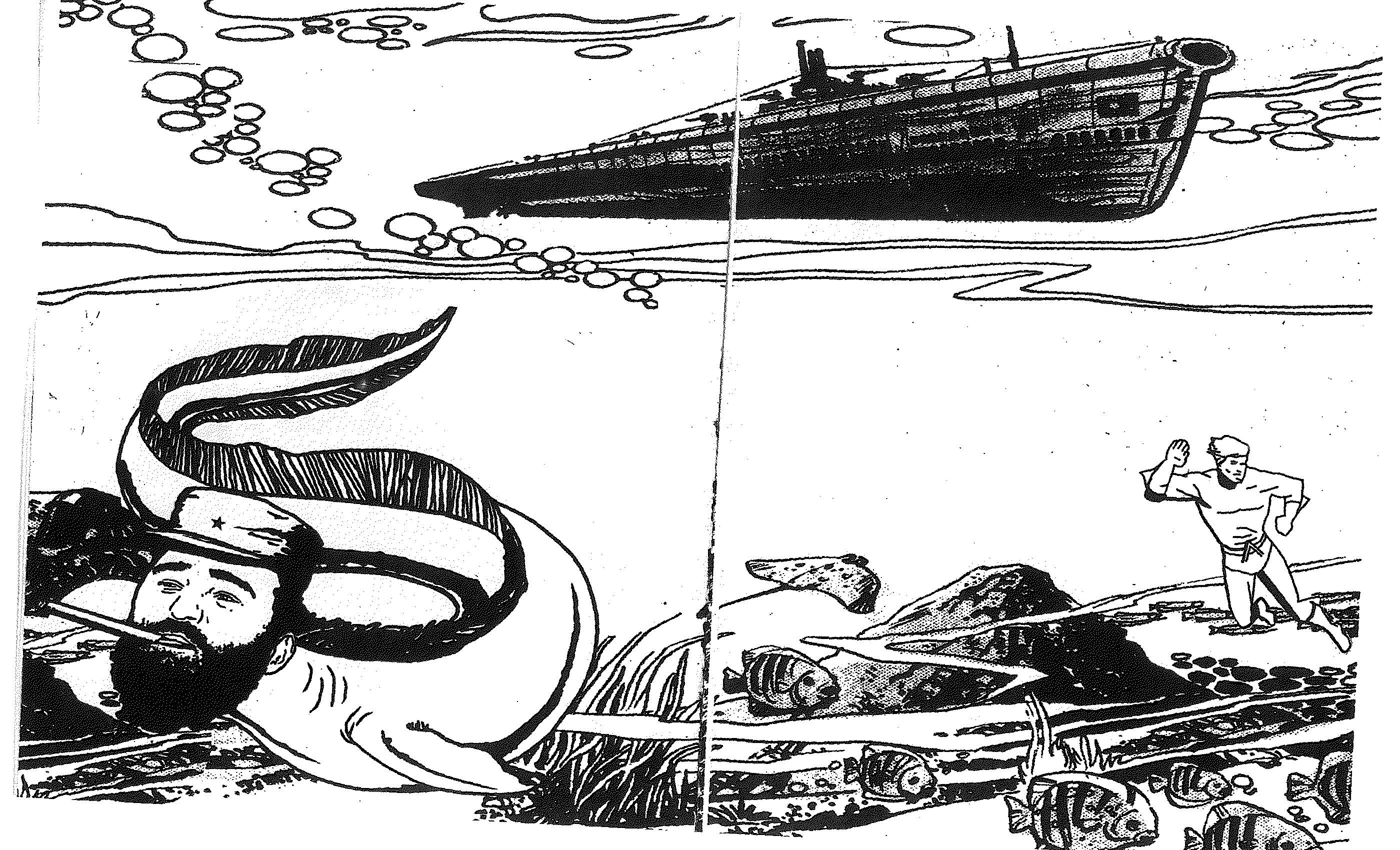
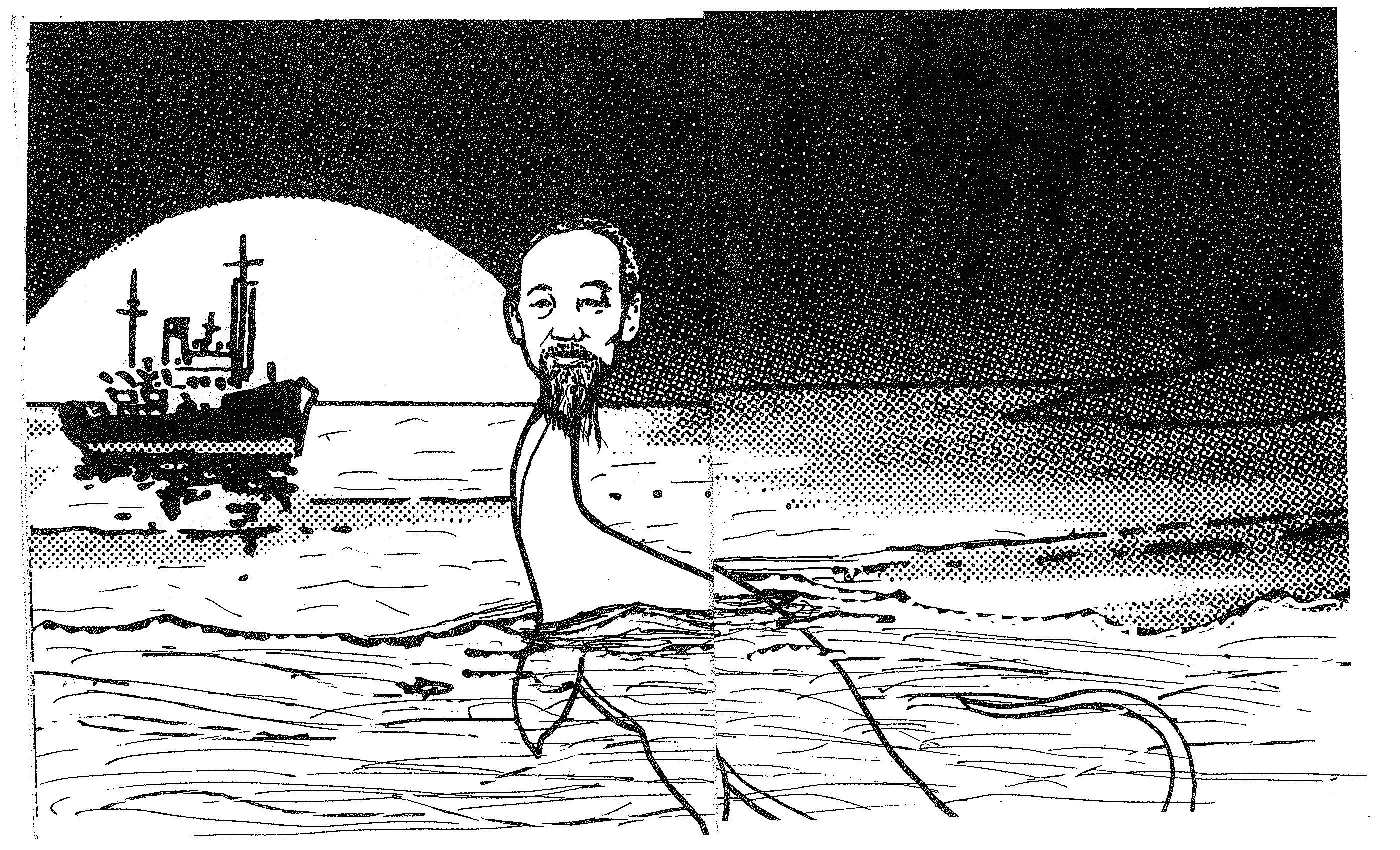
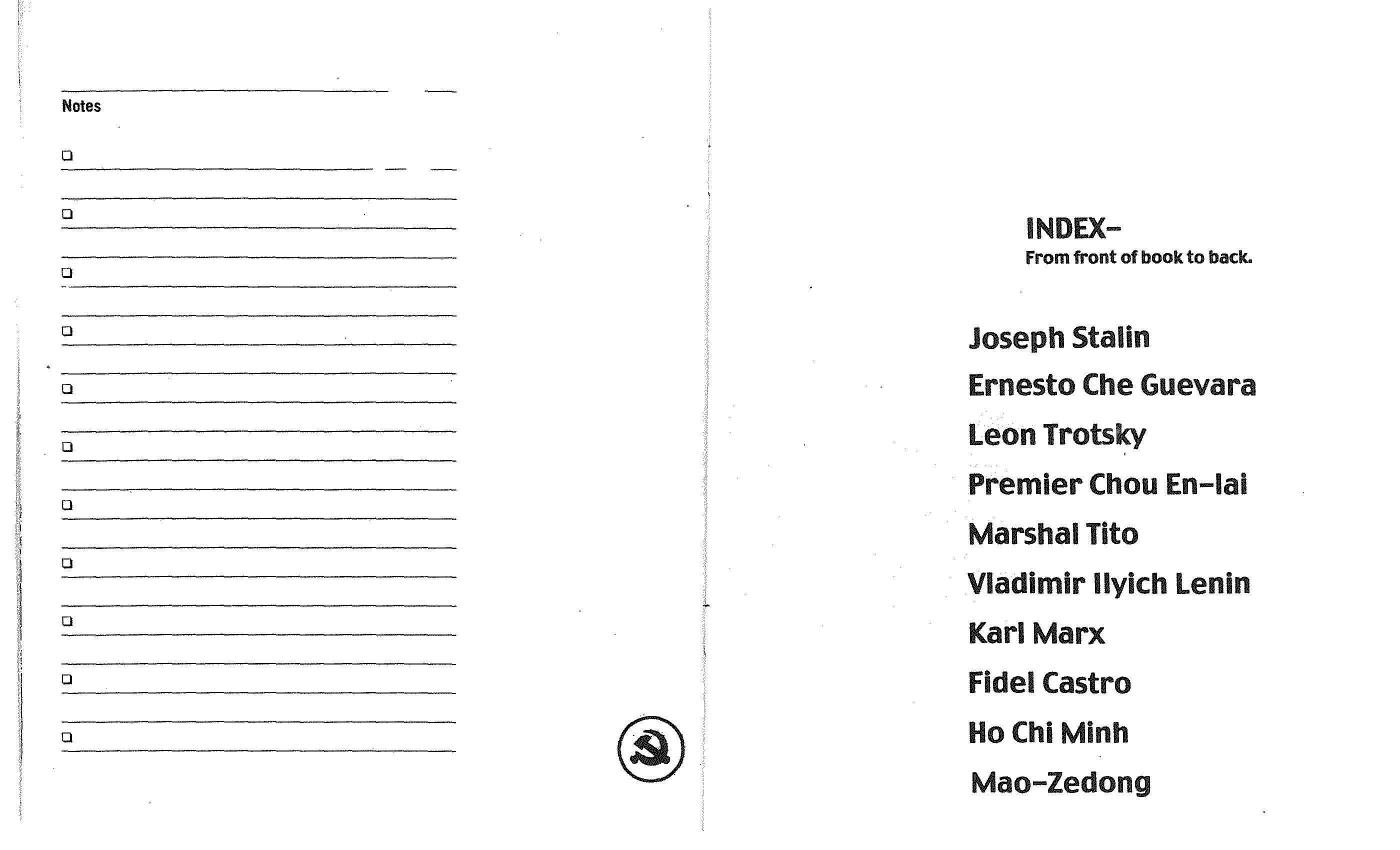
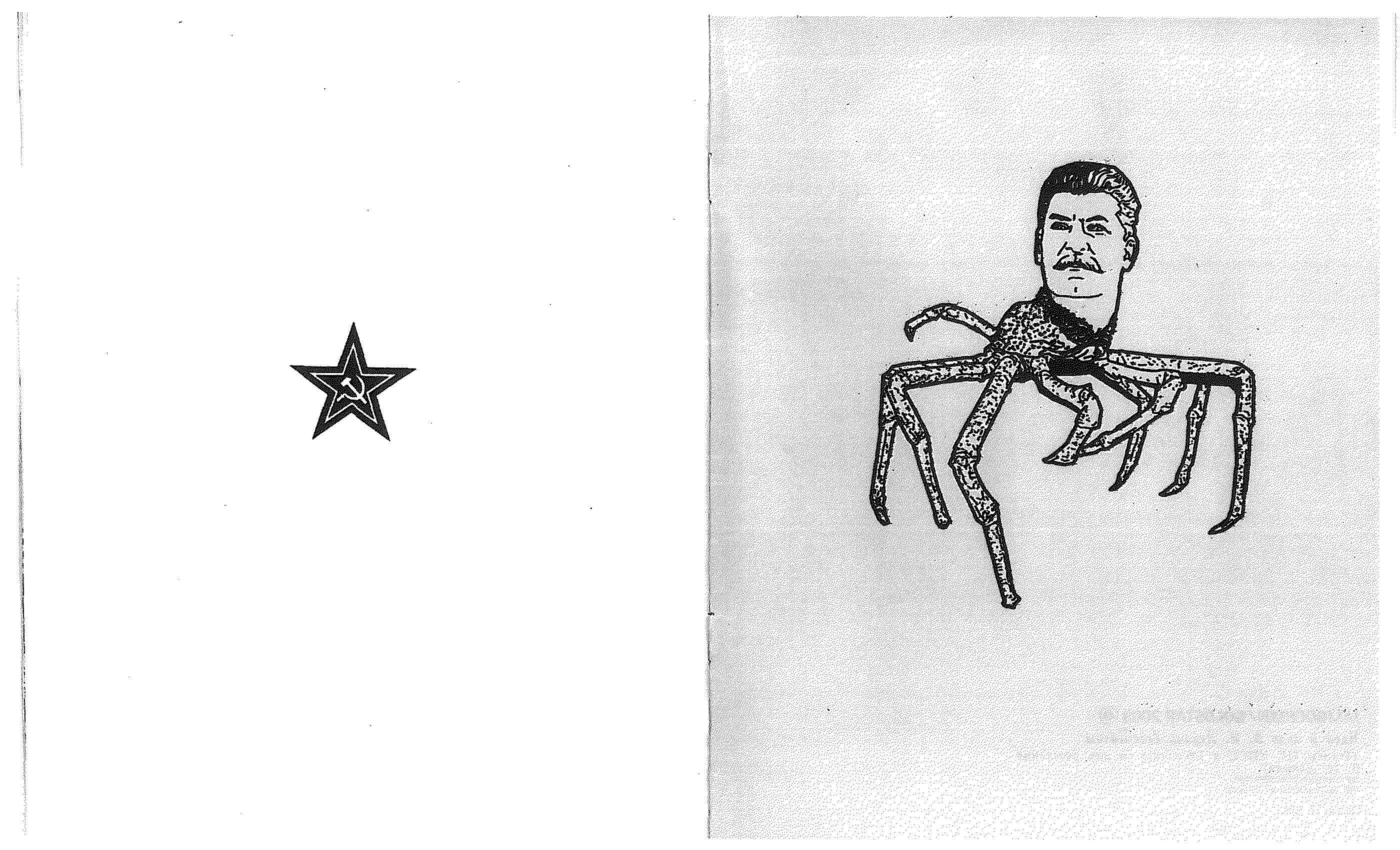
“Some Questions of Socialist Construction and of the Struggle Against Revisionism”

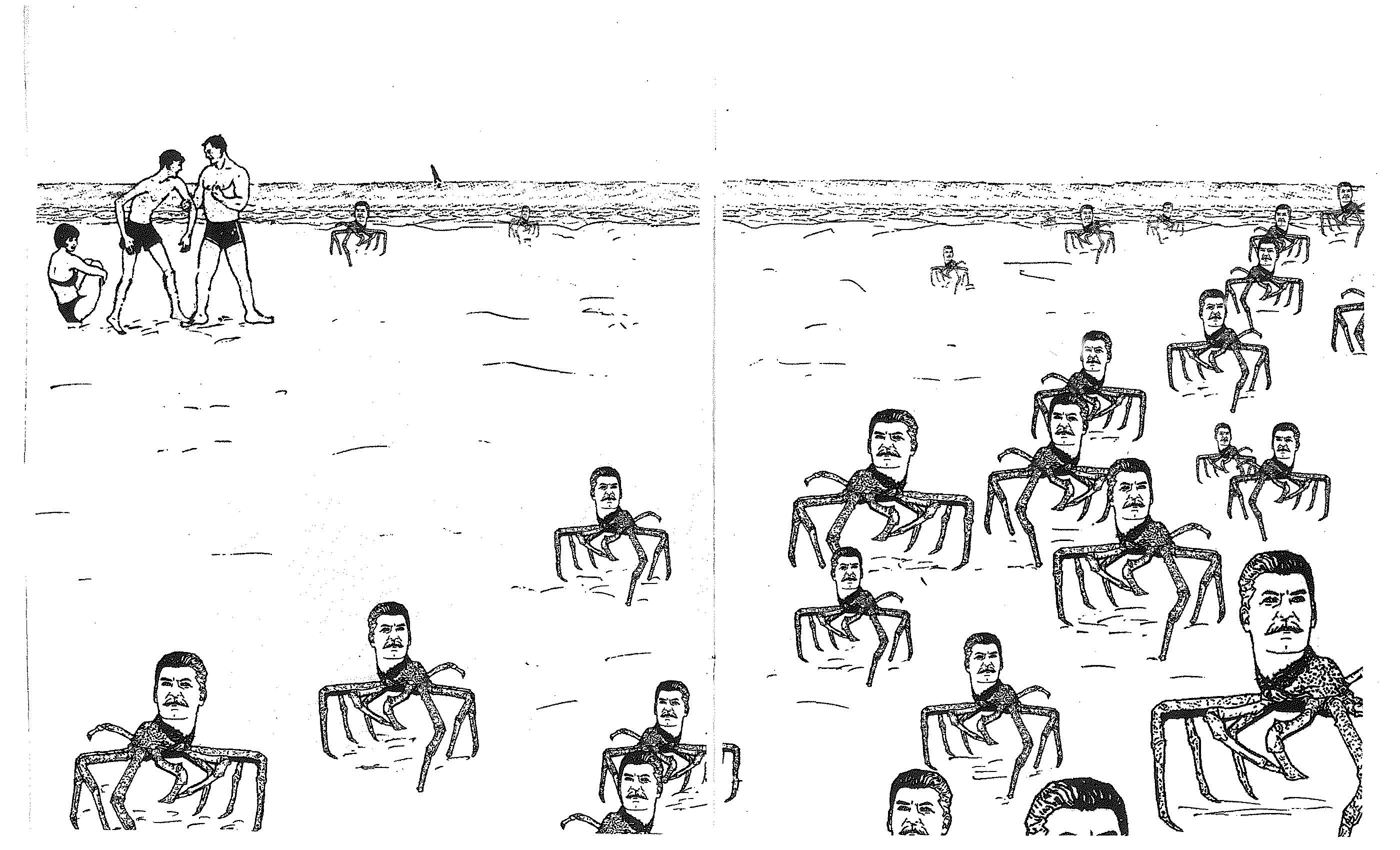
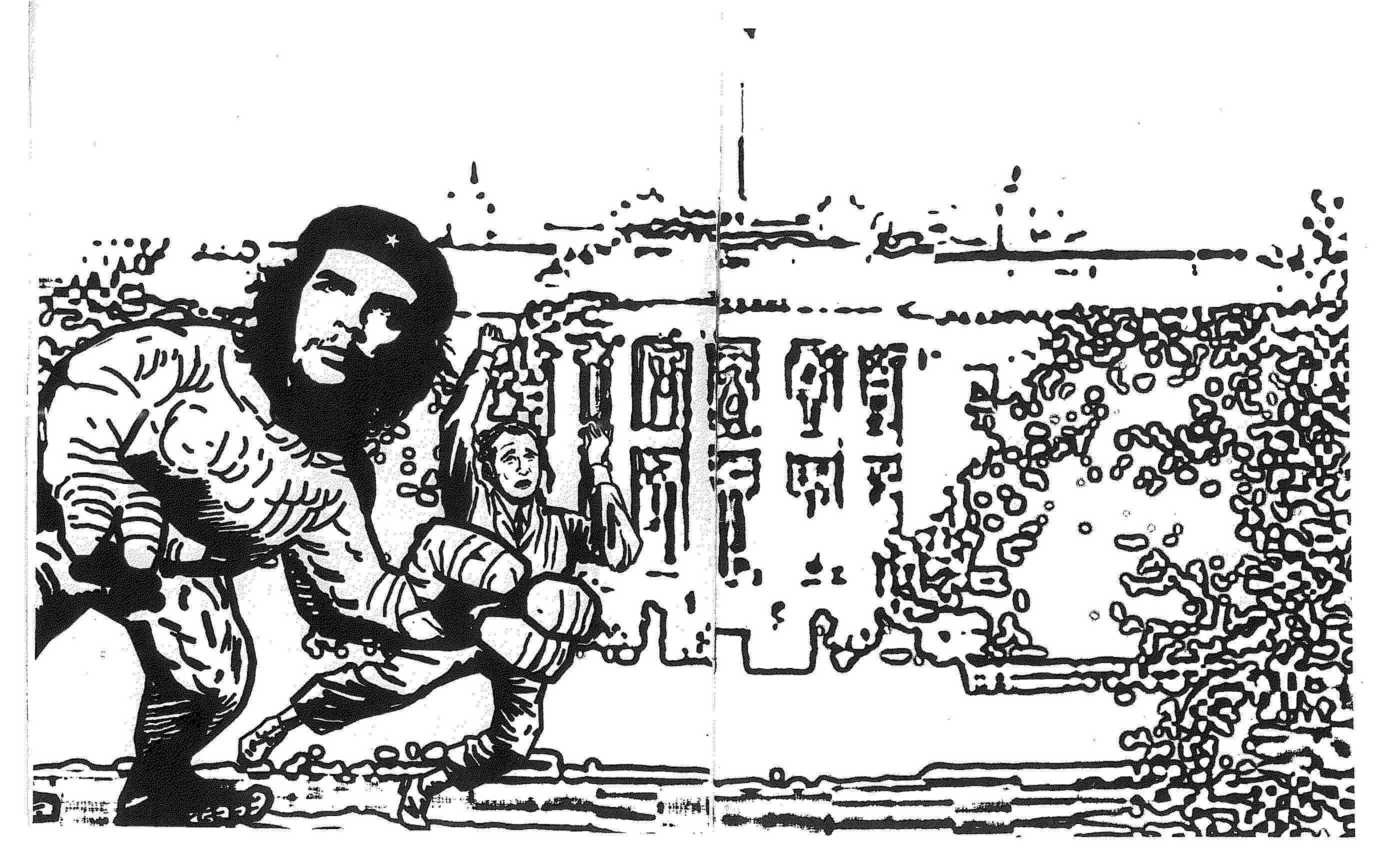
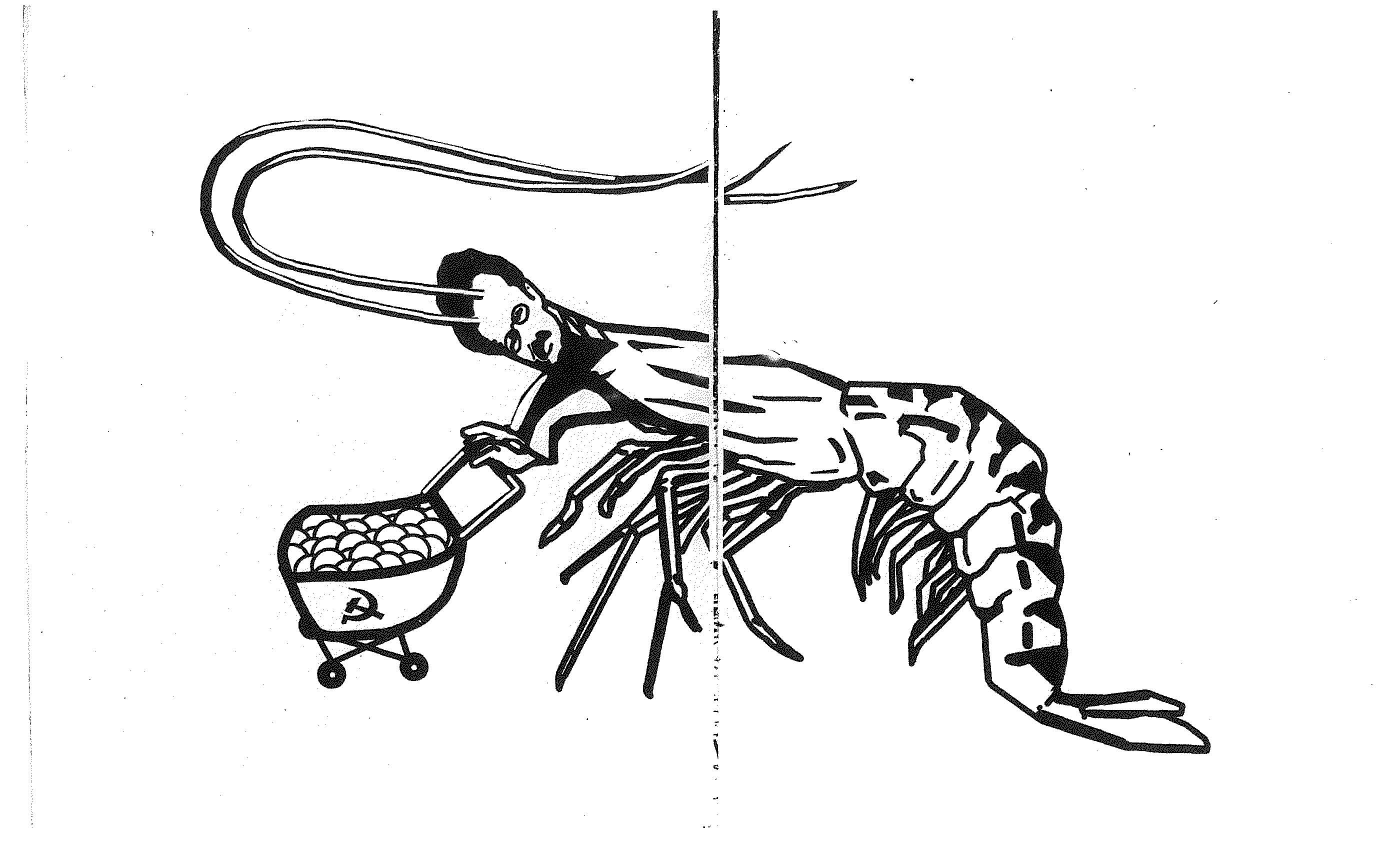
Some Questions of Socialist Construction and of the Struggle Against Revisionism: A C(ccp) Monster coloring book,” 2003.

Brilliant stuff. Click on link above to view as a single PDF.

revisionism.monster_Page_01

revisionism.monster_Page_02

revisionism.monster_Page_03

revisionism.monster_Page_04

revisionism.monster_Page_05

revisionism.monster_Page_06

revisionism.monster_Page_07

revisionism.monster_Page_08

revisionism.monster_Page_09

revisionism.monster_Page_10

revisionism.monster_Page_11

revisionism.monster_Page_12

Gramsci on Lukács and the dialectic in human vs natural history

Note: One must study the position of Professor Lukács towards the philosophy of praxis. It would appear that Lukács maintains that one can speak of the dialectic only for the history of men and not for nature. He might be right and he might be wrong. If his assertion presupposes a dualism between nature and man he is wrong because he is falling into a conception of nature proper to religion and to Graeco-Christian philosophy and also to idealism which does not in reality succeed in unifying and relating man and nature to each other except verbally. But if human history should be conceived also as the history of nature (also by means of the history of science) how can the dialectic be separated from nature? Perhaps Lukács, in reaction to the baroque theories of the Popular Manual, has fallen into the opposite error, into a form of idealism.”
= = =
Antonio Gramsci, ‘The Concept of ‘Science’ section of “Problems of Marxism,” in Selections from the Prison Notebooks, ed. and trans. by Quintin Hoare and Geoffrey Nowell Smith (New York: International Publishers, 1971), page 448.
The Popular Manual Gramsci is referring to is Nikolai Bukharin’s Historical Materialism.

Gabriel & Daniel Cohn-Bendit: Louis Aragon vs the Parisian students of ’68

As the students stood talking they were joined by scores of passers-by, among them Louis Aragon, that venerable bard and prophet of the Communist Party, the man who had sung paeans of praise to OGPU and Stalinism, and who had come to take his place among those who “remind me so movingly of my own youth.” A group of students recognized him and greeted him with cries of “Long live OGPU! Long live Stalin, the father of all the people!”

The Aragon episode, in itself banal and without political importance, nevertheless shows how politically aware the young demonstrators had become. They would have no truck with members of a party whose official organ, L’Humanité, had launched what could only be called a smear campaign against French youth. The revolutionary movement did not deny the importance, and even the necessity, of a dialogue with the rank and file of the Communist Party, but it did try to unmask the opportunist strategy and counterrevolutionary attitude of its leaders, including Louis Aragon, the poet laureate of the personality cult. He could not make himself heard simply because those participating in the “teach-out” knew that he had nothing in common with them. His bold assertion that he was in the Party “precisely because he was on the side of youth” merely turned him into a laughing stock. By refusing to act honestly for once in his life, and to denounce the machinations of his Party, he threw away his chance to join the student movement, and incidentally saved his leaders a great deal of embarrassment.

= = =

from Gabriel Cohn-Bendit & Daniel Cohn-Bendit, Obsolete Communism: A Left-Wing Alternative (London: Penguin, 1968/1969), pp 61-62.

RADICAL ARCHIVES NOTE: The OGPU were the secret police under Stalin.

Bakunin: the “reactionary” consequences of national liberation movements (1866)

“Today no revolution can succeed in any country if it is not at the same time both a political and a social revolution. Every exclusively political revolution – be it in defense of national independence or for internal change, or even for the establishment of a republic – that does not aim at the immediate and real political and economic emancipation of people will be a false revolution. Its objectives will be unattainable and its consequences reactionary.”

= = =

from Mikhail Bakunin, “National Catechism,” 1866. In Bakunin on Anarchism, edited by Sam Dolgoff (Montreal: Black Rose, 1972/2002), page 99. The entire essay is online here.

RADICAL ARCHIVES NOTE: There are is shortage of workerist anarchists who wish to turn Bakunin and classical anarchism into a bottom-up version of the Marxist-Leninism that many of these workerists are strongly influenced by. One of the more outrageous claims they attempt to marshall evidence for, usually by selective quotations of Bakunin’s work on federalism, is that he supported national liberation movements (eg after his pan-Slavist period). Since Bakunin made explicit denunciations of national liberation struggles that were not also thoroughly and completely radical struggles, these writers are clearly banking on most anarchists’ ignorance of their own tradition.

Foucault on the Frankfurt School (1978)

Duccio Trombadori: With the events of ’68, another theoretical current regained strength and was confirmed as a point of reference of notable importance in youth culture. I’m speaking of the Frankfurt School: Adorno, Horkheimer, and much more than them, Marcuse, found themselves with their works at the center of student ideological debates. The struggle against repression, the anti-authoritarianism, the escape from “civilization,” the radical denial of the “system”: all these were themes that with more or less intellectual confusion were debated as watchwords by masses of youths. I’d like to know how your thought is related to that theoretical current, also because you don’t seem to have dealt with it directly.

Michel Foucault: It would be necessary to understand better why, despite the work of many of its exponents in Paris after their expulsion from German universities by the Nazis, the Frankfurt School passed by unnoticed for a long time in France. It began to be discussed with a certain intensity and frequency only in relation to the thought of Marcuse and his Freudian-Marxism. In any case, I knew little about the Frankfurt School. I had read certain texts of Horkheimer’ s dedicated to an entire ensemble of discussions whose meaning I understood with difficulty, and in which I felt a certain laxness, above all concerning the historical materials analyzed. Then I recall having read a book on penal problems and the mechanisms of punishment that had been written in the U.S.A. by Kircheimer.

At that point I realized how the Frankfurt people had tried ahead of time to assert things that I too had been working for years to sustain. This even explains a certain irritation shown by some of them who saw that in France there were experiences that were- I won’t say identical but in some ways very similar. In effect, correctness and theoretical fecundity would have asked for a much more thorough acquaintance with and study of the Frankfurt School. As far as I’m concerned, I think that the Frankfurt School set problems that are still being worked on. Among others, the effects of power that are connected to a rationality that has been historically and geographically defined in the West, starting from the sixteenth century on. The West could never have attained the economic and cultural effects that are unique to it without the exercise of that specific form of rationality. Now, how are we to separate this rationality from the mechanisms, procedures, techniques, and effects of power that determine it, which we no longer accept and which we point to as the form of oppression typical of capitalist societies, and perhaps of socialist societies too? Couldn’t it be concluded that the promise of Aufklärung (Enlightenment), of attaining freedom through the exercise of reason, has been, on the contrary, overturned within the domain of Reason itself, that it is taking more and more space away from freedom? It’s a fundamental problem that we all debate, that is common to so many, whether Communists or not. And this problem, as we know, was singled out by Horkheimer before the others; and it was the Frankfurt School that measured its relationship with Marx on the basis of this hypothesis. Wasn’t it Horkheimer who sustained that in Marx there was the idea of a society as being like an immense factory?

Duccio Trombadori: You assign great importance to this current of thought. To what do you attribute the anticipations and the results attained by the Frankfurt School that you’ve briefly summarized?

Michel Foucault: I think that the Frankfurt School had a greater likelihood of knowing and analyzing early on with exact information what was happening in the U.S.S.R. And this was within the framework of an intense and dramatic political struggle, while Nazism was digging the grave of the Weimar Republic; this was set against the background in Germany, where Marxism and theoretical reflection on Marx had a robust tradition of more than fifty years.

When I recognize all these merits of the Frankfurt School, I do so with the bad conscience of one who should have known them and studied them much earlier than was the case. Perhaps if l had read those works earlier on, I would have saved useful time, surely: I wouldn’t have needed to write some things and I would have avoided certain errors. At any rate, if I had encountered the Frankfurt School while young, I would have been seduced to the point of doing nothing else in life but the job of commenting on them. Instead, their influence on me remains retrospective, a contribution reached when I was no longer at the age of intellectual “discoveries.” And I don’t even know whether to be glad or to feel sorry about it.

= = =

From Michel Foucault, Remarks On Marx: Conversations with Duccio Trombadori, trans.  R. James Goldstein and James Cascaito (New York: Semiotext(e), 1991). Originally published in Italian in 1981, the interviews were conducted in 1978. From Section 4, “Adorno, Horkheimer, and Marcuse: Who Is a ‘Negator of History’?,” pages 115–20.

Raphael Ezekiel: “‘Theory’ on the extreme right consists basically of a single sentence”

“The [Detroit neo-Nazi] Death’s-Head Strike Group’s newsletter is a primitive collection of photocopied news articles and photos of the group in uniform; the content expresses the focus on image and action. In contrast, newspapers from the left feature closely printed columns on abstract theory. The fixation on ideas radically distinguishes the extreme left from the extreme right. ‘Theory’ on the extreme right consists basically of a single sentence: ‘There is a conspiracy.'”

= = =

from Raphael S. Ezekiel, The Racist Mind: Portraits of American Neo-Nazis and Klansmen (New York: Penguin Books, 1995), page 315.

Bakunin in Paris, February 1848

At last the February revolution burst forth. No sooner had I learned that they were fighting in Paris than, taking an acquaintance’s passport against any contingency, I set out again for France. But the passport was not necessary; the first word that greeted us at the border was: “La Republique est proclamee a Paris.”* [“The Republic is proclaimed in Paris.”] Chills ran up my spine when I heard this news. I arrived in Valenciennes on foot because the railroad had been cut. Everywhere there were crowds, wild shouts, red banners in all the streets and squares and on all public buildings. I had to go a roundabout way; the railroad was cut in many places. I arrived in Paris on 26 February, the third day after the proclamation of the republic. I enjoyed the trip. Now what shall I say to you, Sire, of the impression produced on me by Paris! This huge city, the center of European enlightenment, had suddenly been turned into the wild Caucasus: on every street, almost everywhere, barricades had been piled up like mountains, reaching the roofs, and on them, among rocks and broken furniture, like Lezghians* [A tribe of the Caucasus Mountains] in ravines, workers in their colorful blouses, blackened from powder and armed from head to foot. Fat shopkeepers,  épiciers*  [Grocers] with faces stupid from terror, timidly looked out of the windows. On the streets and boulevards not a single carriage. And the dandies, young and old, all the hated social lions with their walking sticks and lorgnettes, had disappeared and in their place MY NOBLE OUVRIERS in rejoicing, exulting crowds, with red banners and patriotic songs, reveling in their victory! And in the midst of this unlimited freedom, this mad rapture, all were so forgiving, sympathetic, loving of their fellow man—upright, modest, courteous, amiable, witty—that only in France, and in France only in Paris, could one see such a thing! Later I lived for more than a week with some workers in the Caserne de Tournon, two steps from the Luxembourg Palace. These barracks were formerly the barracks of the Municipal Guard; at this time they with many others were turned into a red republican fortress, into barracks for Caussidiere’s guard. Now I lived in them at the invitation of an acquaintance, a democrat who commanded a detachment of five hundred workers. Thus I had an opportunity to see and study these last from morning till night. Sire! I assure you, in no class, never, and nowhere have I found so much noble selflessness, so much truly touching integrity, such sincerely considerate good manners, and so much amiable gaiety combined with such heroism as I found in these simple, uneducated people, who always were and always will be a thousand times better than all their leaders! What is so striking about them is their deep instinct for discipline; in their barracks no established regimen, no Jaws, no compulsion could exist, but God grant that any disciplined soldier could so precisely obey, anticipate the wishes of his officers, and observe order as religiously as these free men. They demanded orders, they demanded leadership, they obeyed with punctiliousness, with fevor; they would perform heavy work for twenty-four hours at a stretch without eating and never grow despondent, but were always cheerful and amiable. If these people, if the French workers in general, found a leader worthy of them, one who was able to understand and love them, he could work wonders with them.

Sire! I am in no condition to give you a clear account of the month I spent in Paris, for it was a month of spiritual intoxication. Not only I but everyone was intoxicated: some from reckless fear, others from reckless rapture, from reckless hopes. I got up at five or even four in the morning and went to bed at two. I was on my feet all day, participated vigorously in all the meetings, gatherings, clubs, processions, outings, demonstrations; in a word, I imbibed with all my senses, through all my pores, the ecstatic atmosphere of revolution. It was a feast without beginning and without end. Here I saw everyone and saw no one because all were lost in one infinite, aimless crowd. I spoke with everyone, but I do not remember either what I said to them or what they said to me because at every step there were new topics, new adventures, new information. News that was arriving continually from the rest of Europe also helped no little to maintain and strengthen the general delirium. One constantly heard such things as, “On se bat a Berlin; Ie roi a pris Ia fuite, apres avoir prononce un discours! On s’est battu a Vienne, Metternich s’est enfui, Ia Republique y est proclamee! Toute l’Allemagne se souleve. Les italiens ont triomphe a Milan, a Venise; les autrichiens ont subi une honteuse defaite! La Republique y est proclamee; toute !’Europe devient Republique. Vive Ia Republique!”* [“They are fighting in Berlin; the King has taken flight after having made a speech! They have fought in Vienna, Metternich has fled, the Republic has been proclaimed there! All Germany is rising. The Italians have triumphed  in Milan, in Venice; the Austrians have suffered a shameful defeat! The Republic has been proclaimed there; all Europe is becoming a republic. Long live the Republic!”] It seemed that the whole world had been turned upside down.

The inconceivable had become the usual, the impossible possible, and the possible and the usual unthinkable. In a word, minds were in such a state that if someone had arrived and said, “le bon Dieu vient d’etre chasse du ciel, Ia Republique y est proclamee!”* [“The good Lord has just been chased out of heaven, the Republic has been proclaimed there!”] then everyone would have believed him and no one would have been amazed. And it was not only the democrats who were in such a state of intoxication; on the contrary, the democrats were the first to become sober, for they had to get down to work and secure the power that had fallen into their hands by some unexpected miracle. The conservative party and the dynastic opposition, which in one day had become more conservative than the conservatives themselves—in a word, people of the old order believed in all miracles and all impossibilities more than did the democrats. They really thought that two times two had ceased to be four, and Thiers himself announced that “il ne nous reste plus qu’une chose, c’est de nous faire oublier.”* [“Only one thing remains for us: to make ourselves forgotten.”]  This alone explains the haste and unanimity with which all cities, provinces, and classes in France accepted the republic. (46)

endnote 46: The anarchist and Bakunin scholar Max Nettlau, commenting on the preceding pages, maintained that “This veritable poem to Paris of the February barricades…, sung in the face of the Tsar” should put to rest the insinuations that Bakunin had abased himself before the Tsar and compromised himself by writing the Confession (notes to the French edition of the Confession [1932; reprint Paris, 1974], p. 218….)

= = =

From The Confession of Mikhail Bakunin, with marginal comments of Tsar Nicholas I, trans. Robert C. Howes, introduction and notes by Lawrence D. Orton (Ithaca & London: Cornell University Press, 1977), pp. 54–57. Written by Bakunin in 1851 while imprisoned in Tsarist Russia after the failure of the democractic revolts in the West, and before his political transformation to anarchism.

Mina Graur: Rudolf Rocker debates Otto Strasser

In 1930 the FAUD [the anarcho-syndicalist Free Workers’ Union of Germany] accepted an invitation from Otto Strasser, an activist in the National Socialist Party [e.g., the Nazi party], to a series of debates. It was an interesting challenge for the syndicalists, and Fritz Kater suggested that Rocker should represent their camp. (fn90) Otto Strasser belonged to a faction within the National Socialist Party that differed in many respects from Hitler’s mainstream. Indeed, Strasser’s disagreements with Hitler led to his expulsion from the party in June 1930. After his expulsion, he founded the “Revolutionary National Socialists” organization, later known as the “Black Front.” (fn91) The debate was conducted, therefore, just before Strasser was driven out of the Nazi party.

Three meetings were arranged, each dedicated to a different topic. At the first, Rocker debated Strasser on the issue of nationalism and race, and the role they play in the shaping of history. Rocker claimed that since nationality is not known to be an inherited trait, it follows that the idea of nationality is enforced on men by their surroundings. (fn92) The second session was dedicated to the meaning of socialism. Since Strasser could not attend the meeting due to illness, his place was taken by Dr. Herbert Blank. Blank argued that the historical importance of the National Socialist Party was that it had discovered the true foundations of socialism, since what passed until then as socialism was only the Marxist interpretation. Rocker ridiculed the argument, pointing to the obvious fact that the Nazis had probably never heard of libertarian socialism and its many thinkers, who were in no way connected to Marx and his followers, and who rejected Marxism altogether. At the third debate, Rocker was replaced by Erich Mühsam at the request of Strasser, who felt threatened by Rocker’s rhetorical tactics. Rocker, however, was asked to deliver the closing remarks. Although both camps knew that the differences between them were too wide to be bridged over, and that no side was going to win new converts, the series of debates constituted an interesting experience. The debates were the only time that the anarchists aired their opinions freely in front of a Nazi audience. After the National Socialists came to power, the anarchist movement was extinguished, its members exiled, imprisoned, or sent to concentration camps.

footnotes:

90. Rocker dated the event at around 1928 or later. According to the articles in Fanal reporting the event, it occurred in 1930.
91. Allan Bullock, Hitler, A Study in Tyranny (New York: Harper, 1964), pp. 156-158.
92. Rocker, Revolutsie un Regresie, Vol. 2, p. 29. The issue is elaborated upon in Nationalism and Culture.

= = =

from Mina Graur, An Anarchist “Rabbi”: The Life and Teachings of Rudolf Rocker (New York: St. Martins Press / Jerusalem: The Magnes Press, 1997), pp. 174-75.

Neighbors Network – “Hatred In Georgia” and other publications (1989-1994)

Radical Archives is delighted to present the monitoring publications of the Neighbors Network, including Hatred in Georgia. These publications, covering the years 1989 to 1993, document the extensive far right organizing in that state.

The Neighbors Network was an independent, Atlanta, Georgia-based grassroots anti-Klan/anti-Nazi group; it was founded in 1987 and disbanded in 1996. These years were a high-water mark for far right organizing in the post-Civil Rights era of the U.S., and Georgia was one of its centers.  The traditional distinction between various independent Klans (then experiencing their own revivals) and the Nazis was eroding. In 1987, a small march in Forsyth County (which had been reputed to be all-white since multiple lynchings in 1912) by local residents and civil rights activists was forced to flee when attacked by a stone-throwing mob, despite protection from both State and local law enforcement. A follow-up march by anti-racists the next week was met by thousands of angry counter-protestors, in what many consider to the largest pro-segregation demonstration since the 1960s.

Emboldened by the often lackadaisical response from local governments or communities, Nazi and Klan groups, often in conjunction with old time segregationists or Populist Party members, held frequent public events in towns across Georgia. These ranged from flyering at shopping malls to cross burnings and Nazi skinhead rallies that drew hundreds of attendees. There were numerous assaults on queer folks, people of color, immigrants, the homeless and anti-racist activists — as well as a number of murders. These far right factions ultimately lent their support to “legitimate” right-wing activity, such as Cobb County’s 1993 anti-gay resolution. It was in this context that the Neighbors Network was formed.

An extensive interview with Neighbors Network founder Walter Reeves is now online at the Political Research Associates website.

= = =

Hatred in Georgia, 1989-1993

Hatred in Georgia, 1989: A Chronology of Hate Activity, written and compiled By Patrick Kelly, edited By R.S. Cross (Atlanta: Neighbors Network, 1990).

Hatred in Georgia, 1990: A Chronology of Hate Activity, compiled by Patrick Kelly, edited by Eva Sears and R. S. Cross (Atlanta: Neighbors Network, 1991).

Hatred in Georgia, 1991: A Chronology and Analysis of Hate Activity, compiled by Patrick Kelly; text by Steve Adams, Patrick Kelly, S. Stanton, W. B. Reeves, and Eva Sears; edited by S. Stanton (Atlanta: Neighbors Network, 1992).

Hatred in Georgia, 1992 Report: A Chronology and Analysis of Hate Activity, written and compiled by Patrick Kelly, Marcy Louza, W.B. Reeves, Sandra Garrison, Eva Sears, Steve Adams and Norman Burns (Atlanta: Neighbors Network, 1993).

Hatred in Georgia, 1993 Report: A Chronology and Analysis of Hate Activity, written and compiled by Patrick Kelly, W.B. Reeves, Eva Sears, Janine Landon, David McBride, and Steve Adams (Atlanta: Neighbors Network, 1994).

Neighbors Network reports:

Hidden Agenda: The Influence of Religious Extremism on the Politics of Cobb County, Georgia, compiled and written by W. B. Reeves; produced for the Cobb Citizens Coalition (Atlanta: Neighbors Network, 1994).

Shadow of Hatred: Hate Group Activity in Cobb County, Georgia, written and compiled by: W. B. Reeves, Patrick Kelly, and Steve Adams; produced for the Cobb Citizens Coalition (Atlanta: Neighbors Network, 1994).