Archive for the 'Counterculture & Punk' Category

Boyd Rice on Tom Metzger’s “Race and Reason” (1986)

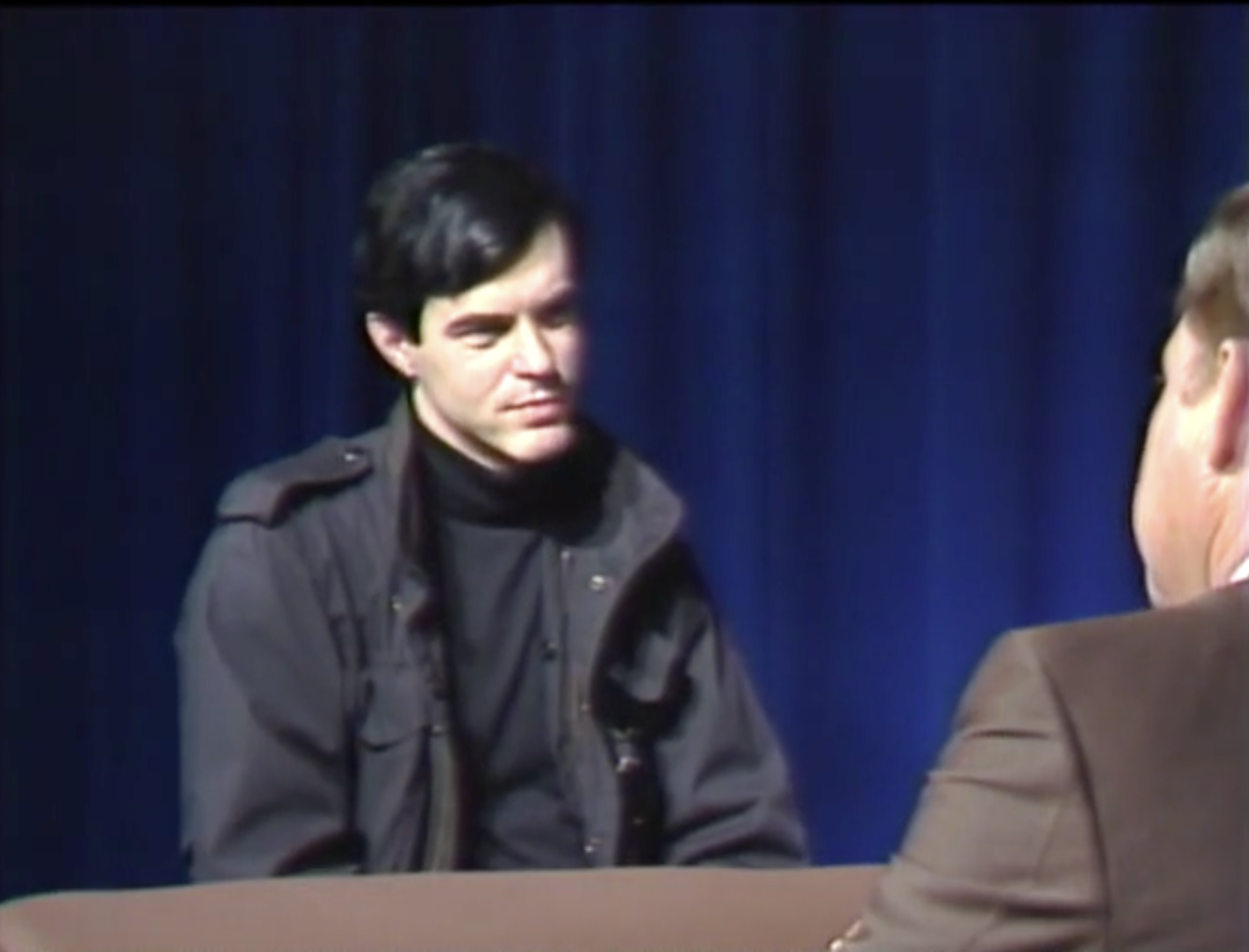
In 1986, industrial musician Boyd Rice appeared on Tom Metzger‘s talk show Race and Reason. Metzger, leader of the White Aryan Resistance, was one of most important—and violent—leaders of the White Supremacist movement in the 1980s and ’90s. After this video resurfaced in the late ’00s, it has been consistently forced off sites like YouTube, and so we have made a transcript. To date, Rice has never addressed this video.
[beginning title card]

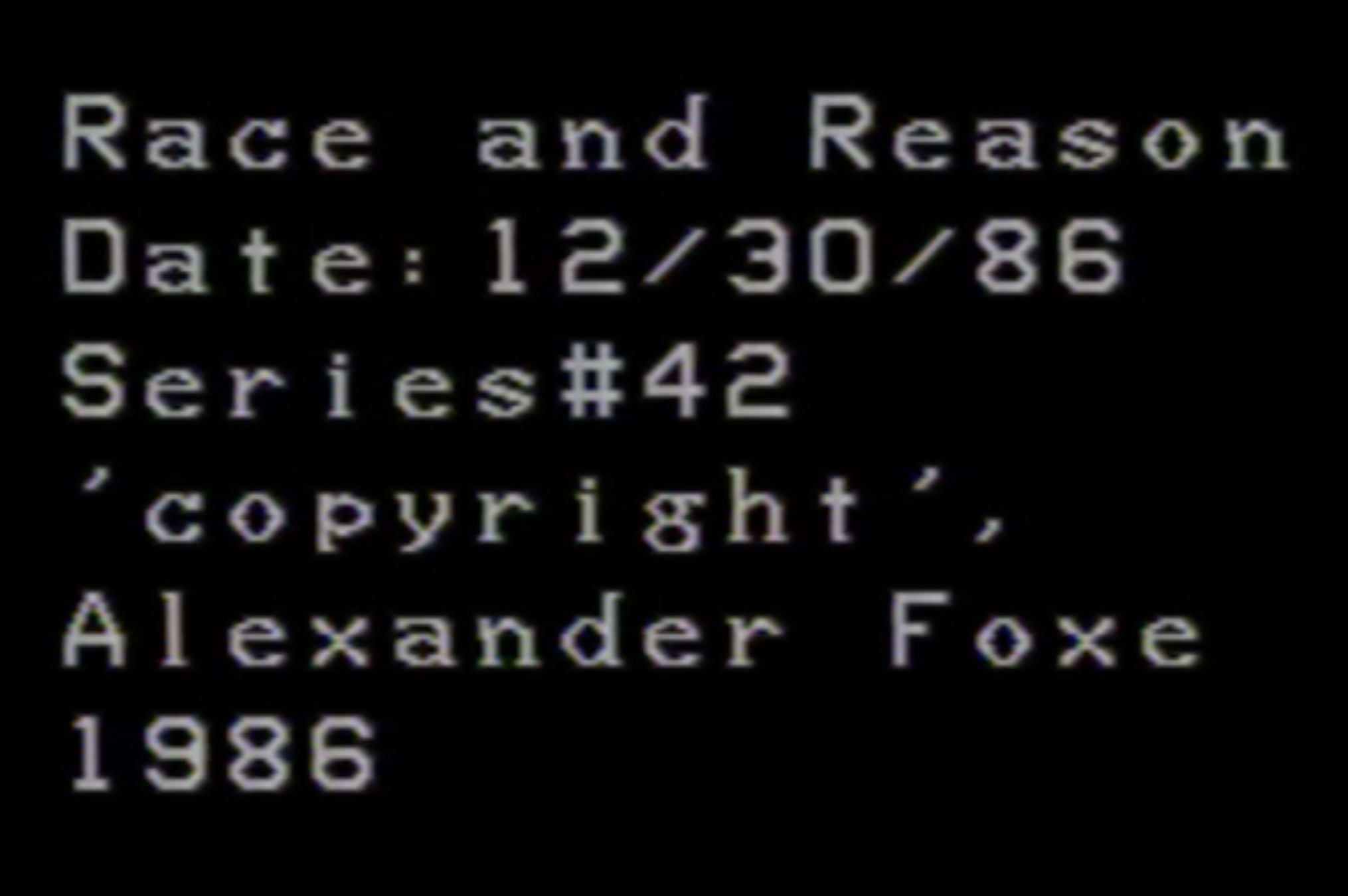
Race and Reason
Date: 12/30/86
Series #42
‘copyright’ Alexander Foxe 1986

Host
Tom Metzger

Co host
Tom Padgett

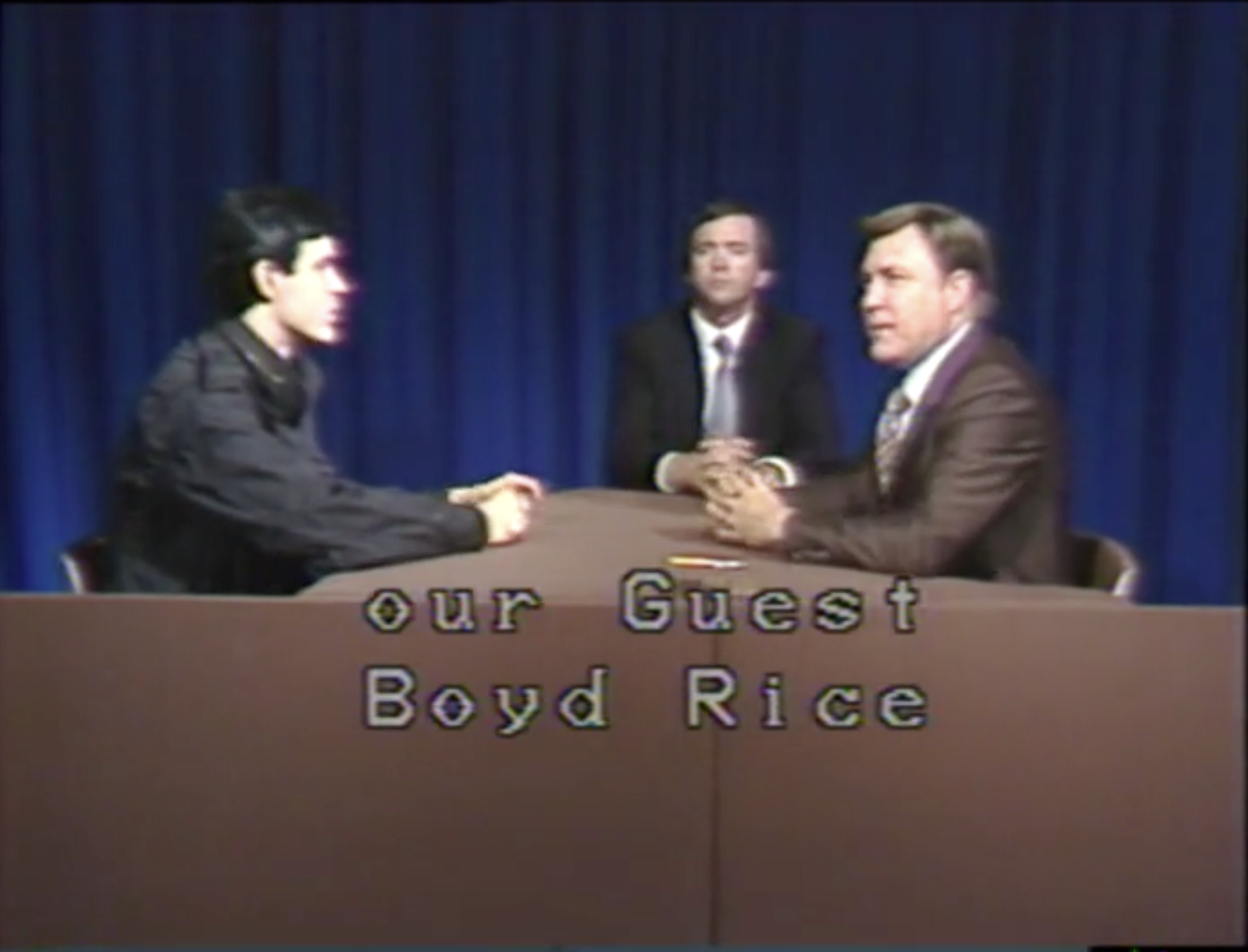
our Guest
Boyd Rice

Metzger
Hi, I’m Tom Metzger, your host for Race and Reason. Race and Reason—dedicated to real free speech, that small island of free speech in a sea of controlled and managed news. And we’ve got a show for you—about what, Tom?

Padgett
Well, let me, let me introduce Mr. Boyd Rice on my right, who is somewhat of a cult figure in the racial underground musical world. And Mr. Rice has also in quite a few other different things, which we’ll be trying to cover in the next half hour. Mr. Rice, welcome to the show.

Rice
Nice to be here.

Metzger
Nice to have you with us. What is this underground racial music? See, I’m forty-eight, maybe I’m not supposed to know about this. What’s happening, Boyd?

Rice
Well, first I started out being just a member of the music underground. I did avant-garde music for years and years, then traveled around and gave concerts and met people all over who were doing, you know… [had] come to a similar place as me, who were doing similar things about, you know, we didn’t know each other. And we just sort of arrived at the same place somehow.

Padgett
Tom says he saw your act here in LA or someplace.

Padgett
This was about six, six years, six-and-a-half years ago.

Rice
Yeah. Well…

Metzger
Now I get the impression—or you said something about—you use soundtracks and various things. It sounds like very different than what we’re used to.

Rice
Yeah, yeah. I think most people who make music are making music for, for the, for the mind, if you understand what I mean. I’m making music more for the brain. It’s like the mind is sort of human, humanized, and sort of has to do with society and the culture out there. But the culture that really doesn’t have anything to do with what, what I am or what you are.

Metzger
Is it more for like, just an emotional need? Or is it…

Rice
It’s, I think it’s something you listen to it, and it gets your mind to start thinking in a different way. Because it causes you to experience things that ordinarily I don’t think you’d experience.

Metzger
This is not necessarily connected to like drug cults or anything like that, right?

Rice
Drug cults? No. You’re talking about like trance music?

Metzger
In other words, you’re trying to get people on their own natural high.

Rice
Yeah, yeah, basically.

Metzger 
Would you say that type of music is uplifting?

Rice
I find it very much so but, but for some people, people who are resistant to it, they find it you know, painful and horrible and they think I’m just trying to torture them with sound.

Metzger
Now I understand you’re quite well known in Europe and in England, maybe better than here. There’s a lot of Americans seem to end up with that type of a hand. I hear you’ve cut records for…

Rice
yeah, for years.

Metzger
and you own, had record company and…

Rice
I don’t own it. I’m signed to a record company in England. It’s like this major independent label called Mute.

Metgzer
So you’re probably even more well-known over there than you are here.

Rice
Yeah.

Padgett
Well, don’t you feel Europeans are more receptive to different types of music. Seems like a lot of Americans are in a rut with Top 40 or the same rock and roll that they heard ten years ago. It’s like they just can’t seem to break out of that and listen to anything new. Europe, Europeans do seem… the time I spent in Europe, they seem far more receptive than Americans do.

Metzger
Well, what’s the evolution of this underground music into the more, say, white racially oriented music? How did this evolve? You probably would be someone who could really clear that up.

Rice
Well, I think it came as sort of chaos of like… I was basically I was on the fringes of the punk rock scene, though I never considered myself part of it. And that sort of came about just naturally as all these people were dissatisfied with what was going on and they, they realized all the values they bought into are just garbage and didn’t have any sort of any function in their life, and they just wanted to throw all that off. And in the process of throwing it off, you know, most of them just just thought of a freedom sort of unfettered individualism, and then they’d get to a certain point, and they’d realize they’re going through all these motions, but they really weren’t being any more free. And so from that point of like throwing off all the values, I think that you have to come back to something, something organic.

Metzger
Some type of discipline?

Rice
Yeah, some type of discipline or, you know, you get back to this biological knowledge of what you are and what nature is and where your place is, and so forth.

Metzger
You know a lot of these racialist-type singers and bands and Europe and Britain. Could you mention a few that… I know that you, you know the skinheads, and you’ve mentioned some others.

Rice
Yeah, there’s some there’s a guy I know named David Tibet who has a band called Current 93, who’s moving more and more towards racialist stuff. And he’s friends with some people called Death in June, who’re very racialist oriented. And we were… they’re actually, they’re… Death in June is quite popular now. And there’s another electronic band called Above the Ruins. Which, there’s a guy in it who is in Skrewdriver—that’s a British skinhead band.

Metzger
Now is that group more like National Socialist oriented? Or fascists, or what?

Rice
Which group?

Metzger
Well, the last group above.

Rice
Death in June? Oh, Above the Ruins?

Metzger
Above the Ruins.

Rice
I haven’t really heard About the Ruins yet, I’ve just heard of them. But I know, it’s, there’s one guy from Death in June and one guy from Skrewdriver, so I assume it’s…

Padgett
Well, I’d have to interject that electronic music is very white, just by it’s, by it’s very nature. You don’t see too many non-whites listening to that kind of stuff. It just seems intrinsically white to me.

Metzger
Well, our producer here has been into electronic music for a long time, Dave, Dave Wiley. And I don’t think it plays on the same wavelength as a lot of the minorities. That’s my opinion, but I’m surely not a, an expert on this.

Rice
Yeah, yeah, that’s what I feel, too. In fact, people in the press this, this music I do, the press dubbed it “industrial music” after this one band that called themselves, you know, said that what they were doing was industrial music. And it had been said that this was the first white music, you know, come out and hundreds and hundreds of years. Because a lot of the popular music has been influenced, you know, black influence—Little Richard and so on.

Padgett
Exactly. Well, this is something that’s downplayed. The media likes to characterize us all as being one people and one mass, but seems like a lot of rock concerts are the most segregated thing since a Klan rally?

Metzger
I would I would think so. Now, I haven’t been to many, but I’m waiting to be invited. /laughs/

Rice
Well I haven’t been to any rock concert in years, you know?

Metzger
Yeah. Well, rock concerts, though. From what I can gather so many of are so full of drugs and stuff, and it’s gets pretty bad. But I, but there seems to be a difference between that and what the skinheads are promoting and people like that, or at least the racially conscious.

Padgett
The point is, we all don’t like the same music. All races don’t like the same music, at least from what I can see.

Metzger
Another question I’d have with like, in Britain, can you say things in music that you go to jail for if you print or say in a speech? Is this a way around…

Rice
I think you can say it in music in a different way, because music, music can speak to the soul, and you can say things through it, that you wouldn’t be able to just come out and say. Or if you said it to somebody, they could understand it intellectually, but they wouldn’t really know it. I mean, you have to sort of experience something to really know it.

Metzger
So whereas modern music has been pretty much propaganda instrument of Jewish interests and, and black, soul and so forth, you see emerging a new propaganda art form for for white Aryans.

Rice
Yeah, yeah, I think so.

Metzger
Now, it seems that a lot of the music I’ve heard like from the skinheads, was this really repressed, suppressed anger at what the system is doing to the youth of Britain.

Rice
Uh huh.

Metzger
That comes right through and like I’ve asked before, why has that not broken through yet? I mean, I… 25% unemployment and this rage that’s building—why hasn’t it spilled over really into the streets? What keeps England from blowing sky high?

Rice
I think just, just little handouts everybody gets from mommy over there. You know, it’s the whole country is this matriarchal place where they have this, Margaret Thatcher, and they have the queen and it’s like, it’s like their mommy giving them money.
Metzger
The dole.

Rice
The dole. Yeah.

Metzger
That seemed to be what I got from our English friends who came over here. And they seem to be still hung up a lot on the Queen and things like that.

Rice
It’s ridiculous, you wouldn’t even believe it. Like over there you can even be put in jail if you put a stamp on upside down, because the stamps will have the picture of the Queen and that’s like, blasphemy or something like that. There’s actually some charge against it. You can be jailed for that.

Padgett
So when the Sex Pistols came out with that song, “God Save the Queen, She ain’t no human being,” I guess that was quite a shock to the British people then.

Rice
Yeah.

Metzger
I noticed also that there’s such a super strong streak of ultra-nationalism in Britain. Yet that, uh, there are so many of the youth are really prepared to march out and do another, like the Falklands or something. These idiotic military ventures that just get Aryan people killed, when their big problems right there in Britain—the same way our problem is right here in United States, not in Central America. It is, you know, strange…

Rice
It’s like, you know, yeah..

Metzger
…it’s strange. It’s hard to figure that the reasoning and the rationale doesn’t sound correct to me. I mean, if you’re 25% of the young people out of work, you gotta blame somebody besides the Argentines? I mean, you got to start putting it, putting it where it’s at, and the fat cats in the corporates in Britain, don’t you?

Rice
Yeah, but that’s, that’s why I have those little things to draw people’s attention over, you know, it’s like, like the Manson trial or something—where everybody’s like, pissed off this one guy, “He went and murdered six people!” And you know, it’s to draw their attention away from the Vietnam War, and all their brothers and sisters that are over there getting killed every day. It’s like they had it like the football scores up on TV.

Metzger
In other words, if you have a license to kill, it’s okay.

Rice
Yeah…

Metzger
If you’re in the government, you have a license to kill millions. But if you’re not licensed…

Rice
if you’re not licensed, then they focus all the attention on this one person, you know, so you don’t…

Metzger
Yes. Now, you mentioned earlier…

Rice
…get your attention off where it should be…

Metzger
…that you tended to be, in a broad sense, pagan and Odinist and like that. Would you explain that a little bit to our audience?

Rice
hmmmm..

Metzger
Just from your own point of view.

Rice
/softly/ from my point of view,

Meztger
Well, not from mine! /laughs/

Rice
OK, well, let’s see…

Metzger
Well, like the Odinists, see we’ve had Odinists on, and Tom’s been with the Odinists for a long time, sort of a Viking-type religion and…

Rice
Yeah, I think it’s a more natural type. It’s not, not so much a religion—well, it is a religion, it’s a spiritual thing. But it’s, it’s something that I think is organic and comes from within…

Padgett
Almost like all music, it springs from the soul, it’s natural and native to us.

Rice
Yeah.

Padgett
And music’s a part of culture, so is religion.

Metzger
Well, isn’t this evolving in this music? What’s it called, neo-pagan type—in a good sense, not being run by a priest craft and so forth?

Rice
Yeah, exactly. I think it’s something that the more relates to, biologically, to what what we are, what I am. And those are the things that satisfy me the most, the things that come from within, you know. I’m always looking for… for a lot of people, I think a lot, a lot of people are looking for answers outside of themselves. And I think all the answers are within yourself.

Metzger
Well, what are you going to do to get the ball rolling more in this country? We’ve had skinheads on the show, and they’re sure out there doing their share, and seem like they fit in with just about any white racialist group that had much sense. What’s going to get this moving, what’s going to get this type of music—that appears to, you know, be attractive to white youth—moving in this country? You know, the major, the major record companies are not going to beat a path to your door, right?

Rice
Yeah, that’s for sure.

Padgett
That’s, I think, the understatement of the show.

Rice
But I think this music appeals to certain core of people. Like, there are people everywhere, who are, sort of, feel not a part of everything else that’s going on around them. And people like them don’t have any music. And this is like music for them. I’m sort of like doing something for myself. I… that’s what what started me into music. I was just completely disenchanted with everything there was to listen to, because it was just, you know, it’s just stuff that programmed people to be weak and cowardly. There’s no good, there’s no values you can look up to in any of the music that’s on the radio today. There’s no, you know, positive role. You know, male role models in the rock music today…

Padgett
I think a lot of people don’t even consciously listen to the music that’s on the Top 40—it’s just something that’s on, and it’s just noise and, and whatever.

Rice
Yeah, that’s the worst part. Because if you don’t consciously listen to it, it just flows right into your subconscious mind. You just, you know, affects all your behavior and it really dictates…

Padgett
Very, very subtle, wouldn’t you agree…very, very subliminal, very subtle, very…

Rice
Yeah, yeah, completely subliminal. But I think even the people who are making this music aren’t even conscious of it. Because they’ve grown up with these, with these pitiful liberal humanist values. And then, you know, comes time for them to do what they think is expressing themselves, and they just reiterate the same stuff that’s been fed into them.

Metzger
Isn’t it interesting when you listen to people being interviewed around the country how they all begin to use the same words? And I can’t think of them all right now because I try to forget them. It’s, it’s like, listen[ing] to the same person, whether you’re in Illinois or California.

Rice
It’s like whenever you read Mein Kampf referred to in print, they always use the exact—there’s like several words they always refer to. They call it turgid, turgid prose and incoherent, and stuff. And it’s like, the exact same words wherever you see it mentioned in print. And it’s like, they all got it from the same source… was like, just meant to discourage people from ever reading that because when you read it, you know, it’s the exact opposite.

Padgett
But wouldn’t you agree Boyd that most people don’t think for themselves?

Rice
Oh, I definitely agree. Well, I mean, think…you talk about think, but when you think with the human mind, you’re thinking in the terms that have been put into it. You know, you’re thinking in those terms, and you use those words, those words are—reflect the value system of—you know, the world out there, not the world within. So it’s even if you think you’re thinking for yourself, you’re still thinking in the same terms that everybody else thinks in. So you’re, you know, you’re still a step removed from yourself, if you know what I mean.

Metzger
Staying with like the subject, [inaudible] Mein Kampf: How can the people, and people all over the world, listen to this explanation that Hitler said in Mein Kampf, that he was pushing “the big lie.” And that’s what’s told millions of people and they repeat it every day. When all they have to do is open up Mein Kampf, and if you’re going to be intellectually honest—no matter who the person was, they should read—and that’s not what he said at all. And he said ‘here it was the Jewish people who are controlling things, that were using the big lie.’ Now anybody in America can go down to a library and get Mein Kampf. And look in there and see, did Hitler say that, or didn’t he say that? But yet, they’re so…

Padgett
They don’t read!

Metzger
So blinded…

Padgett
It’s, it’s, it’s the television.

Rice
Yeah…

Metzger
They’re not intellectually honest. I mean, they seem to wallow in “it’s good to be stupid.” Now, do you feel that the music that we’re talking about here is sort of the beginning of an orchestration of an Aryan underclass movement?

Rice
I think so, I think it’s engendering a new will, among people. That’s, that’s what, what I’m interested in. And bringing about the, you know, self-reliance and inner strength and the qualities that are naturally part of you. I mean, I think, you know, we are naturally weak and cowardly. We just, we’ve been taught that, we’ve been taught to be afraid of things and, and to let other people do our thinking for us.

Metzger
Do you think that your music, like your own music, is such that people of various ages could sit down and, and tune in—you don’t have to be a teenager to get into it?

Rice
Some of it, some of it, it’s very appealing to a whole wide spectrum of people. Some of it, some of it is less appealing.

Metzger
Well, I found that a lot of these groups that are putting out music, the lyrics, I think are great, but I can’t understand what they’re saying when I listen. You know, it’s so loud and the instruments are so loud. I can’t hear…

Padgett
You’re over thirty now.

Metzger
Yeah, I guess so. And I’m trying, “What’s he saying? What’s he saying?” Then I read the lyrics and I say, “Hey, that’s great!” [turns to Padgett] Come on, Tom, don’t tell me you understand everything they say!

Rice
But it’s interesting. One, a reviewer, who knew absolutely nothing of my tastes—or my likes, or dislikes, or anything—compared my, compared a certain record I did to “Ring Cycle” by Wagner. I mean, it’s, there’s…it bears no resemblance, really. And yet there was something in there that that person related to. And would choose in his mind to compare it to that, without knowing anything about me.

Padgett
Possibly just subconscious racial memory or something.

Rice
Yeah.

Metzger
Well, then. Do the young people understand all the lyrics? Or aren’t some of them just sort of go through the motions?

Rice
Well, I’m not sure …

Metzger
I’m not talking specifically about your music, but you know, some like the Skrewdrivers.

Rice
Oh, yeah, Skrewdriver, people definitely understand what they’re on about, because they make no bones about it. They’re very upfront about it.

Padgett
I guess the younger people listen faster.

Metzger
But have you been over to Britain at all or…

Rice
Yeah, many times. I’ve toured over there and played there, and I’ve been over there in recording studios.

Padgett
Did you tour anywhere else in Europe?

Rice
All over Europe. Berlin, Paris, all over.

Metzger
Have you had any trouble with the authorities?

Rice
No, uh uh, they’ve been, you know…. what I’m doing is pretty obscure. It’s pretty hard to look at it, you know. But yeah, I’ve had, I’ve had problems coming into the country to play concerts a few times, but that was just related to work permit problems and stuff.

Metzger
Could you, would it be any radio station you think in this country that would, like, put one of your tracks on once in a while?

Rice
Yeah, a lot, a lot do it all the time.

Metzger
Good.

Rice
But you know, like, kind of underground stations and college stations, you know, not in the Top 40.

Metzger
Well, we’re gonna worry about you if you ever get to the Top 40.

Rice
Don’t worry about me.

Metzger
And, so, is there a language barrier when you get over to these other countries, or?

Rice
No, everybody speaks English, all Europeans speak English.

Metzger
And mostly it’s, what, teenagers and in their twenties?

Rice
Yeah, yeah.

Metzger
Well, do they draw pretty big crowds over there?

Rice
/nods head/

Metzger
Pretty big.

Rice
So I’ve played for, like, 3,000 people.

Metzger
3,000 people?!

Rice
Yeah.

Metzger
Geez.

Rice
The Lyceum in London.

Metzger
That’s really something. That’s, uh, I don’t think…. [to Padgett] Do you think Little Richard could get that many? Probably not anymore—he went back to being a preacher, I understand.

Padgett
Well, that’s quite aways from a small club in Hollywood where I first watched you perform, so…

Rice
I’ve played for audiences… I play for five people and you know, 3,000. And everything in between.

Metzger
Well, one, one, we got to find a place where we’d come and listen to you or something and hear the music. I’m really intrigued about this.

Padgett
You haven’t heard this guy?

Metzger
Well now, explain a little bit what you do on this stage. I mean, you were explaining a little bit before the show—you have soundtracks…

Rice
Yeah, I try and use sounds that are unclichéd sounds. Like most musical instruments, you’ve heard them a million times, and you know how to react to them, and you know what they are. And, and even electronic music, you just kind of the, the frequencies sound a bit foreign to you. And I try and use things that are more sounds that you have to experience. And when you feel them, you don’t really know how to react to them.

Metzger
But that’d be like natural sounds and the outdoors?

Rice
I use a lot of noises. But then I use natural sounds as well.

Metzger
You know, he’d been describing this to me for some time, but I just can’t quite zero in, I…

Padgett
Well, it’s tough to explain. I’ve seen, I’ve been to one of his performances live and it’s hard to put into words. It’s almost like, you’d have to, you’d have to be there. You know?

Rice
Yeah. It’s meant to be as an experience…

Padgett
And that it is!

Rice
You experience it, rather than listen to it, sort of force all this stuff out of your brain.

Metzger
Have you played some known places in the United States—clubs that people would, some people would be familiar with?

Rice
Played the Whisky-A-Go-Go in Hollywood.

Metzger
Oh, I know about that.

Rice
Have you ever been to Kelbo’s in Hollywood, or Chico?

Metzger
No, no.

Rice
It’s great, it’s a Hawaiian barbecue.

Metzger
Oh, I know where that’s at! Oh, I have too been there, sure. You played there?

Rice
Yeah.

Metzger
See, I wish I’d have known about that.

Rice
I might play someplace in Los Angeles soon.

Metzger
Well, next time you do, I’d like to know. Do you plan to go back to Europe?

Rice
Yeah, yeah, they just want me to go back there just recently, but they didn’t give me enough forewarning, so…

Metzger
So you have friends in the National Front in Britain?

Rice
Um, I have friends who are interested in that, and affiliated with those kinds of people, but I’m not sure if any of my friends are actually in the National Front.

Metzger
What do you think politically is happening? I mean, you know, you’re into the music, but you’re obviously, to a degree, a music propagandist in the, in the broadest sense. What’s going on in the political, and…what’s cookin’? What’s coming up?

Rice
Here or in England?

Metzger
Well, here.

Rice
Well here, I’m not sure…

Metzger
Which way are we moving in this country? Are we moving towards a police state?

Rice
I don’t… is it moving towards a police state? /laughs/

Metzger
Yeah, you already think it’s here!

Rice
I’ve always kind of felt like politics was for people who couldn’t run their own lives. I’m always, you know, I think things are, things are getting bad, obviously. But, but I’m more interested in a sort of a rebirth coming from—like, there’s a line of Greek tragedy that says, “Where the root lives, yet, the leaves will come again.”

Metzger
Probably, in other words, from the inside out, from the bottom up, and don’t worry so much what’s going on at the top, just change things. What is it, does it have any…

Rice
This is, this is what’s happening with me. And this what’s happening with people I know. And it’s sort of hard to translate something like that into, into politics, because a lot of politics is just contrite and just structures that really have nothing to do with…

Metzger
Well, when I say politics, I use it generically, in the broadest sense of what’s going on in the country and our institutions and in the government and its relationship to the people. Would you see yourself more as an anti-system, anti-state individual, as opposed to be a state worshiper so to speak?

Rice
Yeah, I see myself as anti-system and anti-state as long as the system and state are completely contrary to, to what people are, and to what people should be.

Metzger
The state…

Rice
Should allow them to be what they are.

Metzger
Well, the state in a super-state seemed to take on the Divine Right of Kings idea, of the Divine Right of the State. Have we outgrown the state?

Rice
Yeah, the state as it currently exists. We certainly have, I’m sure.

Metzger
Especially like a super-state? You know, the United States and Russia? Have these super-states become so big and unwieldly that they just, they do not represent anything that’s intelligent?

Rice
I think so.

Metzger
Well, how do you feel about racial separation and tribalism, and, and…as opposed to national borders and things along these lines?

Rice
Like seems like, it seems like the only intelligent way to go. It seems like the way people would go if they weren’t forced to go another way. Cause its like laws…

Padgett
Isn’t this how we evolved?

Rice
Huh?

Padgett
That’s how we evolved—with tribes.

Padgett
Tribal democracy, that’s the concept—the basic Aryan concept.

Metzger
In other words, does the national borders of the United States mean anything anymore?

Rice
No, I think, I consider myself a nation within myself. I’m just moving around, you know.

Metzger
In other words, I see it as part of a growing underclass that doesn’t have to remain an underclass. But it has the spirit and the ideas of what, in many ways, carved out a lot of things in this country. But national borders, though, seem to me—because whatever your forefathers did in this country, doesn’t mean anything, no matter how many wars they fought, it doesn’t mean anything. Because the third world people just fall over the border, and they’re all—they’re citizens, they’re in, and they get every right anybody else. Why, why would anyone have allegiance to a system that doesn’t take care of its own?

Rice
I have no idea.

Metzger
We’re trying to figure that out.

Rice
I don’t consider myself an underclass because I feel like, I’m in line with what I am. And so everything else in my life runs from that.

Metzger
Is there a better term then, than underclass?

Rice
I’m not sure, maybe it’s just a class apart. Because I feel like I’ve transcended it all.

Metzger
I like that, a class apart. That does sound better than underclass!

Padgett
Sounds like our guest isn’t a conservative Republican.

Metzger
I don’t—I think he’s out of the playpen.

Padgett
Okay!

Metzger
Gotta go. Thanks for being with us, Boyd.

Rice
Okay.

Metzger
Very good, very good. /shakes hands with Rice / And thank you, ladies and gentlemen, and be back again. We’ll have another hot one here on Race and Reason.

[ending title card]

Race and Reason has been provided by:
White American Political Association

For more information write:
P.O. Box 65
Fallbrook, CA
92028

‘copyright’ Alexander Foxe 1986

Do Fanzines Fund the Anarchist Movement?

While an otherwise pretty good essay considering that one of its authors was the chief of the Eugene, Oregon police department, there is one line that has always stuck out to me:

“Many of the higher level [anarchist] organizers and activists have taken to traveling by bus or even airplane and many of them have traveled internationally, especially to Europe. Little is know of the financing structure for that kind of work. Funding sources such as voluntary contributions, book sales, “distros” (selling of shirts, symbols, etc.), and ‘zine sales appear to be the back-bone of financing.”

Keep selling those zines, kids – the higher level organizers are counting on you!

= = =

from Randy Borum and Chuck Tilby, “Anarchist Direct Actions: A Challenge for Law Enforcement,” Studies in Conflict & Terrorism 28:210-233 (2005)

The U.S. Neo-Nazi Rise Above Movement’s 2018 European Vacation

… As had been announced in advance, martial artists from the US competed at the “Kampf der Nibelungen” (Fight of the Nibelungs) tournament in Ostritz, eastern Saxony, Germany. Inquiries revealed that meant leaders of the Rise Above Movement (RAM), known neo-Nazis from southern California.

RAM was established in early 2017 and for a while also called itself DIY Division; journalists in the US call them the “Alt-Right Fight Club.”[1] “Alt-Right” is the designation for the far-right activist wing of Donald Trump’s supporters, comparable with the European “New Right.” Europe’s New Right, characterized by groups like Identitäre Bewegung [Identitarian Movement], has in fact been a significant influence on RAM.

RAM has its own training spaces in California, where it primarily trains for street fights. Additionally, in late 2017, the group created its own line of clothing called Right Brand Clothing. Their online store also sells gear from Ukrainian neo-Nazi brand Svastone.

Robert Rundo attacking a counterdemonstrator in Huntington Beach.

In its rather short history, RAM participated in every major physical altercation connected to Alt-Right marches in 2017, including the Make America Great Again march in Huntington Beach, California, in March and in Berkeley and Charlottesville in August. It coordinated its participation with Identity Evropa, the American offshoot of Identitäre Bewegung.

Ben Daley (r.) of Rise Above Movement with another RAM member (Photo: EXIF-Recherche)

In Ostritz, RAM was represented Robert Rundo, Ben Daley, and one other unknown person who apparently is originally from Eastern Europe. Daley was briefly imprisoned for possession of a revolver without a permit, while Rundo is looking at twenty months in jail for repeatedly stabbing and seriously injuring a Latin American man in Queens, New York, in 2009.

Robert Rundo as a fighter in Ostritz 2018 (Photo: EXIF-Recherche)

The stated goal of both RAM and its Right Brand Clothing is to enable “the youth” to defend themselves through MMA so that they can “confront the left-wing onslaught of degeneracy and the drug culture through which it is promoted”—a cliché that can be found, in some form or another, in the self-description of every far-right martial arts brand.

RAM wants to expand and eventually sponsor its own martial artists. Its presence at the Shield & Sword Festival in Ostritz, where the “Kampf der Nibelungen” took place, might therefore be seen as a step in that direction. The group is getting ardent support in that regard from Denis Nikitin, whose own White Rex clothing brand will also soon be available through the online Right Brand Clothing store.

Robert Rundo, Denis Nikitin, and an unknown member of RAM (left to right) in Kiev, April 2018 (Photo: Facebook screenshot).

But Ostritz was only one leg of RAM’s European tour. Only a week later, Rundo and Daley together with Denis Nikitin and Tomasz Skatulsky were hosted in Kiev, Ukraine. There, Rundo and Skatulsky not only participated in a right-wing rock concert organized by Svastone and featuring German Nazi hardcore band Brainwash, but they also fought in a tournament sponsored by the “Reconquista Club.” This neo-Nazi gym and the Svastone brand are believed to be important supporters of the Ukrainian fascist volunteer Azov Regiment.

After their brief stay in Ukraine, the RAM members also visited Italian fascist party and organization Casa Pound. In practical terms, theirs was a journey to the centers of Europe’s militant neo-fascist movement, from which RAM will undoubtedly take inspiration for developing its own affiliations in the US.

Skyler Segeberg (left side) and Spencer Currie (right side). The center photo shows both with Hammerskins insignia. (Photo: nocara.blackblogs.org).

RAM’s connection with the Hammerskins is also interesting. This also represents another link to the German structure of the “Kampf der Nibelungen,” which is known to be staffed by leading Hammerskins. At least three RAM members are also part of this Nazi fraternity, including Spencer Currie and Skyler Segeberg. Currie was also involved in RAM’s attacks on counterdemonstrators during an Alt-Right march in April 2017. Both Currie and Segeberg are members of the Huntington Beach, California-based band Hate Your Neighbors, which is considered a Hammerskin band. In October 2016, the band played at Hammerfest in Georgia, an event organized by the Confederate Hammerskins. There, they shared the bill with Definite Hate, a band that once included Wade Michael Page, a Hammerskin who shot six people at a Wisconsin Sikh temple before killing himself in August 2012. This is only one indication of just how dangerous the Hammerskins really are.[2]

….

The international network of organizations, the concept of a “pan-Europe,” and the adoption of a society-wide fitness trend allow neo-Nazis to appear progressive and accessible. Moreover, the example of American neo-Nazi group Rise Above Movement, which was present in Ostritz, makes it clear that combat sports are not for casual competition but rather for effective preparation for street fighting.

[1] Anti-Defamation League: “Rise Above Movement (R.A.M.)”, adl.org/resources/backgrounders/rise-above-movement-ram

[2] Antifaschistisches Infoblatt, no. 96: “Soundtrack zum Rassenkrieg”; antifainfoblatt.de/artikel/soundtrack-zum-rassenkrieg

= = =
translation by Joe. Original in German: “Kein Handshake mit Nazis Rückblick und Auswertung des Kampfsportturniers „Kampf der Nibelungen“ auf dem Neonazi-Festival „Schild & Schwert“ am 21.04.2018,” Runter von der Matte – Kein Handshake mit Nazis!, May 14, 2018.

Prague’s massive Global Street Party action (1998)

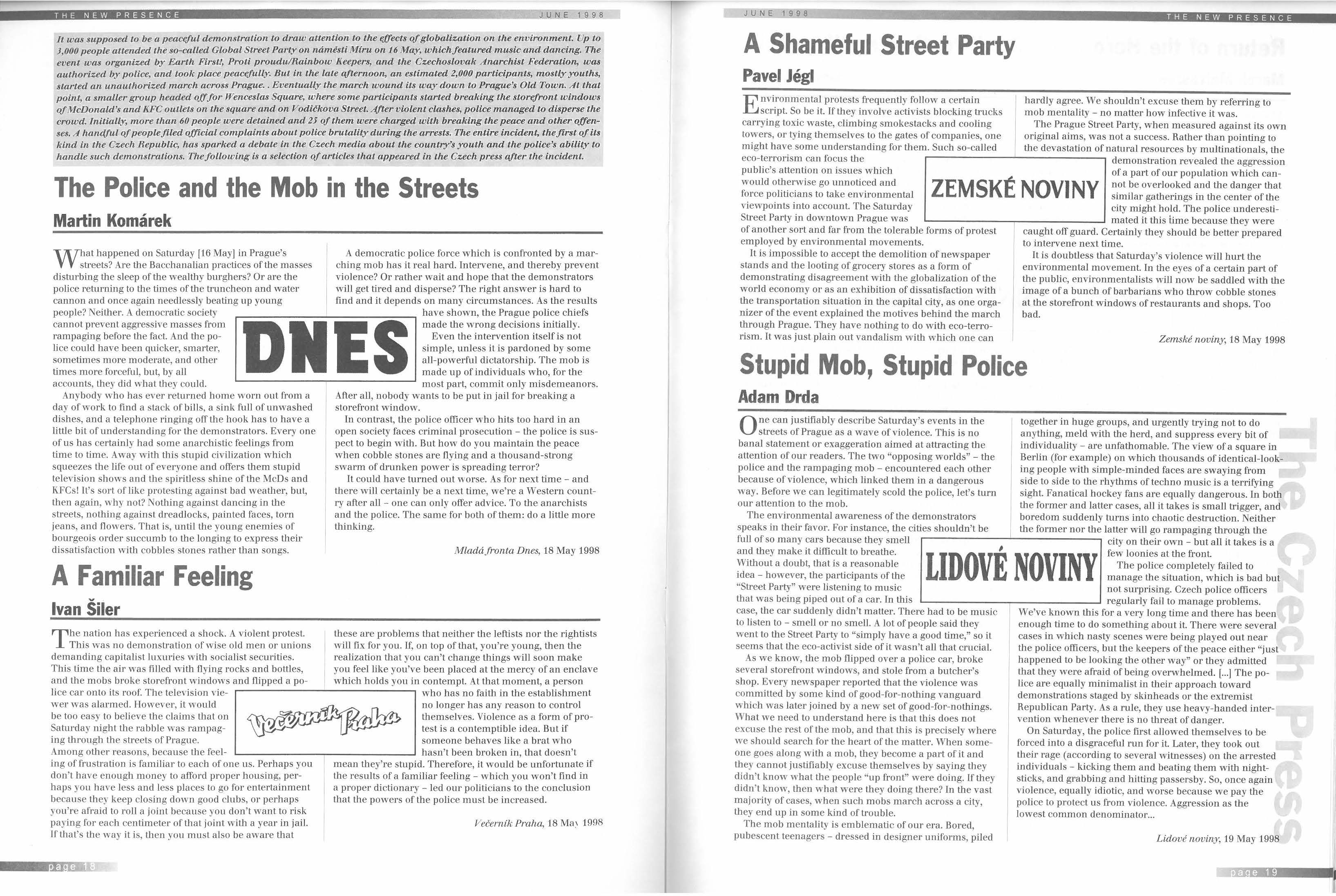
czech-cover.pix“It was supposed to be a peaceful demonstration to draw attention to the effects of globalization on the environment. Up to 3,000 people attended the so-called Global Street Party on náměstí Miru on 16 May [1998], which featured music and dancing. The event was organised by Earth First!, Proti proudu/Rainbow Keepers, and the Czechoslovak Anarchist Federation, was authorized by police, and took place peacefully. But in the later afternoon, an estimated 2,000 participants, mostly youths, started an unauthorized march across Prague. Eventually the march wound its way down to Prague’s Old Town. At that point, a smaller group headed off for Wenceslas Square, where some participants started breaking the storefront windows of McDonald’s and KFC outlets in the square and on Vodičkova Street. After violent clashes, the police managed to disperse the crowd. Initially, more than 60 people were detained and 25 of them were charged with breaking the peace and other offenses. A handful of people filed official complaints about police brutality during the arrests. The entire incident, the first of its kind in the Czech Republic, has sparked a debate in the Czech media about the country’s youth and the police’s ability to handle such demonstrations. The following is a selection of articles that appeared in the Czech press after the incident.”

czech street party.pix= = =

from The New Presence: The Prague Journal of Central European Affairs, June 1998, pages 18-19.

RADICAL ARCHIVES note: The 1998 Global Street Parties were Reclaim the Streets actions held around the world. They were one of a number of events that were direct precursors to the Seattle demonstrations against the WTO in November-December 1999. The Prague one is of note for both its size, location in Eastern Europe, and the fact that it was explicitly sponsored by a self-identified Anarchist federation along with semi-anarchist groups.

Notes From Some Portland Anarchists (1999)

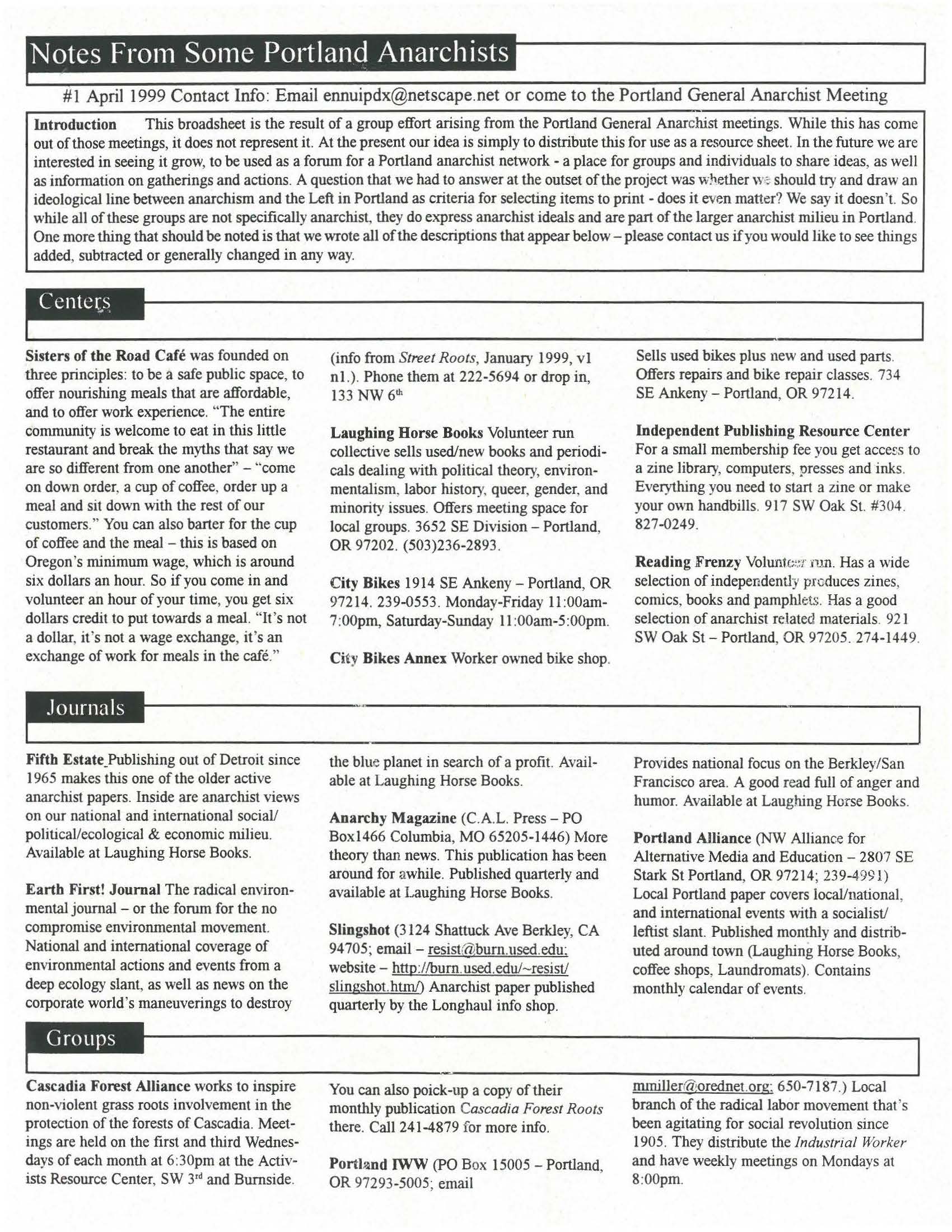
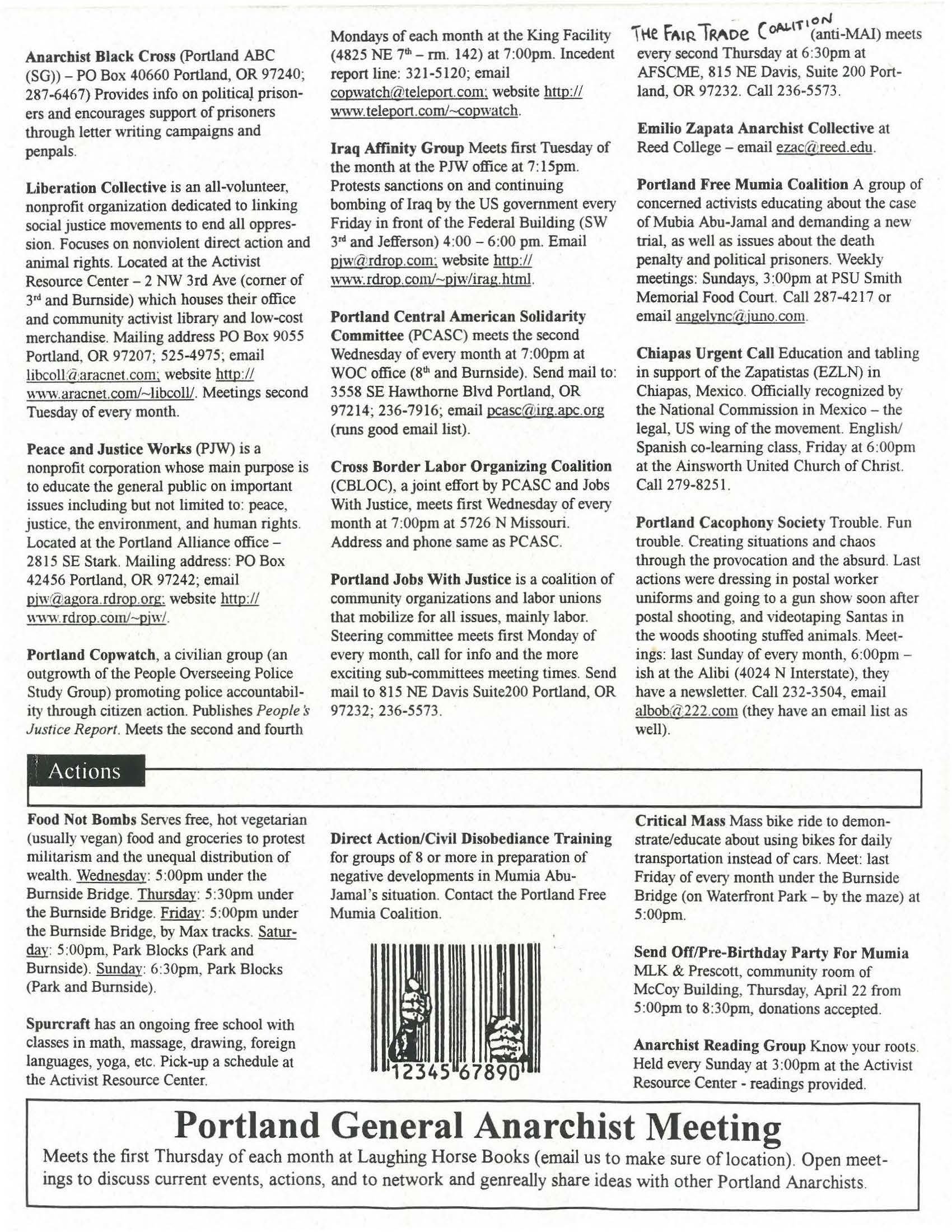
pdx @.1.imagepdx@.2.imageNotes From Some Portland Anarchists
#1 April 1999

Introduction

This broadsheet is the result of a group effort arising from the Portland General Anarchist meetings. While this has come out of those meetings, it does not represent it. At the present our idea is simply to distribute this for use as a resource sheet. In the future we are interested in seeing it grow, to be used as a forum for a Portland anarchist network – a place for groups and individuals to share ideas, as well as information on gatherings and actions. A question that we had to answer at the outset of the project was whether we should try and draw an ideological line between anarchism and the Left in Portland as criteria for selecting items to print – does it even matter? We say it doesn’t. So while all of these groups are not specifically anarchist, they do express anarchist ideals and are part of the larger anarchist milieu in Portland. One more thing that should be noted is that we wrote all of the descriptions that appear below-please contact us if you would like to see things added, subtracted or generally changed in any way.

Centers

Sisters of the Road Cafe was founded on three principles: to be a safe public space, to offer nourishing meals that are affordable, and to offer work experience. “The entire community is welcome to eat in this little restaurant and break the myths that say we are so different from one another” – “come on down order, a cup of coffee, order up a meal and sit down with the rest of our customers.” You can also barter for the cup of coffee and the meal – this is based on Oregon’s minimum wage, which is around six dollars an hour. So if you come in and volunteer an hour of your time, you get six dollars credit to put towards a meal. “It ‘s not a dollar, it’s not a wage exchange, it’s an exchange of work for meals in the cafe.” (info from Street Roots, January 1999, v 1, n 1). Phone them or drop in, 133 NW 6th.

Laughing Horse Books Volunteer run collective sells used/new books and periodicals dealing with political theory, environmentalism, labor history, queer, gender, and minority issues. Offers meeting space for local groups. 3652 SE Division – Portland, OR 97202.

City Bikes 1914 SE Ankeny – Portland, OR 97214.  Monday-Friday 11:00am- 7:00pm, Saturday-Sunday 11:00am-5:00pm.

City Bikes Annex Worker owned bike shop. Sells used bikes plus new and used parts. Offers repairs and bike repair classes. 734 SE Ankeny- Portland, OR 97214.

Independent Publishing Resource Center For a small membership fee you get access to a zine library, computers, presses and inks. Everything you need to start a zine or make your own handbills. 917 SW Oak St. #304.

Reading Frenzy Volunteer run. Has a wide selection of independently produced zines, comics, books and pamphlets. Has a good selection of anarchist related materials. 921 SW Oak St – Portland, OR 97205.

Journals

Fifth Estate Publishing out of Detroit since 1965 makes this one of the older active anarchist papers. Inside are anarchist views on our national and international social/political/ecological & economic milieu. Available at Laughing Horse Books.

Earth First! Journal The radical environmental journal – or the forum for the no compromise environmental movement. National and international coverage of environmental actions and events from a deep ecology slant, as well as news on the corporate world’s maneuverings to destroy the blue planet in search of a profit. Available at Laughing Horse Books.

Anarchy Magazine (C.A.L. Press – PO Box 466 Columbia, MO 65205-1446) More theory than news. This publication has been around for awhile. Published quarterly and available at Laughing Horse Books.

Slingshot (3124 Shattuck Ave Berkley, CA 94705;  website – http://burn.used.edu/~resistslingshot.html) Anarchist paper published quarterly by the Longhaul info shop. Provides national focus on the Berkley/San Francisco area. A good read full of anger and humor. Available at Laughing Horse Books.

Portland Alliance (NW Alliance for Alternative Media and Education – 2807 SE Stark St Portland, OR 97214) Local Portland paper covers local/national, and international events with a socialist/leftist slant. Published monthly and distributed around town (Laughing Horse Books, coffee shops, Laundromats). Contains monthly calendar of events.

Groups

Cascadia Forest Alliance works to inspire non-violent grass roots involvement in the protection of the forests of Cascadia. Meetings are held on the first and third Wednesdays of each month at 6:30pm at the Activists Resource Center, SW 3’d and Burnside. You can also pick-up a copy of their monthly publication Cascadia Forest Roots there.

Portland IWW (PO Box 15005 – Portland, OR 97293-5005) Local branch of the radical labor movement that’s been agitating for social revolution since 1905. They distribute the Industrial Worker and have weekly meetings on Mondays at 8:00pm.

Anarchist Black Cross (Portland ABC (SG)) – PO Box 40660 Portland, OR 97240; 287-6467) Provides info on political prisoners and encourages support of prisoners through letter writing campaigns and pen pals.

Liberation Collective is an all-volunteer, nonprofit organization dedicated to linking social justice movements to end all oppression. Focuses on nonviolent direct action and animal rights. Located at the Activist Resource Center- 2 NW 3rd Ave (corner of 3rd and Burnside) which houses their office and community activist library and low-cost merchandise. Mailing address PO Box 9055 Portland, OR 97207; website http://www.aracnet.com~libcoll/. Meetings second Tuesday of every month.

Peace and Justice Works (PJW) is a nonprofit corporation whose main purpose is to educate the general public on important issues including but not limited to: peace, justice, the environment, and human rights. Located at the Portland Alliance office – 2815 SE Stark. Mailing address: PO Box 42456 Portland, OR 97242; website http://www.rdrop.com/~pjw.

Portland Copwatch, a civilian group (an outgrowth of the People Overseeing Police Study Group) promoting police accountability through citizen action. Publishes People’s Justice Report. Meets the second and fourth Mondays of each month at the King Facility (4825 NE 7tt. – rm. 142) at 7:00pm. Incident report line: 321-5120; website http://www. teleport.com/~copwatch.

Iraq Affinity Group Meets first Tuesday of the month at the P JW office at 7: l 5pm. Protests sanctions on and continuing bombing of Iraq by the US government every Friday in front of the Federal Building (SW 3rd & and Jefferson) 4:00 – 6:00 pm. Website http://www.rdrop.com/~pjw/irag.html.

Portland Central American Solidarity Committee (PCASC) meets the second Wednesday of every month at 7:00pm at WOC office (8th and Burnside). Send mail to: 3558 SE Hawthorne Blvd Portland, OR 97214.

Cross Border Labor Organizing Coalition (CBLOC), a joint effort by PCASC and Jobs With Justice, meets first Wednesday of every month at 7:00pm at 5726 N Missouri. Address and phone same as PCASC.

Portland Jobs With Justice is a coalition of community organizations and labor unions that mobilize for all issues, mainly labor. Steering committee meets first Monday of every month, call for info and the more exciting sub-committees meeting times. Send mail to 815 NE Davis, Suite 200, Portland, OR 97232.

Fair Trade Coalition (anti-MAI) (anti-MAI) meets every second Thursday at 6:30pm at AFSCME, 815 NE Davis, Suite 200 Portland, OR 97232.

Emilio Zapata Anarchist Collective at Reed College – email [only]

Portland Free Mumia Coalition A group of concerned activists educating about the case of Mumia Abu-Jamal and demanding a new trial, as well as issues about the death penalty and political prisoners. Weekly meetings: Sundays, 3:00pm at PSU Smith Memorial Food Court.

Chiapas Urgent Call Education and tabling in support of the Zapatistas (EZLN) in Chiapas, Mexico. Officially recognized by the National Commission in Mexico – the legal, US wing of the movement. English/Spanish co-learning class, Friday at 6:00pm at the Ainsworth United Church of Christ.

Portland Cacophony Society Trouble. Fun trouble. Creating situations and chaos through the provocation and the absurd. Last actions were dressing in postal worker uniforms and going to a gun show soon after postal shooting, and videotaping Santas in the woods shooting stuffed animals. Meetings: last Sunday of every month, 6:00pm-ish at the Alibi (4024 N Interstate), they have a newsletter.

Actions

Food Not Bombs Serves free, hot vegetarian (usually vegan) food and groceries to protest militarism and the unequal distribution of wealth. Wednesday: 5:00pm under the Burnside Bridge. Thursday: 5:30pm under the Burnside Bridge. Friday: 5:00pm under the Burnside Bridge, by Max tracks. Saturday: 5:00pm, Park Blocks (Park and Burnside). Sunday: 6:30pm, Park Blocks (Park and Burnside).

Spurcraft has an ongoing free school with classes in math, massage, drawing, foreign languages, yoga, etc. Pick-up a schedule at the Activist Resource Center.

Direct Action/Civil Disobedience Training for groups of 8 or more in preparation of negative developments in Mumia Abu Jamal’s situation. Contact the Portland Free Mumia Coalition.

Critical Mass Mass bike ride to demonstrate/educate about using bikes for daily transportation instead of cars. Meet: last Friday of every month under the Burnside Bridge (on Waterfront Park – by the maze) at 5:00pm.

Send Off/Pre-Birthday Party For Mumia MLK & Prescott, community room of McCoy Building, Thursday, April 22 from 5:00pm to 8:30pm, donations accepted.

Anarchist Reading Group Know your roots. Held every Sunday at 3:00pm at the Activist Resource Center – readings provided.

Portland General Anarchist Meeting

Meets the first Thursday of each month at Laughing Horse Books (email us to make sure of location). Open meetings to discuss current events, actions, and to network and generally share ideas with other Portland Anarchists.

= = =

RADICAL ARCHIVES NOTE:

A snapshot of what was going on in Portland, Oregon directly before the anti-WTO demonstrations in Seattle, which launched the anti-globalization movement. About one-quarter of the blockade groups there came directly from the Portland scene. Despite the dishonest claims of certain academics, the milieu that created those demonstrations was theoretically self-conscious of its political choices, and did not valorize “direct democracy” as a central idea — as this snapshot shows.

R.J. Lambrose – “Chomsky Unplugged” (1996)

As recently as the 1980s, the farthest an academic could make it in the world of popular culture would have been a brief appearance on the Today show to flog a new book. But cultural studies has changed all that. Now that professors have been churning out books and articles about rap, Elvis, and Madonna, the bemused performers are beginning to scratch the occasional academic back, or better, blurb the occasional academic book. Consider, for example, the quotes on the back cover of Michael Eric Dyson’s recent Making Malcolm, from Oxford University Press. In addition to the more predictable endorsements from Cornel West, Angela Davis, Jesse Jackson, and Carol Moseley-Braun, we also hear from Chuck D of Public Enemy: “With the situation getting more hectic, the real troopers come far and few. And with misinformation spreading, it is a necessity to follow Michael Eric Dyson. He’s a bad brother. Check out his new book Making Malcolm by all means.”R-468022-1118177447.jpg

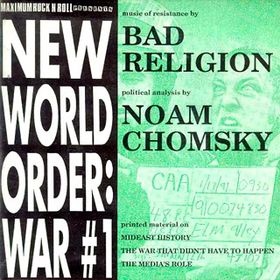
The rappers’ reverence for cultural studies scholars hardly comes as a big surprise; Dyson, after all, testified on behalf of rap music at a congressional hearing in 1994. More startling, however, was the recent report that MIT linguistics professor Noam Chomsky is a major fave with top rock musicians. Rock & Rap Confidential magazine describes Chomsky—the embodiment, we had always thought, of old-fashioned leftist rectitude—as “a quote machine with all the rockers.” Chomsky’s anarchism has also made him a hero to punkers: Bad Religion put an entire Chomsky lecture on the B-side of one of their seven inch singles. And Maximum Rock’n’Roll, a leading fanzine with a circulation of 10,000, reprints Chomsky’s speeches for its Generation X readership. Other tributes abound: In 1994 an Austin-based band called The Horsies did a single they titled “Noam Chomsky.” U2’s Bono has called Chomsky a “rebel without a pause” and “the Elvis of academia.” And Peter Garrett, shaven-headed lead singer for the Australian rockers Midnight Oil, launched into a song called “My Country” at a Boston-area concert by invoking the following trinity: “Thoreau, Noam Chomsky, and…the Hulk!”

The Chomsky connection appears all the more remarkable when one learns more about the linguist’s own rather unusual relationship to mass culture. Because Chomsky can speed-read any document, he apparently grows impatient with the slowness of the fast-forward mode on a VCR. A friend who sought out a Chomsky blurb for a radical video was told by a go-between that the professor might consider wiring an endorsement after he read the script, but he refuses to screen films. He even declined to watch Manufacturing Consent, the documentary about him, and instead insisted the producers give him a transcript. (Unfortunately, he’ll never see Pulp Diction, Quentin Tarantino’s soon-to-be-released homage to Chomsky’s 1965 best-seller, Aspects of the Theory of Syntax.)

All of this raises the intriguing question of whether Chomsky has vetted the rock encomiums to his work. If he has, we would guess that this means that there are now two people who actually read rock lyrics: Noam Chomsky and Tipper Gore.

= = =

Lingua Franca: The Review of Academic Life, May/June 1996, page 10.

Murray Bookchin, in praise of hippie “Youth Culture” and “life-style” (1970)

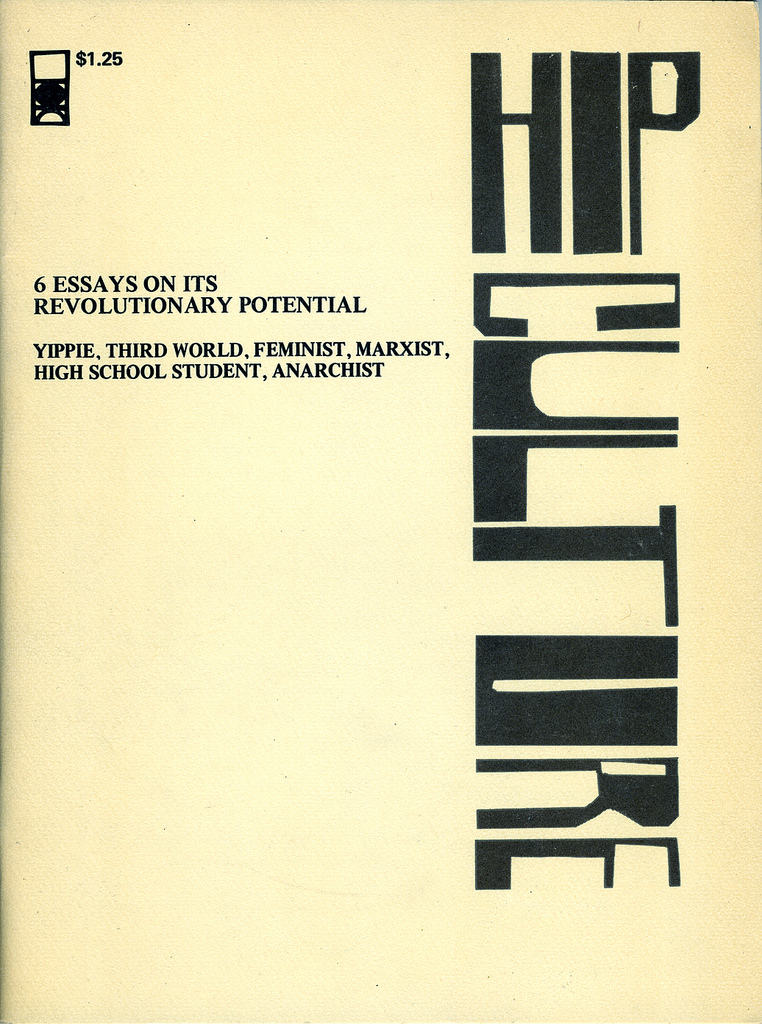
hip cultureWe must break away from the traditional Marxian outlook, with its limited interpretation of the class struggle, of the motive forces for revolution, and of the revolutionary process, to understand the revolutionary implications of the Youth Culture. …

Nourished by the relative abundance produced by a new, potentially revolutionary technology, young people began to develop a post-scarcity outlook—however confused, rudimentary, and intuitive its forms—that has been slowly eroding the ages-old psychic complicity between oppressor and oppressed—a complicity that had made hierarchy, domination, patriarchy, renunciation, and guilt a condition of the human spirit, not only the institutional and psychological instruments of class-rule and the state. It is difficult to convey what a historic breach this emerging Youth Culture produced in the social desert that was once America. …

The explosion of the Youth Culture shattered this decade-long edifice and its mythology [i.e., the social conformity of the 1950s—RA] to their very foundations and, almost alone, is responsible for the massive alienation that permeates American youth today. For the first time in the history of this country, every verity not only of bourgeois society but of hierarchical society as a whole is now in question. Mere critique of the kind so endearing to the orthodox Marxists might have produced nothing more than a sense of cynical engagement, so similar to Salinger’s young hero in “Catcher in the Rye.” But the Youth Culture went further—into the realm of positive, utopian alternatives. In its demands for tribalism, free sexuality, community, mutual aid, ecstatic experience, and a balanced ecology, the Youth Culture prefigures, however inchoately, a joyous communist and classless society, freed of the trammels of hierarchy and domination, a society that would transcend the historic splits between town and country, individual and society, and mind and body. Drawing from early rock-and-roll music, from the beat movement, the civil rights struggles, the peace movement, and even from the naturalism of neo-Taoist and neo-Buddhist cults (however unsavory they may be to the “Left”), the Youth Culture has pieced together a life-style that is aimed at the internal system of domination that hierarchical society so viciously uses to bring the individual into partnership with his/her own enslavement. …

The Youth Culture has spread from the Haight-Eastside axis into the most remote towns of the United States, areas that no radical movement in the past could have hoped to colonize, disrupting all the time-honored ties, institutions, and values of these communities. Owing to its increasing influence on working class youth, the culture has now begun to rework the labor reserves of bourgeois society itself—the reservoirs from which it recruits its industrial proletariat and soldiers—until recently, perhaps the most intractable element to radical ideas and values.

= = =

Murray Bookchin, “The Youth Culture: An Anarcho-Communist View,” in Hip Culture: 6 Essays on Its Revolutionary Potential; Yippie, Third World, Feminist, Marxist, High School Student, Anarchist (New York: Times Change Press, 1970), 54, 55, 58–59, 60.

RADICAL ARCHIVES NOTE: Bookchin became quite well-known late in life for his scathing attacks on a bogeyman he called “lifestylism”—a ridiculous strawman composed of wildly disparate parts of the early 1990s anarchist milieu, united mostly by the fact that he didn’t like them. But Bookchin’s early, favorable view of the 1960s counterculture made a coherent argument in favor of its potential, and, if it had a failure, it was that it was too uncritical in its assessment.

When Taco Bell Promoted Fanzines (1993)

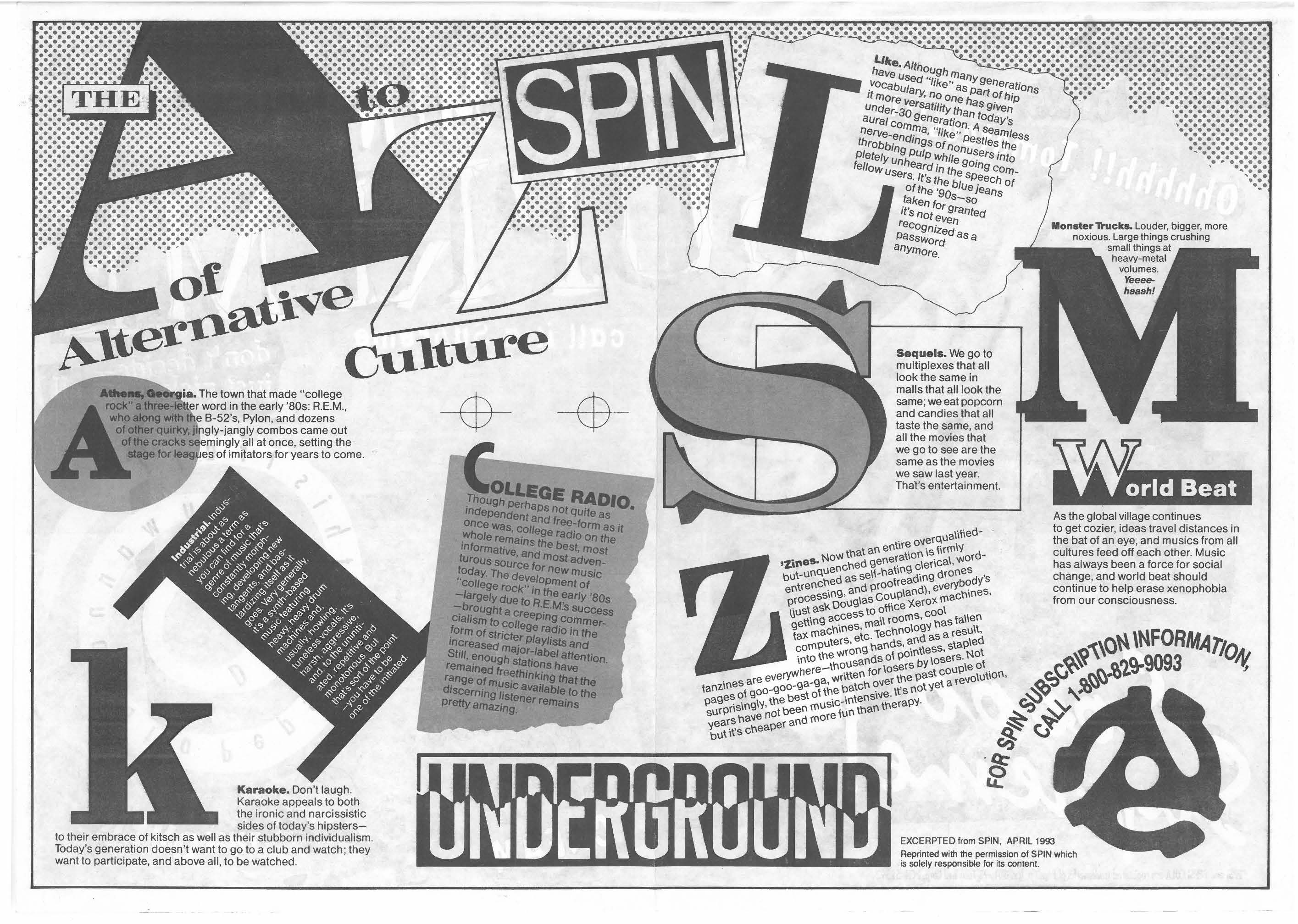
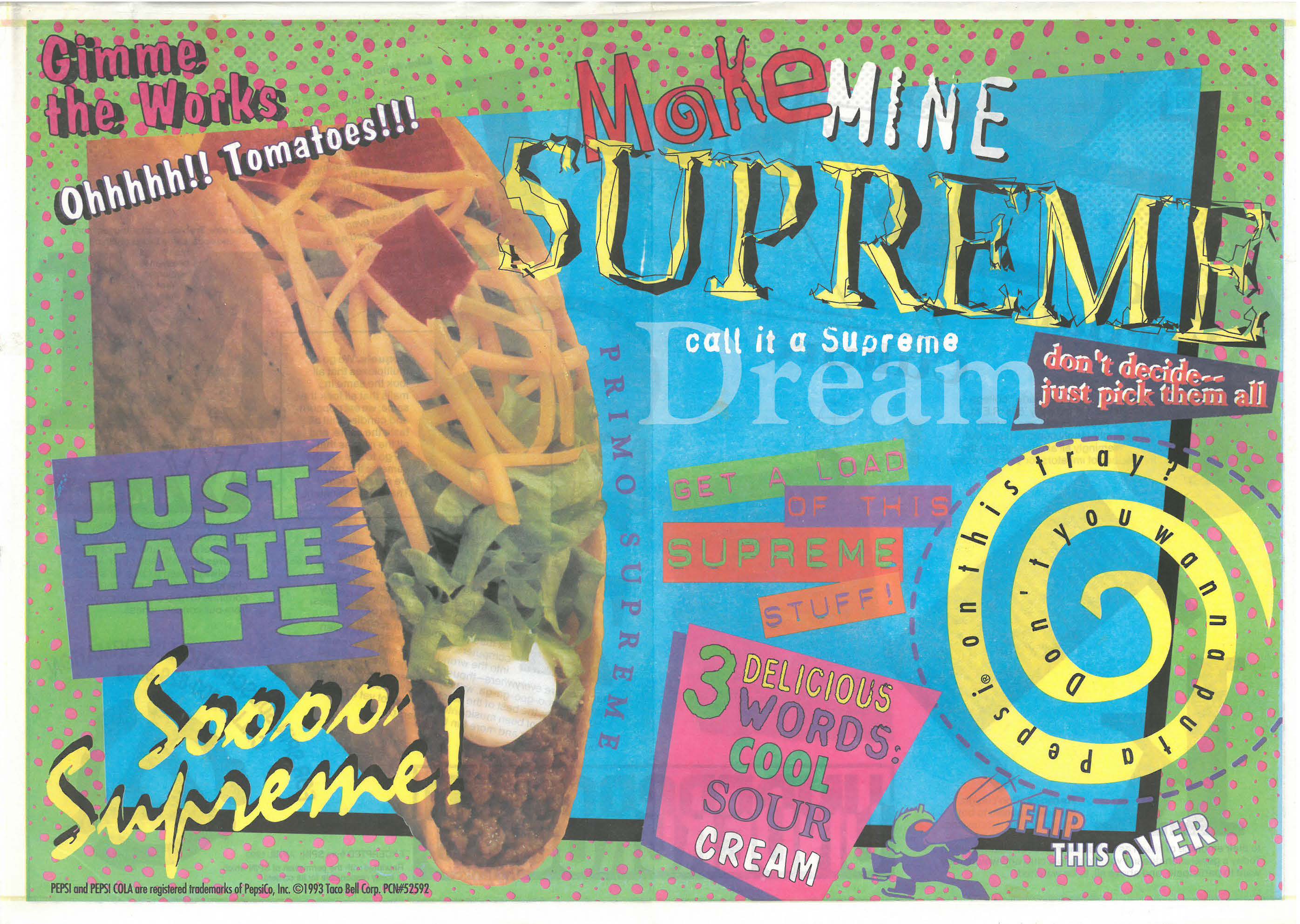
I’m not sure if it’s easier or harder to believe today, but in 1993 the grunge-driven corporate cooptation of the 1980s underground music scene – now watered down and repackaged as “alternative” – had reached such a level that even fast food was getting into it. Taco Bell issued a paper placemat, apparently based on a piece from Spin, so their customers could familiarize themselves with important aspects of the “alternative” culture, including fanzines.

‘Zines. Now that an entire overqualified-but-unquenched generation is firmly entrenched as self-hating clerical, word-processing, and proofreading drones (just ask Douglas Coupland), everybody’s getting access to office Xerox machines, fax machines, mail rooms, cool computers, etc. Technology has fallen into the wrong hands, and as a result, fanzines are everywhere – thousands of pointless, stapled pages of goo-goo-ga, written for losers by losers. Nor surprisingly, the best of the batch over the past couple years have not been music-intensive. It’s not yet a revolution, but it’s cheaper and more fun than therapy.

It was strange days, indeed.

Taco Bell - back

Taco Bell - front

Ron Asheton on New Order and Rock’n’Roll Nazi Chic

RON ASHETON [ex-Stooges guitarist, 1975]: I’d made contact in L.A. with Dennis Thompson of the MC5 and we put New Order together. I found a backer and guys started filtering in and we found a place to practice. The downside was the trend of music was changing so dramatically that we got caught in the middle of a shit storm. It was disco time, and people weren’t going for the hard-rock shit anymore, so it was like, “Uh-oh, screwed again.” Plus, we’d play gigs in front of my big swastika flag. I wasn’t a Nazi, the flag was just part of my collection . . . I had Jewish girlfriends and black buddies. It had nothing to do with promoting Nazism or condoning it. I just enjoyed flash uniforms. But other people freaked–they were like, “It’s fascist.” New Order didn’t mean to put out a Nazi vibe at all. I knew it was probably a bad idea … how not to get a record deal in an industry run by Jewish people. “New Order? Let’s sign ’em up right now.”

= = =

from Marc Spitz & Brendan Mullen, We Got the Neutron Bomb: The Untold Story of L.A. Punk (New York: Three Rivers Press, 2001), pp. 30-31.

RADICAL ARCHIVES NOTE: Nazi chic probably has a long history in rock’n’roll, especially via biker culture, but this is the first description of band I’ve run across that seemed to have intentionally presented themselves as a Nazi rock group, even if it was cartoonish play. [later RA note: I have since found at least one earlier band.] There is no reason to think that New Order was meant in an ideological way; Asheton’s Nazi fetish is well-known. But the circulation of Nazi imagery and themes in rock’n’roll had gone on at least for a good chunk of the 1970s — so when actual, ideologically neo-Nazi punk bands emerged at the end of the decade, was it really a surprise?

Not one to let sleeping dogs lie, after New Order, Asheton played in a band called New Race.

Interview with Nervous Gender (2015)

Formed in 1978, Nervous Gender was a pioneering queer synth-punk band from Los Angeles. They’re easily identifiable by their aggressive punk sound played on all synths, as well as transgressive sexual subject matter and visual style–the latter which presaged the goth scene. While many post-punk and new wave bands adopted synths soon after, almost none continued in the punk vein that Nervous Gender and the Screamers had originally explored.

The band went through a number of permutations before breaking up after the death of founding member Gerardo Velazquez in 1992. In 2007 the band reformed with old and new members, and I caught up with them in December 2014 after their first-ever show in New York City. We talked about the evolution of the band over the years, as well as former members like Phranc; their relation to the LA “art-damaged” scene as well as to No Wave, industrial, and goth/death rock; the question of fascism, homophobia, and what it meant to be queer in the ’70s LA punk scene; and their mention on the 700 Club.

They have recently remixed their 1981 studio album, and released three live recordings, documenting  different periods of the band, including a 1979 show with Phranc and a 1986 show with Wall of Voodoo members. These can be purchased via their website http://nervousgender.com.

DISCOGRAPHY

Live at Target (Subterranean Records, 1980), compilation with Factrix, uns, and Flipper
Music from Hell (Subterranean Records, 1981)
Live at the Hong Kong Cafe 1979 (Nervous Gender Archives, 2006)
Live at the Whiskey A Go-Go 1980 (Nervous Gender Archives, 2006)
Live at the Roxy 1986 (Nervous Gender Archives, 2006)
Music From Hell, 2009 Remixed / Remastered (Nervous Gender Archives, 2009)
“Gestalt” / “Green Tile Floors” (Test Tube Records, 2011), 7″

This is an edited version of a December 7, 2014 interview at the Box Hotel in Greenpoint, Brooklyn.

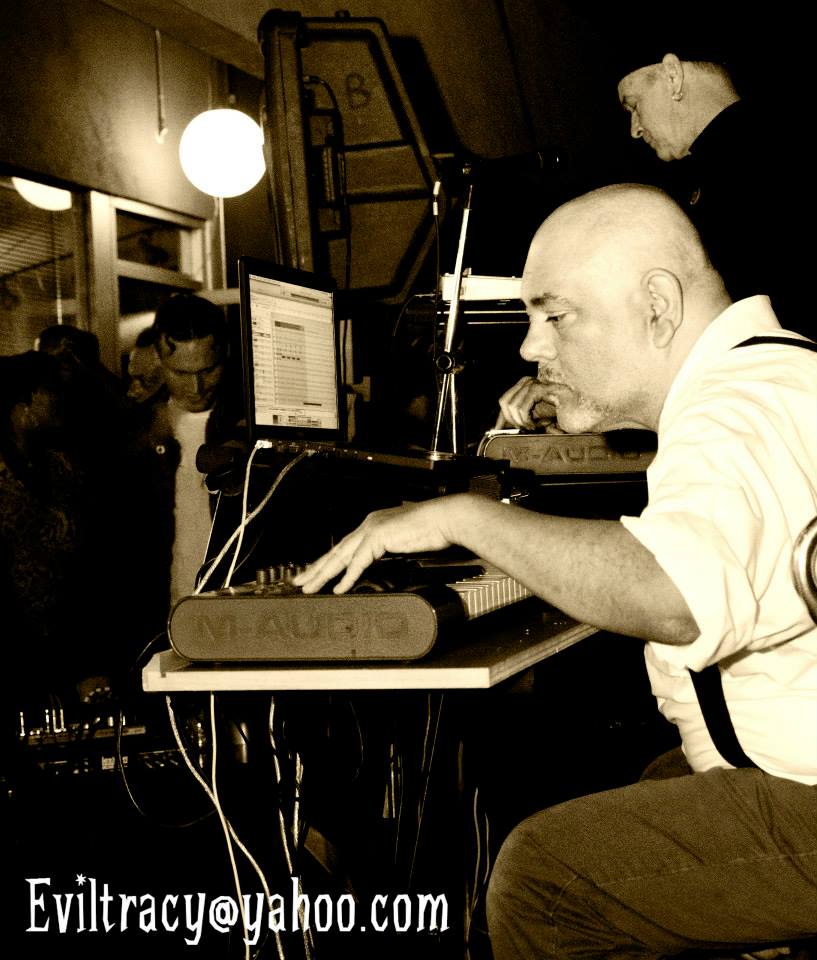
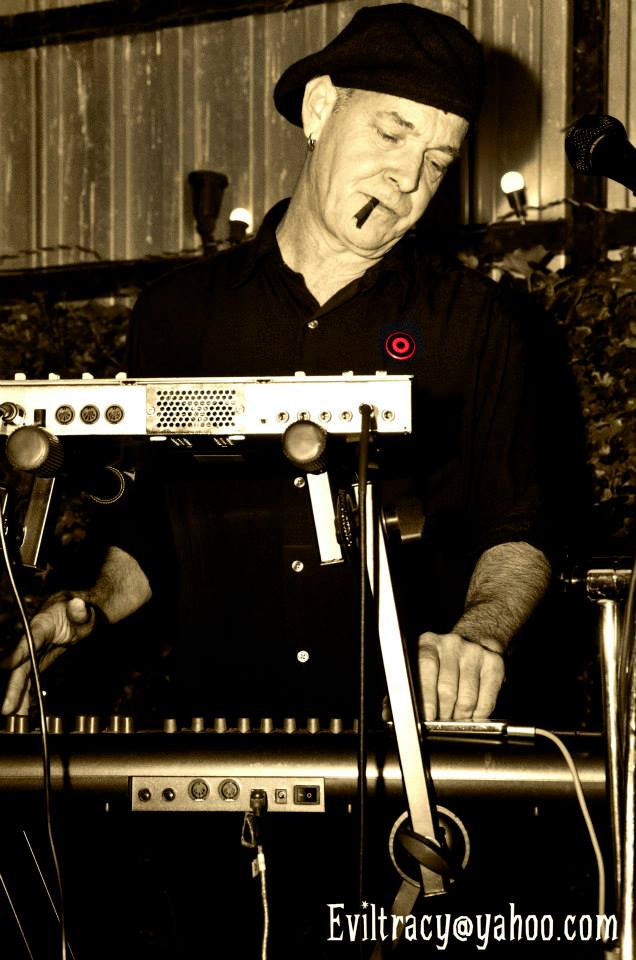
Band photos are from Evil Tracey. Please contact her for reprint permission: eviltracey at yahoo dot com.

http://www.youtube.com/watch?v=pWYKeN_wBK0

SPENCER SUNSHINE: So I’m in Brooklyn with Nervous Gender. What’s the name of everyone in the band today and what’s everyone’s history with the band?

Edward Stapleton

Edward Stapleton

EDWARD STAPLETON: Me and Michael Ochoa are the original members. Joe and Tammy were friends from the very beginning, but they weren’t in the band. [Turns to Joe and Michael] How many years ago did you guys start it up again?

JOE ZINNATO: ‘89? I’ve been in the band since ’89, Tammy’s been in the band about…

TAMMY FRASER: I was just the manager and then I became the fill in…

JOE: Like two years ago?

Michael Ochoa

Michael Ochoa

MICHAEL OCHOA: I had a stroke four years ago.

TAMMY: Was it four?

MICHAEL: Yeah.

JOE: So she was in the band for four years

MICHAEL: So I wasn’t able to play, and they had a show, so they got Tammy sucked in.

Joe Zinnato

Joe Zinnato

JOE: Yeah and Tammy actually knows how to play keyboards…

MICHAEL: …which we don’t…

JOE: …and read music, so it was kinda no-brainer. We had a show lined up, so she became our pinch hitter.

SPENCER: So the band has an odd history. The original form was between ‘79 to ‘89, and then Gerardo—this is what I read online—had a trio from ‘90 to ‘92.

Tammy Fraser

Tammy Fraser

TAMMY: It was Joe, Michael and Gerardo.

JOE: The original lineup was from like ‘78 to ‘79. These two, and Phranc…

MICHAEL: …the lesbian folk-singer…

JOE: …and Gerardo. And Phranc left, and there was also a drummer, Don Bolles. That was the original lineup, which lasted about a year. And then after that, people rotated in and out. It was never—except for the first year—it was never a consistent lineup.

SPENCER: So that was one of my questions, there was so many members of the band, like Paul Roesseler, most of Wall of Voodoo, and an eight-and-a-half year-old boy named Sven, sometimes I wonder about bands—was it more like an arts collective then if people are just rotating in and out, or did it have the consistency?

Continue reading ‘Interview with Nervous Gender (2015)’