Archive for the 'Antisemitism' Category

Boyd Rice on Tom Metzger’s “Race and Reason” (1986)

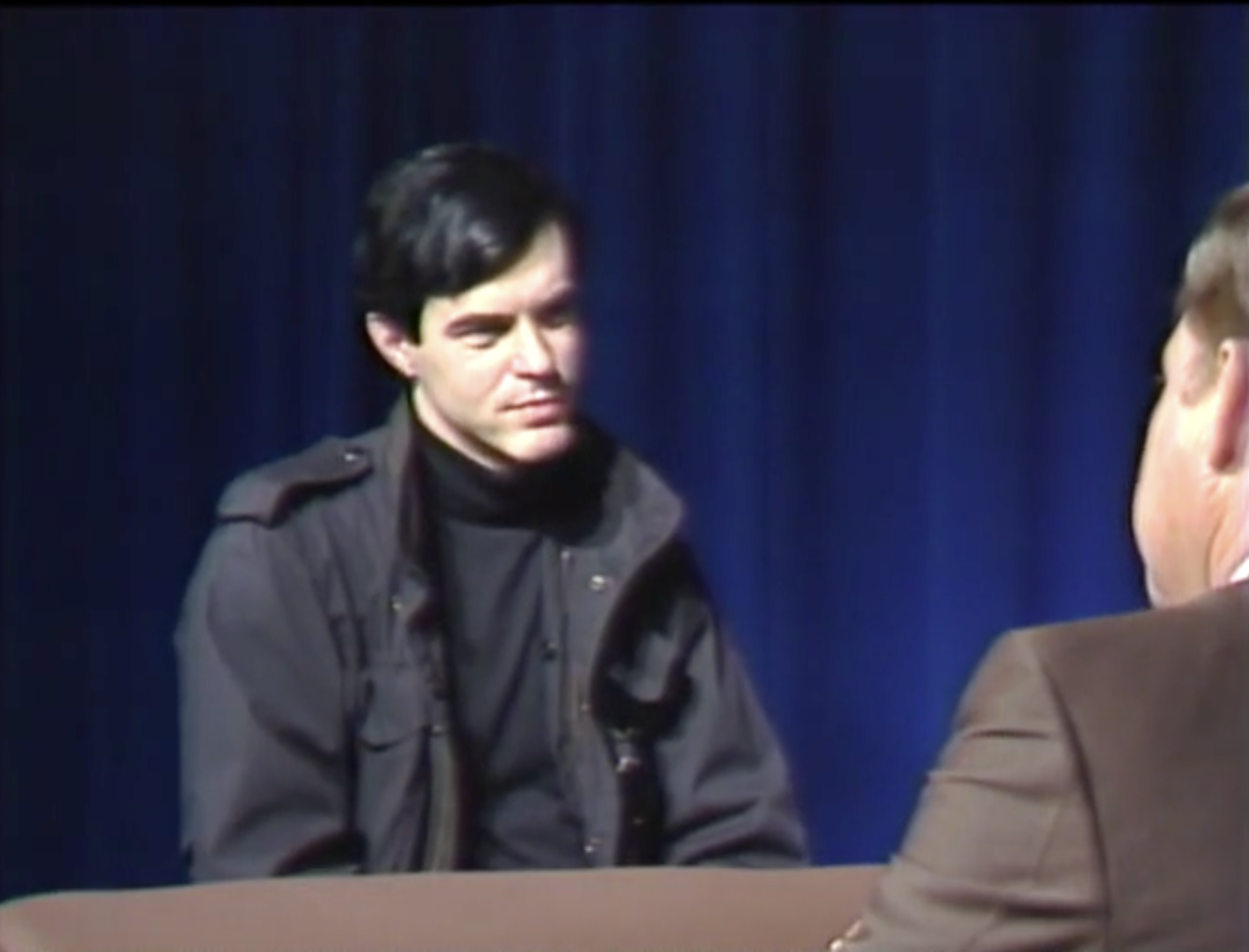
In 1986, industrial musician Boyd Rice appeared on Tom Metzger‘s talk show Race and Reason. Metzger, leader of the White Aryan Resistance, was one of most important—and violent—leaders of the White Supremacist movement in the 1980s and ’90s. After this video resurfaced in the late ’00s, it has been consistently forced off sites like YouTube, and so we have made a transcript. To date, Rice has never addressed this video.
[beginning title card]

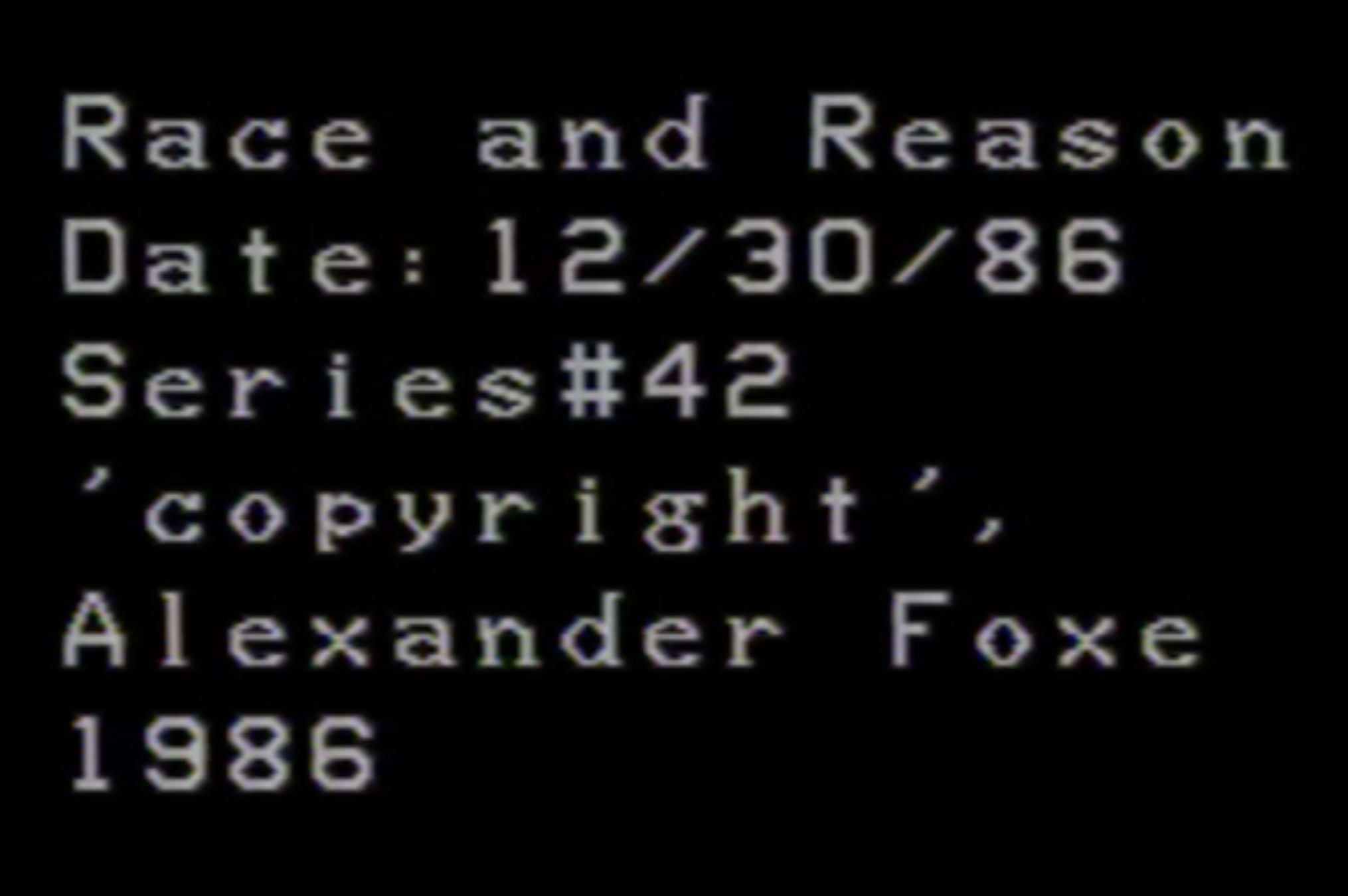
Race and Reason
Date: 12/30/86
Series #42
‘copyright’ Alexander Foxe 1986

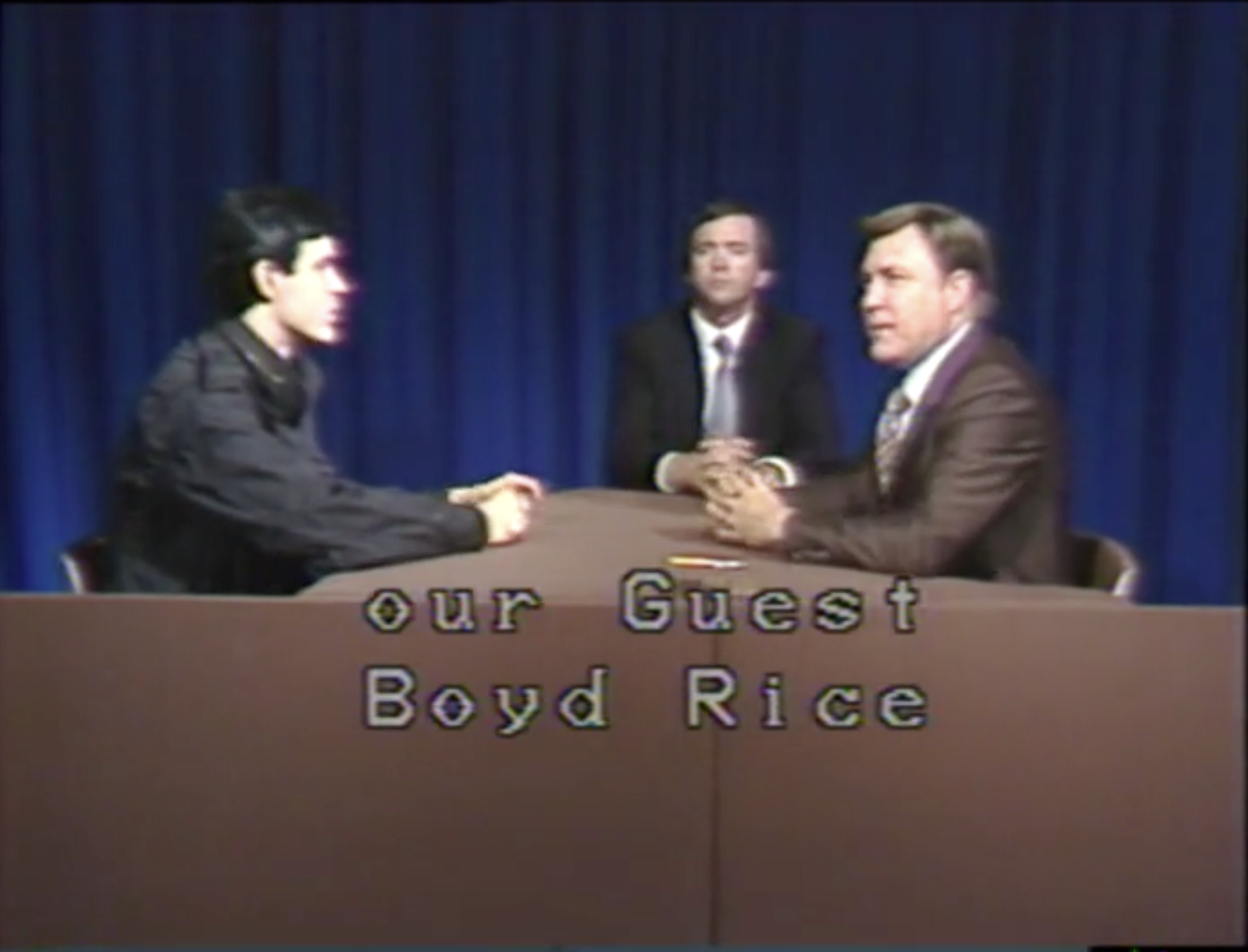
Host
Tom Metzger

Co host
Tom Padgett

our Guest
Boyd Rice

Metzger
Hi, I’m Tom Metzger, your host for Race and Reason. Race and Reason—dedicated to real free speech, that small island of free speech in a sea of controlled and managed news. And we’ve got a show for you—about what, Tom?

Padgett
Well, let me, let me introduce Mr. Boyd Rice on my right, who is somewhat of a cult figure in the racial underground musical world. And Mr. Rice has also in quite a few other different things, which we’ll be trying to cover in the next half hour. Mr. Rice, welcome to the show.

Rice
Nice to be here.

Metzger
Nice to have you with us. What is this underground racial music? See, I’m forty-eight, maybe I’m not supposed to know about this. What’s happening, Boyd?

Rice
Well, first I started out being just a member of the music underground. I did avant-garde music for years and years, then traveled around and gave concerts and met people all over who were doing, you know… [had] come to a similar place as me, who were doing similar things about, you know, we didn’t know each other. And we just sort of arrived at the same place somehow.

Padgett
Tom says he saw your act here in LA or someplace.

Padgett
This was about six, six years, six-and-a-half years ago.

Rice
Yeah. Well…

Metzger
Now I get the impression—or you said something about—you use soundtracks and various things. It sounds like very different than what we’re used to.

Rice
Yeah, yeah. I think most people who make music are making music for, for the, for the mind, if you understand what I mean. I’m making music more for the brain. It’s like the mind is sort of human, humanized, and sort of has to do with society and the culture out there. But the culture that really doesn’t have anything to do with what, what I am or what you are.

Metzger
Is it more for like, just an emotional need? Or is it…

Rice
It’s, I think it’s something you listen to it, and it gets your mind to start thinking in a different way. Because it causes you to experience things that ordinarily I don’t think you’d experience.

Metzger
This is not necessarily connected to like drug cults or anything like that, right?

Rice
Drug cults? No. You’re talking about like trance music?

Metzger
In other words, you’re trying to get people on their own natural high.

Rice
Yeah, yeah, basically.

Metzger 
Would you say that type of music is uplifting?

Rice
I find it very much so but, but for some people, people who are resistant to it, they find it you know, painful and horrible and they think I’m just trying to torture them with sound.

Metzger
Now I understand you’re quite well known in Europe and in England, maybe better than here. There’s a lot of Americans seem to end up with that type of a hand. I hear you’ve cut records for…

Rice
yeah, for years.

Metzger
and you own, had record company and…

Rice
I don’t own it. I’m signed to a record company in England. It’s like this major independent label called Mute.

Metgzer
So you’re probably even more well-known over there than you are here.

Rice
Yeah.

Padgett
Well, don’t you feel Europeans are more receptive to different types of music. Seems like a lot of Americans are in a rut with Top 40 or the same rock and roll that they heard ten years ago. It’s like they just can’t seem to break out of that and listen to anything new. Europe, Europeans do seem… the time I spent in Europe, they seem far more receptive than Americans do.

Metzger
Well, what’s the evolution of this underground music into the more, say, white racially oriented music? How did this evolve? You probably would be someone who could really clear that up.

Rice
Well, I think it came as sort of chaos of like… I was basically I was on the fringes of the punk rock scene, though I never considered myself part of it. And that sort of came about just naturally as all these people were dissatisfied with what was going on and they, they realized all the values they bought into are just garbage and didn’t have any sort of any function in their life, and they just wanted to throw all that off. And in the process of throwing it off, you know, most of them just just thought of a freedom sort of unfettered individualism, and then they’d get to a certain point, and they’d realize they’re going through all these motions, but they really weren’t being any more free. And so from that point of like throwing off all the values, I think that you have to come back to something, something organic.

Metzger
Some type of discipline?

Rice
Yeah, some type of discipline or, you know, you get back to this biological knowledge of what you are and what nature is and where your place is, and so forth.

Metzger
You know a lot of these racialist-type singers and bands and Europe and Britain. Could you mention a few that… I know that you, you know the skinheads, and you’ve mentioned some others.

Rice
Yeah, there’s some there’s a guy I know named David Tibet who has a band called Current 93, who’s moving more and more towards racialist stuff. And he’s friends with some people called Death in June, who’re very racialist oriented. And we were… they’re actually, they’re… Death in June is quite popular now. And there’s another electronic band called Above the Ruins. Which, there’s a guy in it who is in Skrewdriver—that’s a British skinhead band.

Metzger
Now is that group more like National Socialist oriented? Or fascists, or what?

Rice
Which group?

Metzger
Well, the last group above.

Rice
Death in June? Oh, Above the Ruins?

Metzger
Above the Ruins.

Rice
I haven’t really heard About the Ruins yet, I’ve just heard of them. But I know, it’s, there’s one guy from Death in June and one guy from Skrewdriver, so I assume it’s…

Padgett
Well, I’d have to interject that electronic music is very white, just by it’s, by it’s very nature. You don’t see too many non-whites listening to that kind of stuff. It just seems intrinsically white to me.

Metzger
Well, our producer here has been into electronic music for a long time, Dave, Dave Wiley. And I don’t think it plays on the same wavelength as a lot of the minorities. That’s my opinion, but I’m surely not a, an expert on this.

Rice
Yeah, yeah, that’s what I feel, too. In fact, people in the press this, this music I do, the press dubbed it “industrial music” after this one band that called themselves, you know, said that what they were doing was industrial music. And it had been said that this was the first white music, you know, come out and hundreds and hundreds of years. Because a lot of the popular music has been influenced, you know, black influence—Little Richard and so on.

Padgett
Exactly. Well, this is something that’s downplayed. The media likes to characterize us all as being one people and one mass, but seems like a lot of rock concerts are the most segregated thing since a Klan rally?

Metzger
I would I would think so. Now, I haven’t been to many, but I’m waiting to be invited. /laughs/

Rice
Well I haven’t been to any rock concert in years, you know?

Metzger
Yeah. Well, rock concerts, though. From what I can gather so many of are so full of drugs and stuff, and it’s gets pretty bad. But I, but there seems to be a difference between that and what the skinheads are promoting and people like that, or at least the racially conscious.

Padgett
The point is, we all don’t like the same music. All races don’t like the same music, at least from what I can see.

Metzger
Another question I’d have with like, in Britain, can you say things in music that you go to jail for if you print or say in a speech? Is this a way around…

Rice
I think you can say it in music in a different way, because music, music can speak to the soul, and you can say things through it, that you wouldn’t be able to just come out and say. Or if you said it to somebody, they could understand it intellectually, but they wouldn’t really know it. I mean, you have to sort of experience something to really know it.

Metzger
So whereas modern music has been pretty much propaganda instrument of Jewish interests and, and black, soul and so forth, you see emerging a new propaganda art form for for white Aryans.

Rice
Yeah, yeah, I think so.

Metzger
Now, it seems that a lot of the music I’ve heard like from the skinheads, was this really repressed, suppressed anger at what the system is doing to the youth of Britain.

Rice
Uh huh.

Metzger
That comes right through and like I’ve asked before, why has that not broken through yet? I mean, I… 25% unemployment and this rage that’s building—why hasn’t it spilled over really into the streets? What keeps England from blowing sky high?

Rice
I think just, just little handouts everybody gets from mommy over there. You know, it’s the whole country is this matriarchal place where they have this, Margaret Thatcher, and they have the queen and it’s like, it’s like their mommy giving them money.
Metzger
The dole.

Rice
The dole. Yeah.

Metzger
That seemed to be what I got from our English friends who came over here. And they seem to be still hung up a lot on the Queen and things like that.

Rice
It’s ridiculous, you wouldn’t even believe it. Like over there you can even be put in jail if you put a stamp on upside down, because the stamps will have the picture of the Queen and that’s like, blasphemy or something like that. There’s actually some charge against it. You can be jailed for that.

Padgett
So when the Sex Pistols came out with that song, “God Save the Queen, She ain’t no human being,” I guess that was quite a shock to the British people then.

Rice
Yeah.

Metzger
I noticed also that there’s such a super strong streak of ultra-nationalism in Britain. Yet that, uh, there are so many of the youth are really prepared to march out and do another, like the Falklands or something. These idiotic military ventures that just get Aryan people killed, when their big problems right there in Britain—the same way our problem is right here in United States, not in Central America. It is, you know, strange…

Rice
It’s like, you know, yeah..

Metzger
…it’s strange. It’s hard to figure that the reasoning and the rationale doesn’t sound correct to me. I mean, if you’re 25% of the young people out of work, you gotta blame somebody besides the Argentines? I mean, you got to start putting it, putting it where it’s at, and the fat cats in the corporates in Britain, don’t you?

Rice
Yeah, but that’s, that’s why I have those little things to draw people’s attention over, you know, it’s like, like the Manson trial or something—where everybody’s like, pissed off this one guy, “He went and murdered six people!” And you know, it’s to draw their attention away from the Vietnam War, and all their brothers and sisters that are over there getting killed every day. It’s like they had it like the football scores up on TV.

Metzger
In other words, if you have a license to kill, it’s okay.

Rice
Yeah…

Metzger
If you’re in the government, you have a license to kill millions. But if you’re not licensed…

Rice
if you’re not licensed, then they focus all the attention on this one person, you know, so you don’t…

Metzger
Yes. Now, you mentioned earlier…

Rice
…get your attention off where it should be…

Metzger
…that you tended to be, in a broad sense, pagan and Odinist and like that. Would you explain that a little bit to our audience?

Rice
hmmmm..

Metzger
Just from your own point of view.

Rice
/softly/ from my point of view,

Meztger
Well, not from mine! /laughs/

Rice
OK, well, let’s see…

Metzger
Well, like the Odinists, see we’ve had Odinists on, and Tom’s been with the Odinists for a long time, sort of a Viking-type religion and…

Rice
Yeah, I think it’s a more natural type. It’s not, not so much a religion—well, it is a religion, it’s a spiritual thing. But it’s, it’s something that I think is organic and comes from within…

Padgett
Almost like all music, it springs from the soul, it’s natural and native to us.

Rice
Yeah.

Padgett
And music’s a part of culture, so is religion.

Metzger
Well, isn’t this evolving in this music? What’s it called, neo-pagan type—in a good sense, not being run by a priest craft and so forth?

Rice
Yeah, exactly. I think it’s something that the more relates to, biologically, to what what we are, what I am. And those are the things that satisfy me the most, the things that come from within, you know. I’m always looking for… for a lot of people, I think a lot, a lot of people are looking for answers outside of themselves. And I think all the answers are within yourself.

Metzger
Well, what are you going to do to get the ball rolling more in this country? We’ve had skinheads on the show, and they’re sure out there doing their share, and seem like they fit in with just about any white racialist group that had much sense. What’s going to get this moving, what’s going to get this type of music—that appears to, you know, be attractive to white youth—moving in this country? You know, the major, the major record companies are not going to beat a path to your door, right?

Rice
Yeah, that’s for sure.

Padgett
That’s, I think, the understatement of the show.

Rice
But I think this music appeals to certain core of people. Like, there are people everywhere, who are, sort of, feel not a part of everything else that’s going on around them. And people like them don’t have any music. And this is like music for them. I’m sort of like doing something for myself. I… that’s what what started me into music. I was just completely disenchanted with everything there was to listen to, because it was just, you know, it’s just stuff that programmed people to be weak and cowardly. There’s no good, there’s no values you can look up to in any of the music that’s on the radio today. There’s no, you know, positive role. You know, male role models in the rock music today…

Padgett
I think a lot of people don’t even consciously listen to the music that’s on the Top 40—it’s just something that’s on, and it’s just noise and, and whatever.

Rice
Yeah, that’s the worst part. Because if you don’t consciously listen to it, it just flows right into your subconscious mind. You just, you know, affects all your behavior and it really dictates…

Padgett
Very, very subtle, wouldn’t you agree…very, very subliminal, very subtle, very…

Rice
Yeah, yeah, completely subliminal. But I think even the people who are making this music aren’t even conscious of it. Because they’ve grown up with these, with these pitiful liberal humanist values. And then, you know, comes time for them to do what they think is expressing themselves, and they just reiterate the same stuff that’s been fed into them.

Metzger
Isn’t it interesting when you listen to people being interviewed around the country how they all begin to use the same words? And I can’t think of them all right now because I try to forget them. It’s, it’s like, listen[ing] to the same person, whether you’re in Illinois or California.

Rice
It’s like whenever you read Mein Kampf referred to in print, they always use the exact—there’s like several words they always refer to. They call it turgid, turgid prose and incoherent, and stuff. And it’s like, the exact same words wherever you see it mentioned in print. And it’s like, they all got it from the same source… was like, just meant to discourage people from ever reading that because when you read it, you know, it’s the exact opposite.

Padgett
But wouldn’t you agree Boyd that most people don’t think for themselves?

Rice
Oh, I definitely agree. Well, I mean, think…you talk about think, but when you think with the human mind, you’re thinking in the terms that have been put into it. You know, you’re thinking in those terms, and you use those words, those words are—reflect the value system of—you know, the world out there, not the world within. So it’s even if you think you’re thinking for yourself, you’re still thinking in the same terms that everybody else thinks in. So you’re, you know, you’re still a step removed from yourself, if you know what I mean.

Metzger
Staying with like the subject, [inaudible] Mein Kampf: How can the people, and people all over the world, listen to this explanation that Hitler said in Mein Kampf, that he was pushing “the big lie.” And that’s what’s told millions of people and they repeat it every day. When all they have to do is open up Mein Kampf, and if you’re going to be intellectually honest—no matter who the person was, they should read—and that’s not what he said at all. And he said ‘here it was the Jewish people who are controlling things, that were using the big lie.’ Now anybody in America can go down to a library and get Mein Kampf. And look in there and see, did Hitler say that, or didn’t he say that? But yet, they’re so…

Padgett
They don’t read!

Metzger
So blinded…

Padgett
It’s, it’s, it’s the television.

Rice
Yeah…

Metzger
They’re not intellectually honest. I mean, they seem to wallow in “it’s good to be stupid.” Now, do you feel that the music that we’re talking about here is sort of the beginning of an orchestration of an Aryan underclass movement?

Rice
I think so, I think it’s engendering a new will, among people. That’s, that’s what, what I’m interested in. And bringing about the, you know, self-reliance and inner strength and the qualities that are naturally part of you. I mean, I think, you know, we are naturally weak and cowardly. We just, we’ve been taught that, we’ve been taught to be afraid of things and, and to let other people do our thinking for us.

Metzger
Do you think that your music, like your own music, is such that people of various ages could sit down and, and tune in—you don’t have to be a teenager to get into it?

Rice
Some of it, some of it, it’s very appealing to a whole wide spectrum of people. Some of it, some of it is less appealing.

Metzger
Well, I found that a lot of these groups that are putting out music, the lyrics, I think are great, but I can’t understand what they’re saying when I listen. You know, it’s so loud and the instruments are so loud. I can’t hear…

Padgett
You’re over thirty now.

Metzger
Yeah, I guess so. And I’m trying, “What’s he saying? What’s he saying?” Then I read the lyrics and I say, “Hey, that’s great!” [turns to Padgett] Come on, Tom, don’t tell me you understand everything they say!

Rice
But it’s interesting. One, a reviewer, who knew absolutely nothing of my tastes—or my likes, or dislikes, or anything—compared my, compared a certain record I did to “Ring Cycle” by Wagner. I mean, it’s, there’s…it bears no resemblance, really. And yet there was something in there that that person related to. And would choose in his mind to compare it to that, without knowing anything about me.

Padgett
Possibly just subconscious racial memory or something.

Rice
Yeah.

Metzger
Well, then. Do the young people understand all the lyrics? Or aren’t some of them just sort of go through the motions?

Rice
Well, I’m not sure …

Metzger
I’m not talking specifically about your music, but you know, some like the Skrewdrivers.

Rice
Oh, yeah, Skrewdriver, people definitely understand what they’re on about, because they make no bones about it. They’re very upfront about it.

Padgett
I guess the younger people listen faster.

Metzger
But have you been over to Britain at all or…

Rice
Yeah, many times. I’ve toured over there and played there, and I’ve been over there in recording studios.

Padgett
Did you tour anywhere else in Europe?

Rice
All over Europe. Berlin, Paris, all over.

Metzger
Have you had any trouble with the authorities?

Rice
No, uh uh, they’ve been, you know…. what I’m doing is pretty obscure. It’s pretty hard to look at it, you know. But yeah, I’ve had, I’ve had problems coming into the country to play concerts a few times, but that was just related to work permit problems and stuff.

Metzger
Could you, would it be any radio station you think in this country that would, like, put one of your tracks on once in a while?

Rice
Yeah, a lot, a lot do it all the time.

Metzger
Good.

Rice
But you know, like, kind of underground stations and college stations, you know, not in the Top 40.

Metzger
Well, we’re gonna worry about you if you ever get to the Top 40.

Rice
Don’t worry about me.

Metzger
And, so, is there a language barrier when you get over to these other countries, or?

Rice
No, everybody speaks English, all Europeans speak English.

Metzger
And mostly it’s, what, teenagers and in their twenties?

Rice
Yeah, yeah.

Metzger
Well, do they draw pretty big crowds over there?

Rice
/nods head/

Metzger
Pretty big.

Rice
So I’ve played for, like, 3,000 people.

Metzger
3,000 people?!

Rice
Yeah.

Metzger
Geez.

Rice
The Lyceum in London.

Metzger
That’s really something. That’s, uh, I don’t think…. [to Padgett] Do you think Little Richard could get that many? Probably not anymore—he went back to being a preacher, I understand.

Padgett
Well, that’s quite aways from a small club in Hollywood where I first watched you perform, so…

Rice
I’ve played for audiences… I play for five people and you know, 3,000. And everything in between.

Metzger
Well, one, one, we got to find a place where we’d come and listen to you or something and hear the music. I’m really intrigued about this.

Padgett
You haven’t heard this guy?

Metzger
Well now, explain a little bit what you do on this stage. I mean, you were explaining a little bit before the show—you have soundtracks…

Rice
Yeah, I try and use sounds that are unclichéd sounds. Like most musical instruments, you’ve heard them a million times, and you know how to react to them, and you know what they are. And, and even electronic music, you just kind of the, the frequencies sound a bit foreign to you. And I try and use things that are more sounds that you have to experience. And when you feel them, you don’t really know how to react to them.

Metzger
But that’d be like natural sounds and the outdoors?

Rice
I use a lot of noises. But then I use natural sounds as well.

Metzger
You know, he’d been describing this to me for some time, but I just can’t quite zero in, I…

Padgett
Well, it’s tough to explain. I’ve seen, I’ve been to one of his performances live and it’s hard to put into words. It’s almost like, you’d have to, you’d have to be there. You know?

Rice
Yeah. It’s meant to be as an experience…

Padgett
And that it is!

Rice
You experience it, rather than listen to it, sort of force all this stuff out of your brain.

Metzger
Have you played some known places in the United States—clubs that people would, some people would be familiar with?

Rice
Played the Whisky-A-Go-Go in Hollywood.

Metzger
Oh, I know about that.

Rice
Have you ever been to Kelbo’s in Hollywood, or Chico?

Metzger
No, no.

Rice
It’s great, it’s a Hawaiian barbecue.

Metzger
Oh, I know where that’s at! Oh, I have too been there, sure. You played there?

Rice
Yeah.

Metzger
See, I wish I’d have known about that.

Rice
I might play someplace in Los Angeles soon.

Metzger
Well, next time you do, I’d like to know. Do you plan to go back to Europe?

Rice
Yeah, yeah, they just want me to go back there just recently, but they didn’t give me enough forewarning, so…

Metzger
So you have friends in the National Front in Britain?

Rice
Um, I have friends who are interested in that, and affiliated with those kinds of people, but I’m not sure if any of my friends are actually in the National Front.

Metzger
What do you think politically is happening? I mean, you know, you’re into the music, but you’re obviously, to a degree, a music propagandist in the, in the broadest sense. What’s going on in the political, and…what’s cookin’? What’s coming up?

Rice
Here or in England?

Metzger
Well, here.

Rice
Well here, I’m not sure…

Metzger
Which way are we moving in this country? Are we moving towards a police state?

Rice
I don’t… is it moving towards a police state? /laughs/

Metzger
Yeah, you already think it’s here!

Rice
I’ve always kind of felt like politics was for people who couldn’t run their own lives. I’m always, you know, I think things are, things are getting bad, obviously. But, but I’m more interested in a sort of a rebirth coming from—like, there’s a line of Greek tragedy that says, “Where the root lives, yet, the leaves will come again.”

Metzger
Probably, in other words, from the inside out, from the bottom up, and don’t worry so much what’s going on at the top, just change things. What is it, does it have any…

Rice
This is, this is what’s happening with me. And this what’s happening with people I know. And it’s sort of hard to translate something like that into, into politics, because a lot of politics is just contrite and just structures that really have nothing to do with…

Metzger
Well, when I say politics, I use it generically, in the broadest sense of what’s going on in the country and our institutions and in the government and its relationship to the people. Would you see yourself more as an anti-system, anti-state individual, as opposed to be a state worshiper so to speak?

Rice
Yeah, I see myself as anti-system and anti-state as long as the system and state are completely contrary to, to what people are, and to what people should be.

Metzger
The state…

Rice
Should allow them to be what they are.

Metzger
Well, the state in a super-state seemed to take on the Divine Right of Kings idea, of the Divine Right of the State. Have we outgrown the state?

Rice
Yeah, the state as it currently exists. We certainly have, I’m sure.

Metzger
Especially like a super-state? You know, the United States and Russia? Have these super-states become so big and unwieldly that they just, they do not represent anything that’s intelligent?

Rice
I think so.

Metzger
Well, how do you feel about racial separation and tribalism, and, and…as opposed to national borders and things along these lines?

Rice
Like seems like, it seems like the only intelligent way to go. It seems like the way people would go if they weren’t forced to go another way. Cause its like laws…

Padgett
Isn’t this how we evolved?

Rice
Huh?

Padgett
That’s how we evolved—with tribes.

Padgett
Tribal democracy, that’s the concept—the basic Aryan concept.

Metzger
In other words, does the national borders of the United States mean anything anymore?

Rice
No, I think, I consider myself a nation within myself. I’m just moving around, you know.

Metzger
In other words, I see it as part of a growing underclass that doesn’t have to remain an underclass. But it has the spirit and the ideas of what, in many ways, carved out a lot of things in this country. But national borders, though, seem to me—because whatever your forefathers did in this country, doesn’t mean anything, no matter how many wars they fought, it doesn’t mean anything. Because the third world people just fall over the border, and they’re all—they’re citizens, they’re in, and they get every right anybody else. Why, why would anyone have allegiance to a system that doesn’t take care of its own?

Rice
I have no idea.

Metzger
We’re trying to figure that out.

Rice
I don’t consider myself an underclass because I feel like, I’m in line with what I am. And so everything else in my life runs from that.

Metzger
Is there a better term then, than underclass?

Rice
I’m not sure, maybe it’s just a class apart. Because I feel like I’ve transcended it all.

Metzger
I like that, a class apart. That does sound better than underclass!

Padgett
Sounds like our guest isn’t a conservative Republican.

Metzger
I don’t—I think he’s out of the playpen.

Padgett
Okay!

Metzger
Gotta go. Thanks for being with us, Boyd.

Rice
Okay.

Metzger
Very good, very good. /shakes hands with Rice / And thank you, ladies and gentlemen, and be back again. We’ll have another hot one here on Race and Reason.

[ending title card]

Race and Reason has been provided by:
White American Political Association

For more information write:
P.O. Box 65
Fallbrook, CA
92028

‘copyright’ Alexander Foxe 1986

1970s Soviet Antisemitism

The antisemitism of Stalin’s Doctors’ Plot —  and to a lesser extent the Polish, Czech and other pseudo-antizionist antisemitic purges of the 1950s and ’60s — are remembered today. However, much less attention is paid to the Soviet Union’s conspiracy theory turn starting in the 1960s, where the previous hegemony of Orthodox Marxism was rivaled by various pro-Soviet conspiracy theories, often anti-capitalist and anti-imperialist in character. As part of this a vicious antisemitism – usually cloaked in anti-zionist terms – returned as well, and was exported to Soviet-allied groups in the Arab world, including the PLO. With the revival of antisemitism in Russia after the Soviet collapse, this period of Soviet antizionism can be seen as part of an unbroken link in the history of Russian antisemitism.

Roland Evans and Robert Novak, “Moscow vs Zionism”

“For one thing, the official state newspapers [of the Soviet Union]—Pravda and Izvestia—have been preaching fearsome anti-zionism for years. Following the first Brussels Conference On Soviet Jewry in 1971, Pravda labeled Zionism “an enemy of the people”—a phrase echoing the great purge of the 1930s. After a brief respite, the new, more virulent anti-Zionist campaign was triggered by the second Brussels conference.

The new state-supported campaign is manifested by an official Communist Party lecturer named Valery Yemelyanov, a candidate of economic sciences and a professor in the prestigious Institute of Foreign Languages. What makes Yemelyanov’s anti-Zionist campaign so insidious is that his harshest rhetoric came in a Moscow interview with a newspaper closely connected to the Palestine Liberation Organization (PLO).

Yemelyanov delivered opinions that must have startled even anti-Israel PLO activists who are trying to establish a mini-state of their own on the Israeli-occupied West Bank. “World Zionism has become a great power in the world,” he said, elaborating as follows in a breathtaking spiral of charges:

Eighty-percent of the economy of non-Communist nations is concentrated in the hands of “Zionist capitalists.” 95% of the propaganda efforts undertaken in the capitalist world are concentrated in the hands of the Zionists, 99% in the United States.

In words reminiscent of the notorious “Protocols of the Learned Elders of Zion,” Yemelyanov told his PLO interviewers that the world Zionist organization “works in a strictly secret framework” which includes “all the presidents and parliaments of the developed capitalist countries.” The only way to fight this “world” Zionist movement is to establish a world countermovement with the Arabs themselves should lead “because they are the prime objective of the Zionist movement and the leaders of the world struggle against one of its agents—the state of Israel.”

Such nonsense would not be worth a second glance were it not for the likelihood….that behind it is the weight of the Soviet state and its multiple propaganda apparatus.

Yemelyanov’s appeal directly to militant PLO members is obviously designed to thwart American efforts to find a political solution to the Arab-Israeli wares. As such, it plays on… anti-Israeli Arab passions (Deeply felt by all Palestinians) in a way calculated to arouse them to the highest pitch.”

from “Moscow vs Zionism,” Roland Evans and Robert Novak
“World Front” syndicated column, November 14-15, 1976.

= = =

More on Yemelyanov

“Evidence that the Soviet new right wants a “final solution of the Jewish problem” is found… in the secret memorandum presented to the 25th Soviet Communist Party congress in 1975, a partial text of which reached Israel early this year.

Its author is Yemelyanov, a well-known ideological lecturer. The memorandum claims “that the Jewish Masonic order, B’nai B’rith, is the visible top of the invisible international Judaeo-Masonic pyramid ruling the non-Communist world and influencing Soviet policies through its agents inside the USSR.’

To deal with the Jewish menace, Yemelyanov proposes: ‘The creation of a world-wide anti-Zionist and anti-Masonic front on the model of the anti-fascist fronts of the 1930s and 1940s because the threat of Zionist rule over the world planned for the year 2000 threatens all the gentiles on our earth irrespective of their race, religion and party affiliation.’

Like Hitler, “Yemelyanov does not spell out in detail how he proposes to eliminate the Jewish menace. But he argues throughout his memorandum that Soviet Jews must not be expelled or allowed to leave, for those who go to Israel reinforce the potential of a fascist state, while the others who emigrate to the United States or other Western countries reinforce the Judaeo-Masonic pyramid.”

from “Behind the Headlines Anti-semitism May Replace Marxism-leninism As Official Soviet Creed,” JTA, December 27, 1978, http://www.jta.org/1978/12/27/archive/behind-the-headlines-anti-semitism-may-replace-marxism-leninism-as-official-soviet-creed

(See also “B’nai B’rith Accuses Soviet Lecturer of Rampant Anti-Semitism,” JTA, August 24, 1976, http://www.jta.org/1976/08/24/archive/bnai-brith-accuses-soviet-lecturer-of-rampant-anti-semitism)

= = =

Ruth Okuneva, “Anti-Semitic Notions: Strange Analogies”

Excerpts from various works of Soviet propaganda, compiled by Russian historian Ruth Okuneva.

* “The chief strategic aim of the Zionist movement is the establishment of its domination of the world.”

* “Their obsession with the idea of world domination is the primary cause of the crimes which humanity has witnessed.”

* “… [A] group of people who profess a doctrine which alleges that they have been chosen by God to dominate the world.”

* “To sow poison and demonization,” i.e., to corrupt and destroy society, to deceive the peoples… the Zionists could not do this without having control of the most powerful propaganda apparatus—the mass media. That is why their first objective is to always take control of the newspapers and magazines, telegraph agencies, publishing houses, radios and television, the entire history of the world. In this pursuit they have already achieved a great deal.

* “Zionism is fascism… The basic content of Zionism is anticommunism, implacable hostility to the Soviet Union and other socialist countries, to the international revolutionary movement, and to all the anti-imperialist forces today.”

* “If we review the Torah form the standpoint of modern civilization and progressive Communist morality, it proves to be an unsurpassed textbook of blood-thirstiness and hypocrisy, treachery, perfidy, and licentiousness—of every vile human quality.”

* “The peculiarities of Jewish religion are hatred of mankind, preaching genocide, cultivating a love for power, and glorifying criminal means of achieving power.”

* “The chauvinistic idea of world domination has been particularly repulsive; formulated in the ‘Holy Scriptures,’ it has been reflected in their prayers.”

* “[I]n official abstracts of the prescripts of Judaism, repeated emphasis is given to the ‘exclusiveness’ of the Jews, their innate superiority to the goyim, their right to world domination.”

* “‘God’s chosen people’ have their own laws, their own sphere, their own destiny, whereas the despised goyim are suited only to be ‘tools with the power of speech,’ slaves.”

* “The Jews want to have slaves, but the slaves must not be Jews.”* “The teachings of Judaism are pervaded with hatred for the work and contempt for the man who spends his day in toil. The entire ideology of Judaism is not imbued with the idea of work, but with a narrow practicality, the means for making a profit, a mania for silver, the spirit of egoism, and the craving for money.”

* “The Talmud teaches that one is forbidden to steal only from a khaver (a fellow man). One is permitted to take everything from anyone else (goyim), because God has reserved all non-Jewish wealth for the Jews.”

From Ruth Okuneva, “Anti-Semitic Notions: Strange Analogies, 1980s” in Marvin Perry and Frederick M. Schweitzer, eds., Antisemitic Myths: A Historical and Contemporary Anthology (Bloomington: Indiana University Press, 2008), pp. 251–53. Taken in turn from Theodore Freedman, ed, Anti-Semitism in the Soviet Union (NY: ADL, 1984).

Sinclair Lewis – Profile of an American Demagogue (excerpt from ‘It Can’t Happen Here’)

Sinclair Lewis’s 1935 novel, It Can’t Happen Here, portrays a world where several of the popular Far Right and populist demagogues of the 1930s—including Louisiana Senator and corrupt oligarch Huey Long, antisemitic priest and radio show host Father Coughlin, and  pro-Nazi Kansas minister Gerald Winrod—combine forces. They win the presidency and turn the country into a dictatorship wrapped in a kitschy Americana. (Although Long was assassinated before the 1936 presidential campaign, Coughlin and several others did join together, forming the far right Union Party. Their candidate, William Lemke, received over 900,000 votes in the race.)

It Can’t Happen Here’s protagonist is Doremus Jessup, a liberal who is the editor of a small town Vermont newspaper. Senator Buzz Windrip—based on Long—is the book’s successful presidential candidate and, soon after, the first dictator of the United States. Lee Sarason is Windrip’s Steve Bannon—a circus-show svengali who guides Windrip’s ambitions and later takes the crown himself.

The famous passage below isn’t so much an eerie prognostication of Donald Trump—although it is that, too—so much as a description of the canned shtick of the American right-wing demagogue. Trump is merely the latest incarnation of this hackneyed role, which seems to have a perpetual audience. Far RIght demogaguery allows talented speakers to harness the emotion of the public and tap into their disenchantment at the systemic problems of capitalism. But instead of directing this anger at the system, it is channeled toward Jews, blacks, immigrants, and finance capital; and the the very structures that created these problems are reinforced.

* * *

“Doremus Jessup, so inconspicuous an observer, watching Senator Windrip from so humble a Boeotia, could not explain his power of bewitching large audiences. The Senator was vulgar, almost illiterate, a public liar easily detected, and in his “ideas” almost idiotic, while his celebrated piety was that of a traveling salesman for church furniture, and his yet more celebrated humor the sly cynicism of a country store.

Certainly there was nothing exhilarating in the actual words of his speeches, nor anything convincing in his philosophy. His political platforms were only wings of a windmill. Seven years before his present credo—derived from Lee Sarason, Hitler, Gottfried Feder, Rocco, and probably the review Of Thee I Sing—little Buzz, back home, had advocated nothing more revolutionary than better beef stew in the country poor-farms, and plenty of graft for loyal machine politicians, with jobs for their brothers-in-law, nephews, law partners, and creditors.

Doremus had never heard Windrip during one of his orgasms of oratory, but he had been told by political reporters that under the spell you thought Windrip was Plato, but that on the way home you could not remember anything he had said.

There were two things, they told Doremus, that distinguished this prairie Demosthenes. He was an actor of genius. There was no more overwhelming actor on the stage, in the motion pictures, nor even in the pulpit. He would whirl arms, bang tables, glare from mad eyes, vomit Biblical wrath from a gaping mouth; but he would also coo like a nursing mother, beseech like an aching lover, and in between tricks would coldly and almost contemptuously jab his crowds with figures and facts—figures and facts that were inescapable even when, as often happened, they were entirely incorrect.”

But below this surface stagecraft was his uncommon natural ability to be authentically excited by and with his audience, and they by and with him. He could dramatize his assertion that he was neither a Nazi nor a Fascist but a Democrat—a homespun Jeffersonian-Lincolnian- Clevelandian-Wilsonian Democrat—and (sans scenery and costume) make you see him veritably defending the Capitol against barbarian hordes, the while he innocently presented as his own warm-hearted Democratic inventions, every anti-libertarian, anti-Semitic madness of Europe.

Aside from his dramatic glory, Buzz Windrip was a Professional Common Man.

Oh, he was common enough. He had every prejudice and aspiration of every American Common Man. He believed in the desirability and therefore the sanctity of thick buckwheat cakes with adulterated maple syrup, in rubber trays for the ice cubes in his electric refrigerator, in the especial nobility of dogs, all dogs, in the oracles of S. Parkes Cadman, in being chummy with all waitresses at all junction lunch rooms, and in Henry Ford (when he became President, he exulted, maybe he could get Mr. Ford to come to supper at the White House), and the superiority of anyone who possessed a million dollars. He regarded spats, walking sticks, caviar, titles, tea-drinking, poetry not daily syndicated in newspapers, and all foreigners, possibly excepting the British, as degenerate.

But he was the Common Man twenty-times-magnified by his oratory, so that while the other Commoners could understand his every purpose, which was exactly the same as their own, they saw him towering among them, and they raised hands to him in worship.”

= = =

Sinclair Lewis, It Can’t Happen Here (NY: New American Library/Penguin, 1935/2005), pages 70­–71.

Seymour Martin Lipset on the Black Panthers and Antisemitism

Thus Stokeley Carmichael who was a leader of both the Student Nonviolent (now “National”) Coordinating Committee (SNCC) and of the Black Panthers before abandoning the struggle in America for residence abroad, accounted for the resentment expressed toward Jews by black militants as a result of “the exploitation [of blacks] by Jewish landlords and merchants,” in an article published in The New York Review of Books in 1966. Elsewhere, he wrote: “You let just one Negro get a Molotov cocktail and throw it at some Jew’s liquor store and they call out the whole damn National Guard.” In an interview with David Frost on April 13, 1970, Carmichael declared that, in his judgment, Adolf Hitler “was the greatest white man.” He went on to say that he could not describe men like Johnson, Nixon, Truman or Churchill as “great people,” since they “were doing things against my people.”

The most overt expressions of anti‐Semitism have come generally from the most militant of the black organizations, the one with closest ties to sections of the white New and Old Lefts, the self‐described Marxist‐Leninist Black Panther party. The party goes out of its way to identify as Jews those in the Establishment who oppose it and who happen to be Jews. Thus, in the Dec. 21, 1968, issue of The Black Panther, Eldridge Cleaver attacked Judge Monroe Friedman, who presided over the Oakland, Calif., trial of Huey Newton in the following terms: “If the Jews like Judge Friedman are going to be allowed to function, and come to their synagogues to pray on Saturdays, or do whatever they do down there, then we’ll make a coalition with the Arabs, against the Jews….”

The Panthers have even argued that Judge Julius J. Hoffman gave the Jewish defendants in the Chicago conspiracy trial better treatment than he gave Bobby Seale. Connie Matthews, international coordinator of the party, wrote in The Black Panther of April 25, 1970, that there was an alliance between the Jewish judge and the Jewish defendants:

“It was a Zionist judge, Judge Hoffman, who allowed the other Zionists to go free but has kept Bobby Seale in jail and sentenced him to four years for contempt charges. Bobby Seale alone stands trial again in April on conspiracy charges. With whom did he conspire? The Zionists?

“The other Zionists in the… trial [i.e., Abbie Hoffman, Jerry Rubin] were willing and did sacrifice Bobby Seale and his role in the conspiracy trial to gain publicity.”

Now clearly Rubin and Hoffman are in no way “Zionists.” This is simply a code word for Jew, just as it has become in Eastern Europe.

Though opposed to all capitalists, the Panthers single out Jewish businessmen for attack. Thus, a statement in the May 19, 1970, issue of the party newspaper declares that they are against “Zionist exploitation here In Babylon, manifested in the robber barons that exploit in the garment industry and the bandit merchants and greedy slum lords that operate in our communities.” In describing a tenants’ action in Atlantic City against a landlord, an article in the June 13, 1970, Black Panther praises the tenants for “gathering together to form a United Front against Zionist Pig Sobel….” The article concludes with the exhortation: “ALL POWER TO THE PEOPLE — DEATH TO THE ZIONIST PIGS.” And as if to prove that the reference to Sobel was not fortuitous, the paper a week later carried a story on “Substandard Housing in America” which referred to buildings “owned by a Zionist by the name of Rosenbaum.”

= = =

from Seymour Martin Lipset, “The Socialism of Fools,” New York Times, January 3, 1971, page 6.

Alison Weir on Clay Douglas’s ‘The Free American Hour,’ Aug, 25, 2010

Recently the website IfAmericansKnewAlisonWeir went down, which documented some of cryptoantisemite Alison Weir’s more outrageous statements. We’ve pulled it out of archive.org to make it more available. The first post was a transcript of one of her appearances on the Clay Douglas show, and the second showed that one the first things she did upon becoming Council for the National Interest president was to send out propaganda based on classic antisemitic tropes.


SOURCE:
https://web.archive.org/web/20160308024336/http://ifamericansknewalisonweir.com

Transcript: Alison Weir on The Free American Hour, August 25, 2010

originally posted March 25th, 2011

Below is a complete transcript of Alison Weir’s August 25, 2010 appearance on the Free American Hour internet radio show, hosted by far-Right and anti-Semitic activist Clay Douglas (freeamerican dot com). The full audio of this broadcast is available here. Alison Weir has also appeared on the Free American Hour on April 23, 2010 and February 9, 2011.


Continue reading ‘Alison Weir on Clay Douglas’s ‘The Free American Hour,’ Aug, 25, 2010′

U.S. Green Party’s Ajamu Baraka Linked to Holocaust Denier

The U.S. Green Party is well-known to be a home for antisemites and conspiracy theorists. In fact, this seems to be such an accepted fact in the party that it has nominated Amaju Baraka for vice president, even tho he has a very public history of working with Holocaust Denier Kevin Barrett. This includes being in an anthology Barrett edited, and appearing on his radio show.

  • It was not a fluke that Baraka was in the anthology; he appeared on Barrett’s Truth Jihad radio show at least twice: see here and here.
  • For Barrett’s views on Holocaust Denial, see here and here.
  • A Green Party national co-coordinator replied by smearing those who pointed this out as an attempt to “run interference for apartheid in Israel” — despite the fact that the discussion was in reference to Holocaust Denial, and had no references to Israel.
    Screen Shot 2016-08-10 at 2.01.50 PM
  • Jill Stein, or whoever is running her twitter account, has refused to reply to tweets, but has “liked” a tweet saying it’s acceptable that Baraka is working with a  Holocaust Denier.

Screen Shot 2016-08-10 at 12.48.33 AM

There is no justification for anyone on the Left working with Holocaust Deniers. This is not a new issue for the Greens either; the Canadian party just expelled a member for Holocaust Denial.

The Green Party needs to publicly denounce Holocaust Denial, break links with deniers, and institute mandatory education about antisemitism for all national and state-level staff.

UPDATE: According to Gawker, Baraka claims he knew nothing about Barrett’s views — despite the fact that they were public before his radio shows appearances. He claims he is the victim of a vast media conspiracy, saying,

“This witch-hunt against Ajamu Baraka is utterly bizarre, and the people participating it—from the media barons who ordered it to the lowly reporters who carry out those orders—are pathetic cowards who disgrace the name of journalism.”

It seems that everyone is to blame except Ajamu Baraka.

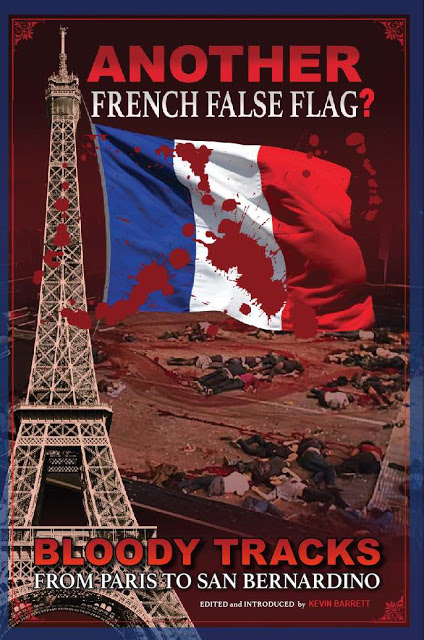
afff-front-cover

Barrett’s anthology, which includes a contribution from Ajamu Baraka, alongside a host of well-known neofascists and antisemites.

David Macey – Foucault, the French Communist Party, and the Doctor’s Plot (1993)

Foucault approached the final hurdle of the agrégation in spring 1950. This was also the year in which he finally joined the PCF. The Parti Communiste Français [PCF] had emerged from the war as the single most important political grouping in France, and was able to win five million votes in 1945. By the middle of 1947, its membership reached a high point of 900,000. Authoritarian, highly centralised and disciplined, the Party was a classic Stalinist formation, complete with a somewhat absurd personality cult dedicated to its secretary-general, Maurice Thorez. It was also highly patriotic and still enjoyed and exploited the reputation it had won in the wartime Resistance; this was le parti des fusillis—the party which had lost more members than any other to German repression. …

This was the party which Foucault chose to join in 1950. He took out his Party card at the urging of Althusser, who had taken the same decision two years earlier. In subjective terms, Foucault’s newfound commitment was largely a reaction to the apocalyptic despair he had felt as an adolescent living through a disastrous war. Politics had little meaning when the only choice available was one between Truman’s America and Stalin’s Russia. …

Many of those who joined the PCF at roughly the same time as Foucault left it after only a few years. Mass resignations followed the revelations about Stalin’s Russia made in Khrushchev’s ‘secret report’ to the Twentieth Party Congress of the CPSU [Communist Party of the Soviet Union] in 1956, and Soviet intervention in Hungary that same year led to many more departures. In Foucault’s case, the disaffection set in earlier. At the beginning of 1953, Pravda announced the arrest of nine doctors on very serious charges. They had allegedly murdered Zhdanov, had planned to murder a number of Soviet marshals and had plotted against the life of Stalin himself. Immediately after Stalin’s death from natural causes on 3 March, Pravda announced that the nine had been released and rehabilitated; they had been the victims of a machination. Seven of the nine were Jewish. In. France, the PCF’s press covered the ‘doctors’ plot’ in slavishly pro-Soviet terms, commenting that the security services of the USSR had ‘picked off the murderers in white coats, the secret agents recruited among the Zionists and Jewish nationalists’ and implying that the entire plot had been hatched in Tel Aviv.

Foucault attended a meeting at which André Wurmser attempted to justify the arrest of the nine. Wurmser laid down the Party line, and his audience of normaliens did their best to believe the unbelievable. For Foucault, believing the unbelievable was a way of existing within the Party: continued membership was the source of such tension that it became an exercise in ‘dissolving the ego’. After the death of Stalin, the PCF let it be known that there had been no plot, that it had been pure invention. The ENS [École Normale Supérieure, where Foucault was a student] cell wrote to Wurmser to ask for an explanation, but received no reply. Shortly afterwards, Foucault quietly left the PCF. The incident left a ‘bitter taste’ in his mouth, and resulted in both a life-long loathing for the PCF and a distinctly jaundiced view of the USSR.

The ‘doctors’ plot’ had revealed the existence of an ugly strand of anti-Semitism in the Soviet Union. The French Party press was not to be outdone in the matter of anti-Semitism. According to Annie Besse, writing in Cahiers du communisme, ‘Hitler…refrained from harming the Jews of the big bourgeoisie… Who will ever forget that Leon Blum, his wife at his side, contemplated from the windows of his villa the smoke from the ovens of the crematoria!’ Zionism was ‘a mask behind which to conceal espionage operations against the Soviet Union’. Whether Foucault ever read these statements is not known, but in 1953 he was already denouncing the ‘odious’ attitude taken towards Israel by both the superpowers. His pro-Israeli sentiments were as unswerving as his dislike for the PCF, and it is difficult to believe that there was no connection between the two.

= = =

from David Macey, The Lives of Michael Foucault: A Biography (NY: Pantheon Books, 1993), pages 37-38, 39-40.

Kalle Lasn (Adbusters): “Why Won’t Anyone Say They Are Jewish?” (full image) (2004)

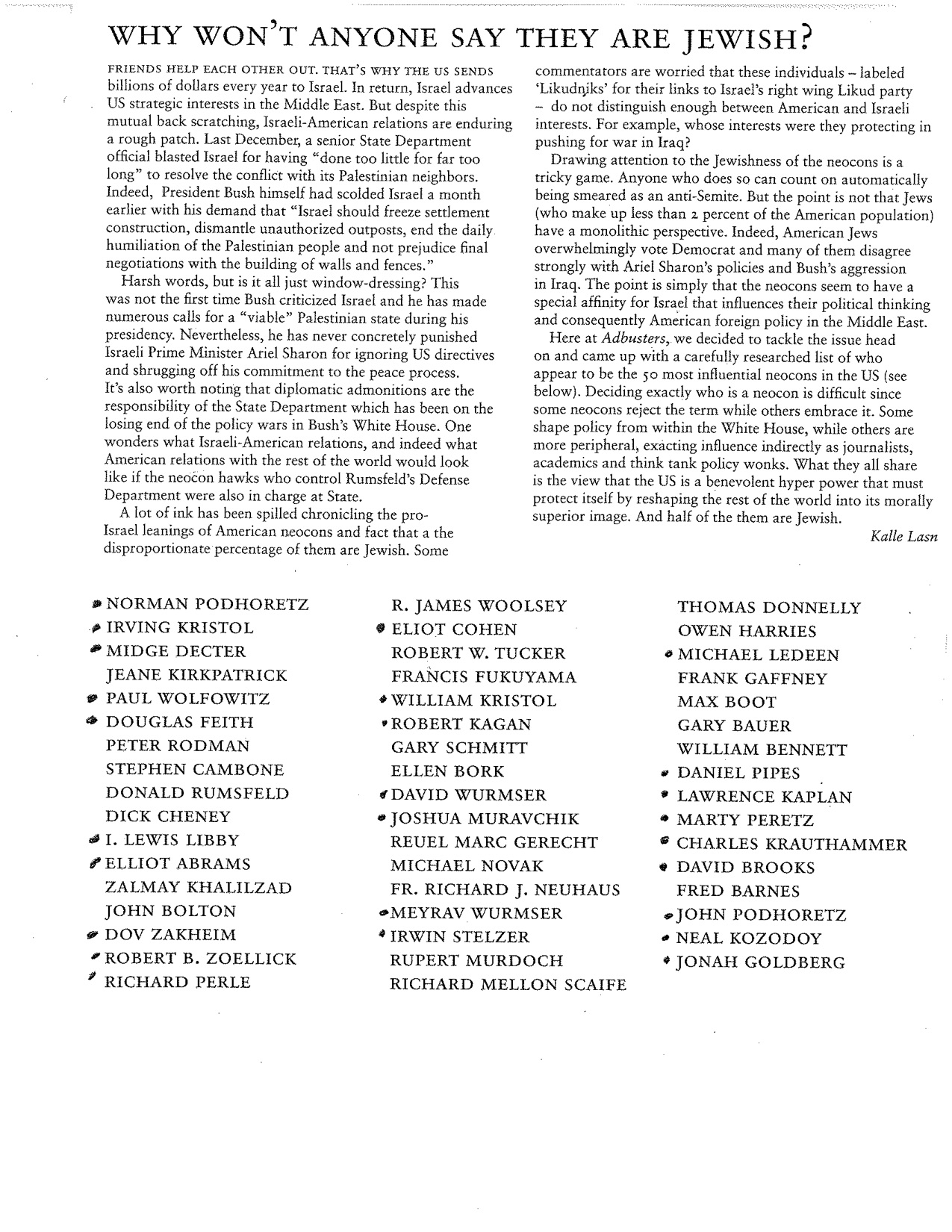
“Why Won’t Anyone Say They Are Jewish?”,  Kalle Lasn’s infamous Adbusters article (March/April 2004),  is often talked about. But it is curiously hard to find a copy of the actual image—especially since much of its notoriety  derives from it being a list political figures in which the Jewish ones are marked with symbols next to their names! So, with all the brew-ha-ha lately about antisemitism at Occupy Wall Street, we thought we’d pull this one out of the archives.

adbusters-jewish

We have a lot to say about antisemitism and the critique of finance capital; the failure of the left to oppose antisemitism at OWS and how this has handed openings to the right; the left’s pathetic failure in the response to these accusations, which have some validity; and the comparison between the anti-globalization and “Occupy” movements in terms of antisemitism, the critique of finance capital, and Left/Right crossover. But it will all have to wait.

Further reading about the Occupy movement, the critique of finance capital, and left/right crossover:

Spencer Sunshine,“Occupied With Conspiracies? The Occupy Movement, Populist Anti-Elitism, and the Conspiracy Theorists”

Matthew Lyons, “Rightists woo the Occupy Wall Street movement”

TPMDC, “Not Helping: David Duke Supports Occupy Wall Street”

The Liberty Lamp, “Infiltrators of the Occupy Movement.”

Michael C. Moynihan, “Busted: The Canadian magazine Adbusters sparked the Occupy Wall Street movement. It also has a weakness for Israel-bashing conspiracy theories.”

(mostly important for information at the end about Adbusters publishing Holocaust-denier Gilad Atzmon & co)

Scission,  “OCCUPY KANSAS CITY DEBATES THE “PROTOCOLS OF THE LEARNED ELDERS OF ZION”/ ARE YOU KIDDING ME”

“The bad seed of the #Occupy Movement—Occupy Tallinn”

Our American Generation, “American Neo Nazis and the Occupy Movement”

Hoosier Anti-Racist Movement (HARM), HARM Withdraws Support for Occupy Indianapolis

Mike Levine, “US Professors Travel to Iran to Discuss Occupy Wall Street Movement”

(Normally, I’d never link to FOX, but this is of interest because, while the “US professors” were leftists and marxists – one an Italian-style autonomist – Iran’s Press TV quotes a US Iman saying that the OWS 99% is “naturally against Zionism…. The monster today is global Zionism.”)

(Documents some of the antisemitic cartoons which came out in 2012 in Occupy/Anonymous circles.)

TEXT:

WHY WON’T ANYONE SAY THEY ARE JEWISH?

Friends help each other out. That’s why the US sends billions of dollars every year to Israel. In return, Israel advances US strategic interests in the Middle East. But despite this mutual back scratching, Israeli-American relations are enduring a rough patch. Last December, a senior State Department official blasted Israel for having “done too little for far too long” to resolve the conflict with its Palestinian neighbors. Indeed, President Bush himself had scolded Israel a month earlier with his demand that “Israel should freeze settlement construction, dismantle unauthorized outposts, end the daily humiliation of the Palestinian people and not prejudice final negotiations with the building of walls and fences.”

Harsh words, but is it all just window-dressing? This was not the first time Bush criticized Israel and he has made numerous calls for a “viable” Palestinian state during his presidency. Nevertheless, he has never concretely punished Israeli Prime Minister Ariel Sharon for ignoring US directives and shrugging off his commitment to the peace process. It’s also worth noting that diplomatic admonitions are the responsibility of the State Department which has been on the losing end of the policy wars in Bush’s White House. One wonders what Israeli-American relations, and indeed what American relations with the rest of the world would look like if the neocon hawks who control Rumsfeld’s Defense Department were also in charge at State.

A lot of ink has been spilled chronicling the pro-Israel leanings of American neocons and fact that a the disproportionate percentage of them are Jewish. Some commentators are worried that these individuals – labeled ‘Likudniks’ for their links to Israel’s right wing Likud party – do not distinguish enough between American and Israeli interests. For example, whose interests were they protecting in pushing for war in Iraq?

Drawing attention to the Jewishness of the neocons is a tricky game. Anyone who does so can count on automatically being smeared as an anti-Semite. But the point is not that Jews (who make up less than 2 percent of the American population) have a monolithic perspective. Indeed, American Jews overwhelmingly vote Democrat and many of them disagree strongly with Ariel Sharon’s policies and Bush’s aggression in Iraq. The point is simply that the neocons seem to have a special affinity for Israel that influences their political thinking and consequently American foreign policy in the Middle East.

Here at Adbusters, we decided to tackle the issue head on and came up with a carefully researched list of who appear to be the 50 most influential neocons in the US (see above). Deciding exactly who is a neocon is difficult since some neocons reject the term while others embrace it. Some shape policy from within the White House, while others are more peripheral, exacting influence indirectly as journalists, academics and think tank policy wonks. What they all share is the view that the US is a benevolent hyper power that must protect itself by reshaping the rest of the world into its morally superior image. And half of the them are Jewish.

Kalle Lasn


Nick Griffin: “National Anarchism: Trojan Horse for White Nationalism” (2005)

NATIONAL ANARCHISM: TROJAN HORSE FOR WHITE NATIONALISM

Nick Griffin

[2007 note] This article was written for Green Anarchy magazine under the name “Nick Griffin,” which is obviously a pseudonym. The “other” Nick Griffin is the head of the far-right British National Party, who by coincidence was brought to trial on charges of ‘incitement to racial hatred’ as the issue of GA hit the stands (ie well after the article was written). Apparently more than one unscrupulous North American radical used this opportunity to publicly accuse Green Anarchy of printing an article by the BNP’s Griffin – despite the fact that it was an obviously anti-fascist article! Therefore it should be specified that the “Nick Griffin” of this article is not the same as the BNP’s Nick Griffin; rather, it is a pseudonym of an anti-fascist monitor with a wry sense of humor. Go figure.

Recently a man who hung out in Eugene around green anarchists started promoting the idea of National Anarchism. A few years ago he had written a well-known essay from a green anarchist perspective, and he was a familiar face to many. [2007 note: “Chris” wrote the article “Against Mass Society,” which can be found on the cover of Green Anarchy #6 (Summer 2001) and is reprinted in Our Enemy Civilization: An Anthology Against Modernity.] His new belief system advocated that people of different ethnic backgrounds should live in different villages, and he later wrote a letter to Green Anarchy in an attempt to propagate his views about supposedly “natural” hierarchies. [GA Note: We were going to print his letter, but it is almost as long as this article, and we did not want to provide a forum for his ideas on “natural hierarchies” and “National Anarchism”. If people are interested in the letter, and who wrote it, you can contact us.] Fortunately his attempt to spread this racist, anti-Semitic and homophobic (so-called) “anarchism” were quickly unveiled. But what is National Anarchism? How did it arise, and what does it stand for, and why are these racist Right-wingers attempting to recruit anarchists?

Radical politics of all kinds took a new turn after the collapse of the Soviet Union, and this accelerated after the demonstrations against the WTO in Seattle in 1999. Decentralized and networked political forms started becoming the predominant types of resistance. In the last few years, we have seen anarchism replace marxism as the dominant radical movement in the U.S., but changes have also occurred elsewhere. Parts of the white power movement started advocating “leaderless resistance” as early as the 1980s; the Islamic jihadists Al Qaeda are a state-less, transnational entity; and even marxist groups like Left Turn have rejected the tight “vanguard party” model in favor of a more network-based structure.

But anarchism itself has also became a magnet for the racist radical right, and a tiny fringe group in the UK called the National Revolutionary Faction has re-christened itself as National Anarchists. They are attempting to use anarchist symbolism and rhetoric to recruit both “White Nationalists” (WN, a catch-all term for the various kinds of white racists) as well as anarchists – especially green anarchists – to their strange belief system. They advocate a decentralized economic and political system which features ethnically-pure villages which are defined by racial separatism, anti-semitism and homophobia.

Most National Anarchists (NA) tend to be long-time participants in the Nazi or other racist movements (ie Klan, Christian Identity) who are looking for a new “hook” to use to break-out of the ghettoized White Nationalist scene. Many are former skinheads who retain their interests in racist Oi!, metal and goth bands, European football (soccer), and sci-fi. They also tend to be interested in occult or pagan religions, although the proprietor of the sole NA-affiliated website in the U.S. is a Christian. Sometimes they are interested in the ecology movement or animal rights, although this seems mostly to be lip service to attract anarchists to their ideas. Their real interests are clearly racism against non-white people and a hatred of Jews.

Unfortunately, their bait has seemed to hook a few from the anarchist scene, mostly mystical anarchists, individualists, and green anarchists – including the aforementioned Eugene hanger-on. There has always been a small Left-Right crossover point, especially where the politics involve a mixture of anti-capitalism, mysticism, environmentalism and questions of technology. (Although skewed in its conclusions, Ecofascism: Lessons from the German Experience by Janet Biehl and Peter Staudenmaier offers a detailed historical account of this, and many of the racists have read this and taken it as a guide.) Continue reading ‘Nick Griffin: “National Anarchism: Trojan Horse for White Nationalism” (2005)’

Bob Avakian on SNCC, Anti-Zionism & Anti-Semitism (2005)

One time through Eldridge [[Cleaver]] I got this issue of the SNCC newspaper and they had this cartoon portraying Nasser, who was the head of the government of Egypt at that time, going up against Israel, and the cartoon drew a parallel with how Black people had to deal with Jews who were exploiting them in the ghetto in America. This really bothered me. I was already learning about imperialism, partly from Eldridge, so I said to him: “Look, this is not right. The common enemy here is imperialism. What’s wrong with Israel is not the Jewish character of it; it’s the fact that it’s an instrument of imperialism. And the common cause of black people in the U.S. and people in Egypt is that they’re going up against imperialism.” Eldridge said, “Well, why don’t you write them a letter?” So I did. I made these arguments and I made the point that in writing the letter that I was a strong supporter of SNCC and of Black liberation, but this bothered me because it wasn’t the right way to look at the problem and to analyze friends and enemies, and so on. So they wrote back and said, “We take you at your word that you’re a supporter of Black liberation and let us make clear that we are not anti-Semitic and we don’t see Jews as the enemy.”

= = =

from Bob Avakian, From Ike to Mao and Beyond: My Journey From Mainstream America to Revolutionary Communist (Chicago: Insight Press, 2005), p 147.

RADICAL ARCHIVES NOTE: Bob was a member of SDS and the Revolutionary Union, and is the founder and chairman of the Revolutionary Communist Party, USA (RCP), a Maoist sect. The son of East Bay judge ‘Sparky’ Avakian, Bob has stated that “After the Holocaust, the worst thing that has happened to Jewish people is the state of Israel.” His follower Alan Goodman took this to heart and, after Israel’s 2009 attack on Gaza, Goodman held a banner with this slogan outside the ‘Museum of Jewish Heritage–A Living Memorial To The Holocaust’ in downtown New York City.

Despite its subtitle, the Museum of Jewish History is not a Holocaust museum; current exhibitions include an expose about the love of American Jews for Mah Jongg.